Beatty and Rhyolite Offer Desert Heritage Day Trips in Southwestern Nye County
Beatty and ghost town Rhyolite sit just miles apart in southwestern Nye County, offering one of Nevada's most rewarding desert heritage day trips within easy reach.
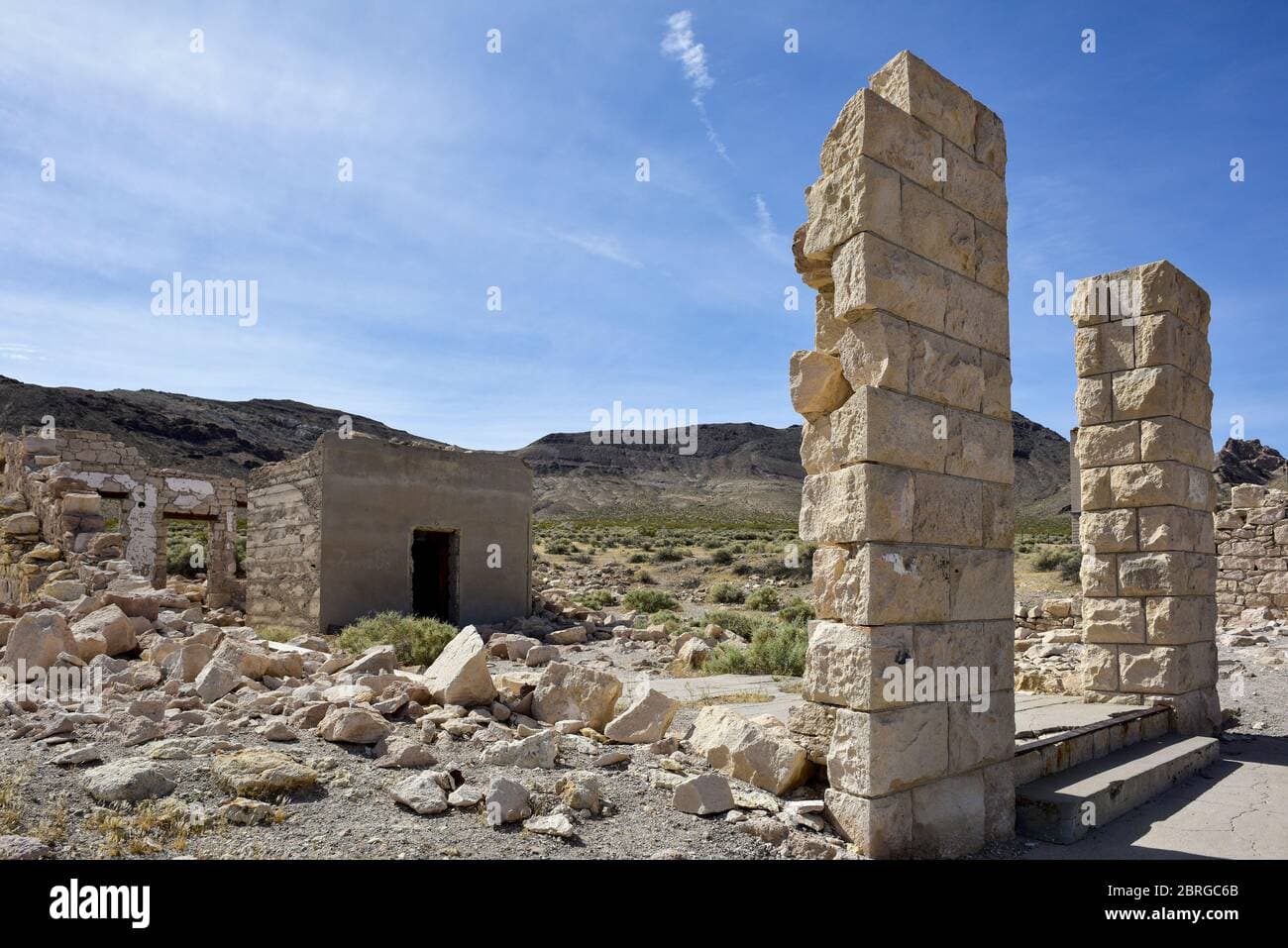
Few corners of Nevada pack as much history, geology, and raw desert atmosphere into a single day as the stretch of southwestern Nye County anchored by Beatty and the ghost town of Rhyolite. These two destinations sit just a few miles apart near the edge of Death Valley National Park, close enough to combine in a single outing yet distinct enough that each demands its own attention. Whether you're driving up from Las Vegas, heading south from Tonopah, or simply looking for a weekend excursion from somewhere within the county, this pairing rewards the curious traveler with layers of boom-and-bust Nevada history that are surprisingly easy to reach.
Getting to Beatty
Beatty sits along U.S. Highway 95, the main artery connecting Las Vegas to Reno through central Nevada. From Las Vegas, the drive runs roughly 120 miles northwest, passing through the Amargosa Valley before the highway curves into town. The town itself serves as a natural gateway to Death Valley, and its position on a major federal highway means the roads are paved, well-maintained, and accessible to standard passenger vehicles year-round. Fill your gas tank in Beatty before heading to any outlying sites; the surrounding desert offers no services for long stretches in any direction.
Beatty: The Living Town
Beatty is a small but resilient community that has outlasted the boom cycles that destroyed so many of its neighbors. The town's character is shaped by its mining heritage, its proximity to Death Valley, and the steady flow of travelers passing through on Highway 95. Local businesses along the main corridor include motels, diners, and a handful of shops that cater to both through-travelers and people heading into the park. The Beatty Museum and Historical Society preserves artifacts and records from the region's early twentieth-century mining era, offering context that makes the Rhyolite ruins far more meaningful once you've spent time there. Stop in before heading to the ghost town if the museum is open during your visit.
The town also serves as a practical base of operations. If you're planning a longer stay, Beatty's lodging options range from budget motels to RV parks, and the elevation is lower than Tonopah, which means milder winters but scorching summers that require planning.
Rhyolite: Nevada's Most Dramatic Ghost Town
About four miles west of Beatty, just off State Route 374, the ruins of Rhyolite stand as one of the most photogenic and historically significant ghost towns in the American West. Rhyolite exploded into existence after a gold strike in 1904 and grew with extraordinary speed; at its peak around 1907 and 1908, it had a population estimated between six thousand and ten thousand people, multiple banks, a stock exchange, an opera house, a school, and railroad service from two competing lines. By 1916 it was essentially abandoned, its mines having played out and its residents having scattered across the West in search of the next strike.
What remains today is genuinely striking. The three-story shell of the Cook Bank building still stands against the desert sky, its stone walls intact enough to convey the ambition of what was briefly a serious city. The ruins of the Las Vegas and Tonopah Railroad depot sit nearby, a reminder that Rhyolite was once connected to regional rail networks. Perhaps the most unusual structure is the Bottle House, built in 1906 by a miner named Tom Kelly using approximately fifty thousand beer and liquor bottles set in adobe mortar, a testament to frontier resourcefulness that has survived more than a century in the desert.
Rhyolite is managed as a free, open-air site. There are no gates, no entry fees, and no set closing times, though visiting during daylight hours is strongly recommended both for safety and for photography. The site is on Bureau of Land Management property, and several interpretive signs explain the history of individual structures.
The Goldwell Open Air Museum
Adjacent to the Rhyolite ruins sits the Goldwell Open Air Museum, a genuinely unexpected find in the Mojave Desert. The museum began when Belgian artist Albert Szukalski created a life-sized sculptural tableau of "The Last Supper" using ghostly figures draped in white fiberglass resin, placing it against the backdrop of the Rhyolite ruins in 1984. Other artists followed, and the site now holds several large-scale outdoor sculptures that have become landmarks in their own right. Admission is free, and the juxtaposition of contemporary art and crumbling early twentieth-century mining infrastructure creates a visual experience unlike anything else in Nye County.
Seasonal Considerations
The timing of your visit matters considerably in this part of the Mojave. Spring, from roughly mid-February through April, is widely considered the best season: temperatures are moderate, wildflowers occasionally bloom across the desert floor, and the light in the late afternoon turns the ruins and surrounding mountains a deep amber that photographers prize. Fall, from October through early November, offers similarly pleasant conditions.
Summer visits require serious preparation. Temperatures in Beatty regularly exceed 100 degrees Fahrenheit from June through September, and the desert around Rhyolite offers virtually no shade. If you visit in summer, plan to arrive at the ruins by early morning, carry far more water than you think you'll need, and be back in an air-conditioned vehicle well before midday. Deaths from heat exposure occur every year in this region; the margin for error is small.
Winter visits are generally comfortable during the day, with temperatures in the 50s and 60s Fahrenheit, but nights drop sharply and occasional cold fronts can bring wind and rain. The site remains accessible in winter, and the lower sun angle creates interesting photographic conditions.
Safety and Practical Tips
The desert around Beatty and Rhyolite is beautiful and can be dangerous in equal measure. A few practical considerations before you go:
- Carry at least one gallon of water per person for a day trip, more in summer
- Do not enter any standing structures at Rhyolite; the ruins are unstable and the site is managed as a walk-around, exterior-viewing experience
- Cell service is limited to nonexistent in parts of this area; download offline maps before leaving a populated area
- Let someone know your itinerary if you plan to do any hiking beyond the main site
- A standard passenger vehicle handles the paved roads to Rhyolite without difficulty; high-clearance vehicles are useful if you plan to explore any of the surrounding BLM roads
Why This Pairing Works as a Day Trip
The combination of Beatty's living town character, the Rhyolite ruins, and the Goldwell sculptures creates a day that moves through multiple registers of the Nevada experience: commerce and survival, ambition and collapse, and the strange creativity that the desert seems to inspire. The drive itself, through the wide Amargosa Valley with the Funeral Mountains visible to the southwest, is part of the experience. Southwestern Nye County doesn't advertise itself aggressively, but for anyone willing to follow Highway 95 into the high desert, the reward is a landscape and a history that feel entirely their own.
This article was produced by Prism’s automated news system from verified source data, official records, and press releases, then run through automated quality and moderation checks before publishing. The system is built and supervised by the people who set the standards it runs under. Read our full AI policy.
Did this article answer your question?