Beatty’s mining “second act” could boost jobs, strain water supplies
Beatty’s mining comeback hinges on permits, water, and whether North Bullfrog can clear federal review without draining Oasis Valley’s fragile groundwater.
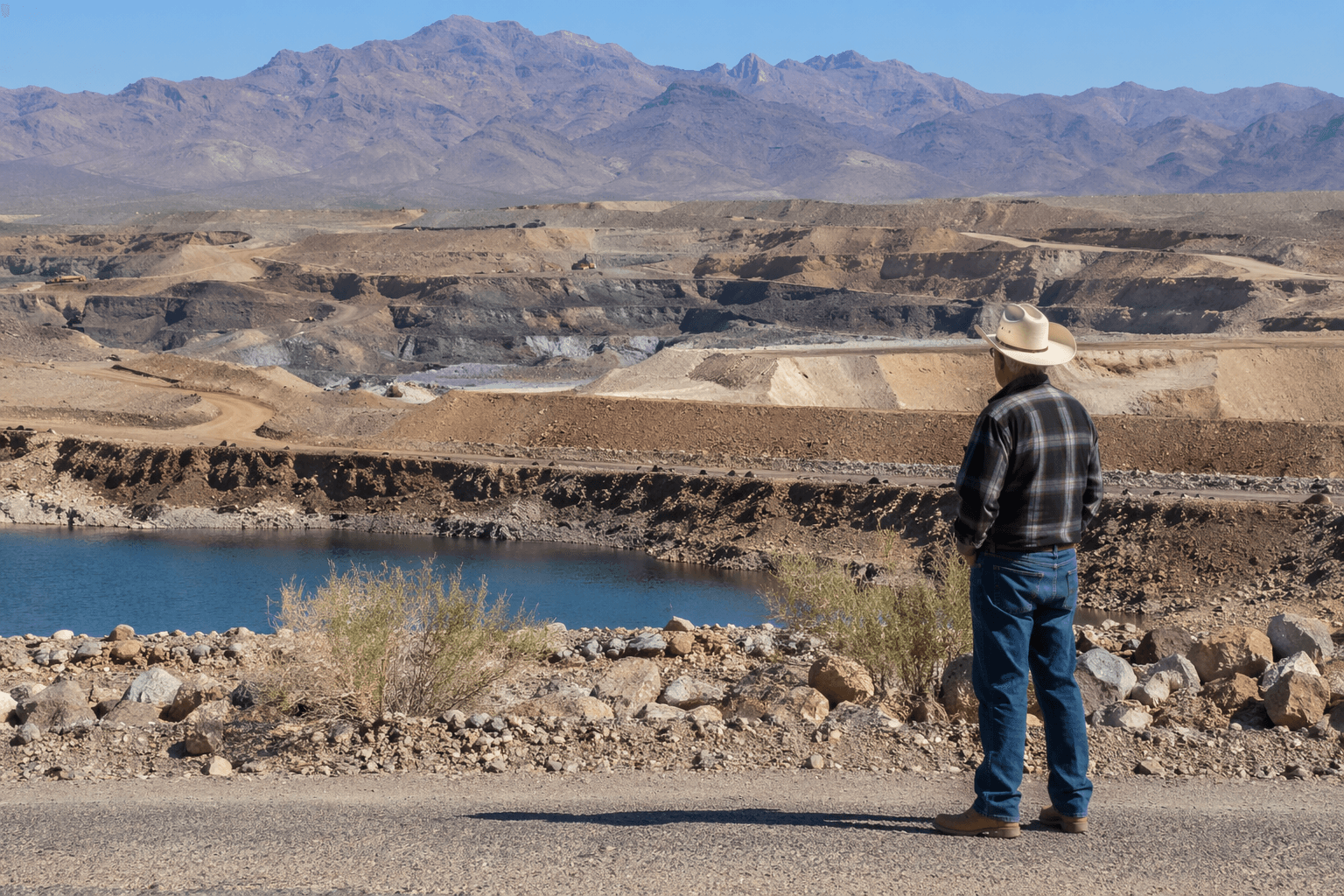
Beatty’s next big mining decision is not about nostalgia for the old Bullfrog days. It is about whether AngloGold Ashanti can win the remaining approvals for North Bullfrog and Arthur without intensifying pressure on the springs, groundwater and habitat that make Oasis Valley distinct.
The Bureau of Land Management has already put the North Bullfrog Mine Project draft environmental impact statement out for public comment, and that 30-day window closed June 8, 2026. Public meetings were held May 13 on Zoom and May 27 in Beatty, and the agency is still working toward a final Record of Decision targeted for the end of 2026.
What still has to happen
For Beatty and the rest of Nye County, the key issue is that the project is not fully approved yet. BLM says the proposal would cover about 6,298 public and private acres near Beatty, roughly nine miles north of the town’s main population center, and would include three open pits if it moves forward.
The federal review matters because it is the gatekeeper for the mine’s future. BLM is weighing whether the project can proceed as proposed, while conservation groups, residents and tribal stakeholders continue to press their case through the comment process, public meetings and, if needed, the courts. AngloGold says North Bullfrog and Arthur are part of its Beatty district portfolio, and the company says it completed its acquisition of Augusta Gold in October 2025 to consolidate landholdings in the district.
The company’s own materials frame the project as a major buildout rather than a small-scale expansion. BLM’s earlier project notice said the mine could employ about 530 people during the one-year construction phase and about 230 people over the life of the mine. In a town the size of Beatty, those numbers can shape everything from payrolls and housing demand to local purchasing power and county tax expectations.
Water is the central fight
The biggest local question is how much water the project could require, and what that would mean for the Amargosa River system. The Center for Biological Diversity said in a 2024 emergency species petition that North Bullfrog could withdraw up to 2,500 acre-feet of water a year from Oasis Valley and a likely connected aquifer in Sarcobatus Flat. That is about 815 million gallons annually, a scale that explains why the proposal has become a water-governance story as much as a mining story.
That concern is especially sharp because Beatty depends on springs and groundwater tied to the Amargosa River. The Amargosa Conservancy says North Bullfrog is one of about half a dozen gold mines under exploration or permitting near the river, and it places the project about nine miles north of Beatty and about three miles west of the river. In a place where groundwater supports both daily life and sensitive habitat, even a technically separate mining footprint can ripple outward fast.
The ecological stakes are not abstract. Federal conservation documents say the Amargosa toad historically occupied about a 10-mile reach of the Amargosa River and nearby spring and wetland systems. A U.S. Fish and Wildlife Service restoration document says almost half of the toad’s habitat is on private property and the rest is on BLM land, which means any change in water levels or land use can cut across ownership lines. The same groundwater network also supports the Oasis Valley speckled dace, another species tied to spring-fed habitat near Beatty.
What Beatty could gain, and what it could lose
If North Bullfrog and Arthur move ahead, Beatty could see the kind of economic lift that rarely comes to a town this small. AngloGold describes the Beatty district as a generational development opportunity, and as of December 31, 2025, the district hosted 6.11 million ounces of measured and indicated gold resources and 9.58 million ounces in the inferred category. That scale helps explain why the company is talking about a long-term district buildout rather than a short-lived prospect.
The upside goes beyond mine wages. A project this size can lift demand for contractors, suppliers, lodging and services, while also expanding the local tax base if development proceeds as planned. AngloGold says it created the Beatty Foundation in 2023 to support community development, and the company has also said it is working on tribal engagement with local Indigenous communities.
But the tradeoffs are just as large. Beatty’s economy and ecology are tightly linked, and the same water that keeps the landscape alive is what makes the mine controversial. If the project draws heavily from the aquifer system, local leaders could be forced to weigh new jobs against strain on wells, springs, wildlife and the broader sense of place that gives Beatty value in the first place.
That tension was already visible at the Beatty Town Advisory Board meeting on April 27, 2026. AngloGold discussed revised water conservation measures, projected economic impacts, housing plans and environmental monitoring, while the board approved support letters tied to conservation, utilities and healthcare. The debate is no longer limited to the mine site. It is reaching into housing, infrastructure and the public services that would have to absorb any boom.
Why the old Bullfrog district still matters
The current argument has roots more than a century old. University of Nevada, Reno history resources say gold was discovered in the Bullfrog district in August 1904, and the district became a booming mining center within seven months. Another history source says the original Bullfrog mine was discovered on August 9, 1904, by Frank “Shorty” Harris and Ernest “Ed” Cross.
That history still shapes the way locals hear the present proposal. The idea of a mining revival does not land as abstract economic development in Beatty. It lands in a place whose identity was built, lost and partly revived through mining before, and where the cost of another cycle would be measured not just in jobs but in water, habitat and the future of Oasis Valley.
For Nye County, the question is now simpler and harder at the same time: whether Beatty’s second act will be written as a durable local gain, or as another industrial chapter that leaves the town with less water than it started with.
This article was produced by Prism’s automated news system from verified source data, official records, and press releases, then run through automated quality and moderation checks before publishing. The system is built and supervised by the people who set the standards it runs under. Read our full AI policy.
Know something we missed? Have a correction or additional information?
Submit a Tip