Calvada Herd Filly Zamora Turns One; Advocates Warn Against Feeding Wild Horses
Zamora, the beloved Calvada herd filly, turned one despite two colic episodes caused by people feeding her herd near Pahrump's Calvada Eye.
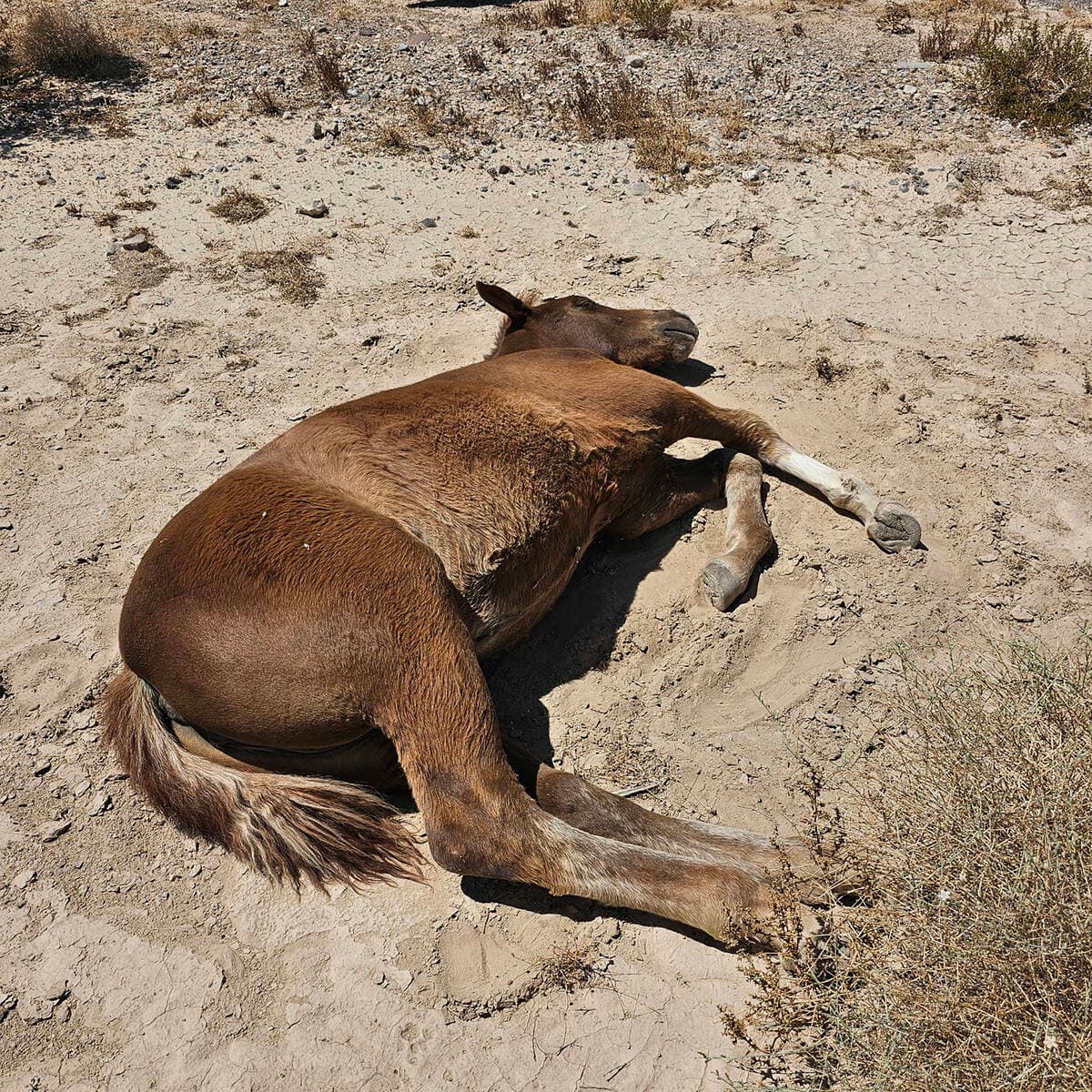
Zamora, the wild filly who captured Pahrump's attention since her birth, marked her first birthday last week, but the milestone came with a sobering message from advocates: the illegal act of feeding wild horses nearly cost the young horse her life twice over.
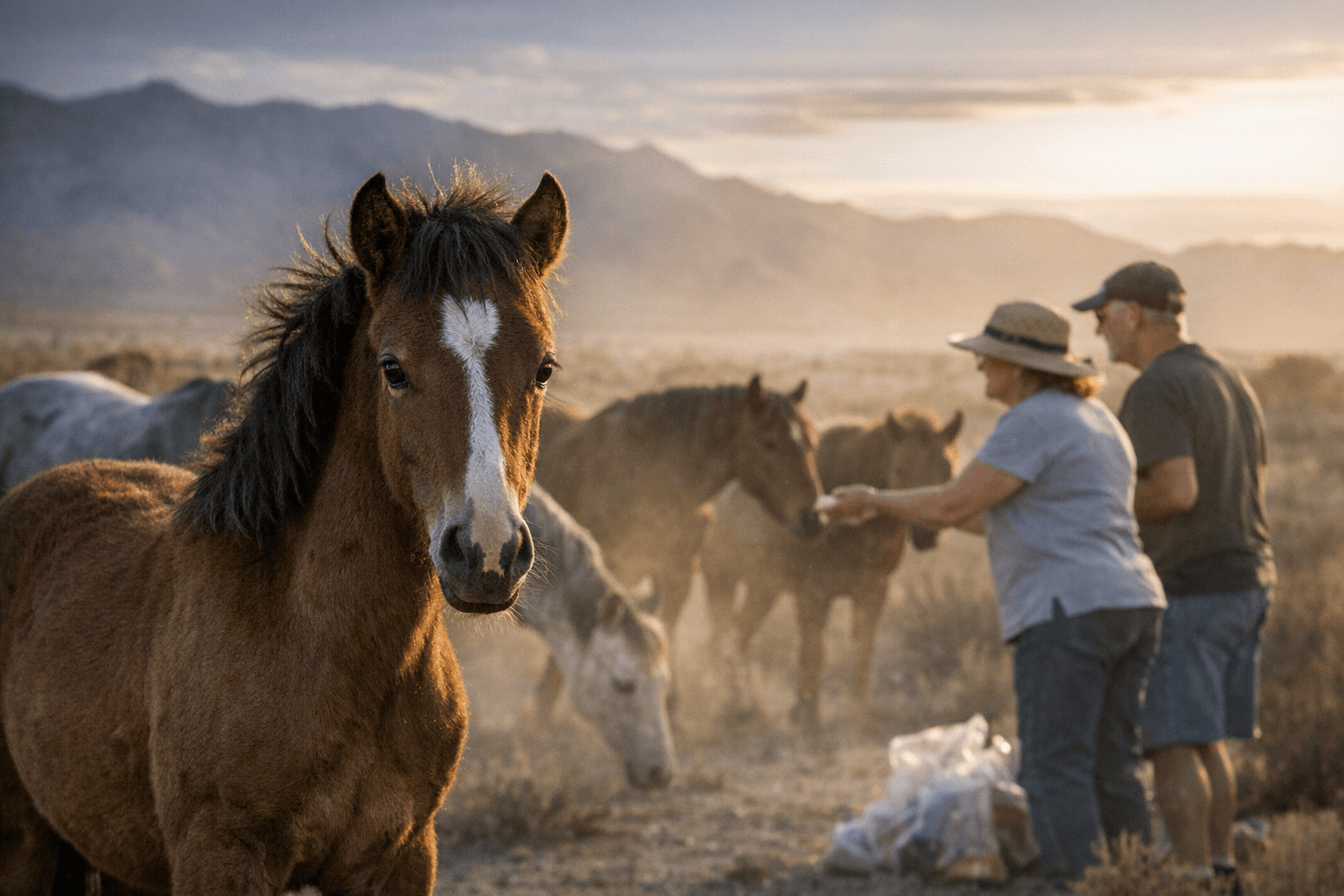
Zamora belongs to the Calvada herd, a group of wild horses that regularly roams the Calvada Eye area of Pahrump. Her family includes her mother Rain, older sister Stardust, new brother Zephyr, and herd stallion Spirit. Southwestern Wilds, one of the local organizations dedicated to advocating for wildlife including these horses, celebrated the occasion on their Facebook page, where Vice President Vanessa Fernandez addressed Zamora directly.
"One year ago, you ignited our little community. You brought people together to love you, protect you and learn from you," Fernandez wrote. "Your name means wild and place with water. Pahrump means water over rocks. You belong here."
The birthday celebration carried genuine relief behind it. Many Southwestern Wilds members had feared this milestone would never arrive. Twice during her first year, Zamora developed painful colic attributed to people dropping food for her herd. The episodes prompted Southwestern Wilds members to press their public messaging that human food is not appropriate for wild horses, and eventually led to the installation of new signs reading "Do not feed or touch the horses" around the Calvada Eye.
Zamora's health troubles did not stop at colic. She also suffered a hoof abscess, though it fortunately healed without requiring the Bureau of Land Management to remove her from the valley, an outcome that advocates had worked to avoid.
On Feb. 28, volunteers gathered to repair fencing running along the northern end of the area where the herd frequents, a hands-on community effort to better protect the horses from further human interference.
Touching or feeding a wild horse is illegal, and the health consequences Zamora endured this year illustrate precisely why that law exists. Well-intentioned offerings of food can cause colic, a condition that can be fatal, and repeated incidents place wild horses at risk of removal from their home range by federal land managers.
This article was produced by Prism’s automated news system from verified source data, official records, and press releases, then run through automated quality and moderation checks before publishing. The system is built and supervised by the people who set the standards it runs under. Read our full AI policy.
Did this article answer your question?