Nye County OHV Riders Find Desert Trails, Safety Tips Near Pahrump
Pahrump sits at the edge of some of Nevada's most accessible OHV terrain, and knowing where to ride legally could save you a fine or worse.
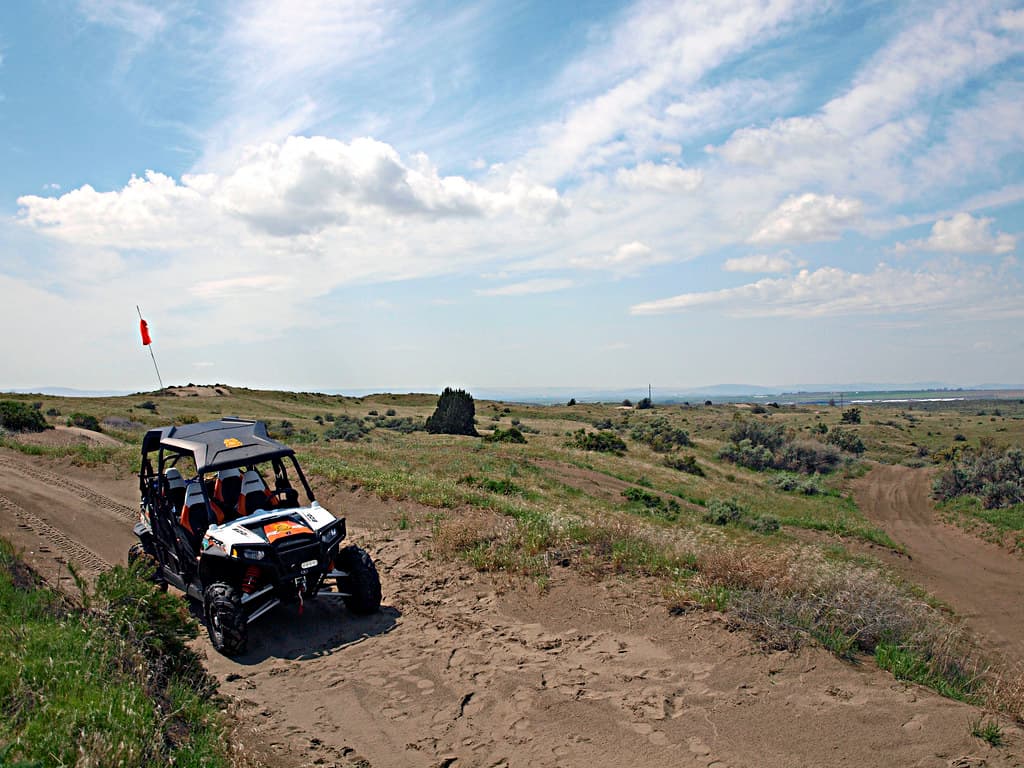
The Mojave Desert doesn't ease you in. It drops you into a landscape of dry washes, hardpan flats, and rocky ridgelines that have drawn off-highway vehicle riders to the Pahrump Valley and greater Nye County for decades. Whether you're loading a side-by-side for a weekend run or putting a dirt bike on a trailer for the first time, understanding how to access, ride, and camp on these public lands responsibly is the difference between a great day out and a costly one.
Where Riders Go Near Pahrump
Nye County's position in southern Nevada gives it an outsized share of Bureau of Land Management terrain, and most of the riding country accessible from Pahrump falls under BLM jurisdiction. That matters because BLM land operates under a different set of rules than state parks or private property, and access that looks open may carry specific OHV designations that determine where you can legally travel.
The desert surrounding Pahrump includes a mix of open areas, where OHVs may travel anywhere the terrain allows, and designated-route areas, where you must stay on marked trails or roads. Before heading out, checking the applicable BLM field office map for your intended riding zone isn't optional, it's the step that keeps you out of trouble with land managers and protects fragile desert ecology like cryptobiotic soil crust, which can take decades to recover from a single tire pass.
Registering Your OHV in Nevada
Nevada law requires OHVs operated on public land to be registered with the Nevada Department of Motor Vehicles. The OHV decal must be displayed on the vehicle and renewed annually. Riders who skip this step risk citation and can be turned away from trailheads where registration checks occur. The registration fee funds OHV programs across the state, including trail maintenance and safety education initiatives that benefit Nye County riders directly.
If your vehicle is already street-legal and carries standard Nevada license plates, it may be exempt from the separate OHV decal requirement, but confirming that status with the DMV before your ride is worth the five-minute phone call.
Safety on Desert Terrain
Desert OHV riding carries a specific risk profile that differs from wooded or mountainous terrain. Heat, distance from help, and the deceptive flatness of dry lake beds and washes all contribute to incidents that proper preparation prevents.
The core safety checklist for any Pahrump-area ride includes:
- Carry more water than you think you need: a minimum of one gallon per person per hour of expected activity in warm months
- Tell someone your route and expected return time before leaving cell coverage
- Bring a paper map or downloaded offline map; cell service is unreliable across much of Nye County's backcountry
- Wear a properly fitted helmet, and require passengers to do the same regardless of vehicle type
- Check tire pressure, fuel levels, and all fluid reservoirs before departure, not at the trailhead
- Pack a basic tool kit and a tow strap; a broken belt or flat tire miles from pavement becomes a serious situation without them
Riders should also be aware that desert temperatures can swing dramatically between afternoon highs and post-sunset lows, particularly in spring and fall. A ride that starts in 80-degree heat can finish in temperatures that drop into the 40s. Layering and carrying emergency shelter, even a simple mylar blanket, has pulled people out of hypothermia situations that started as afternoon rides.
Riding Etiquette and Environmental Rules
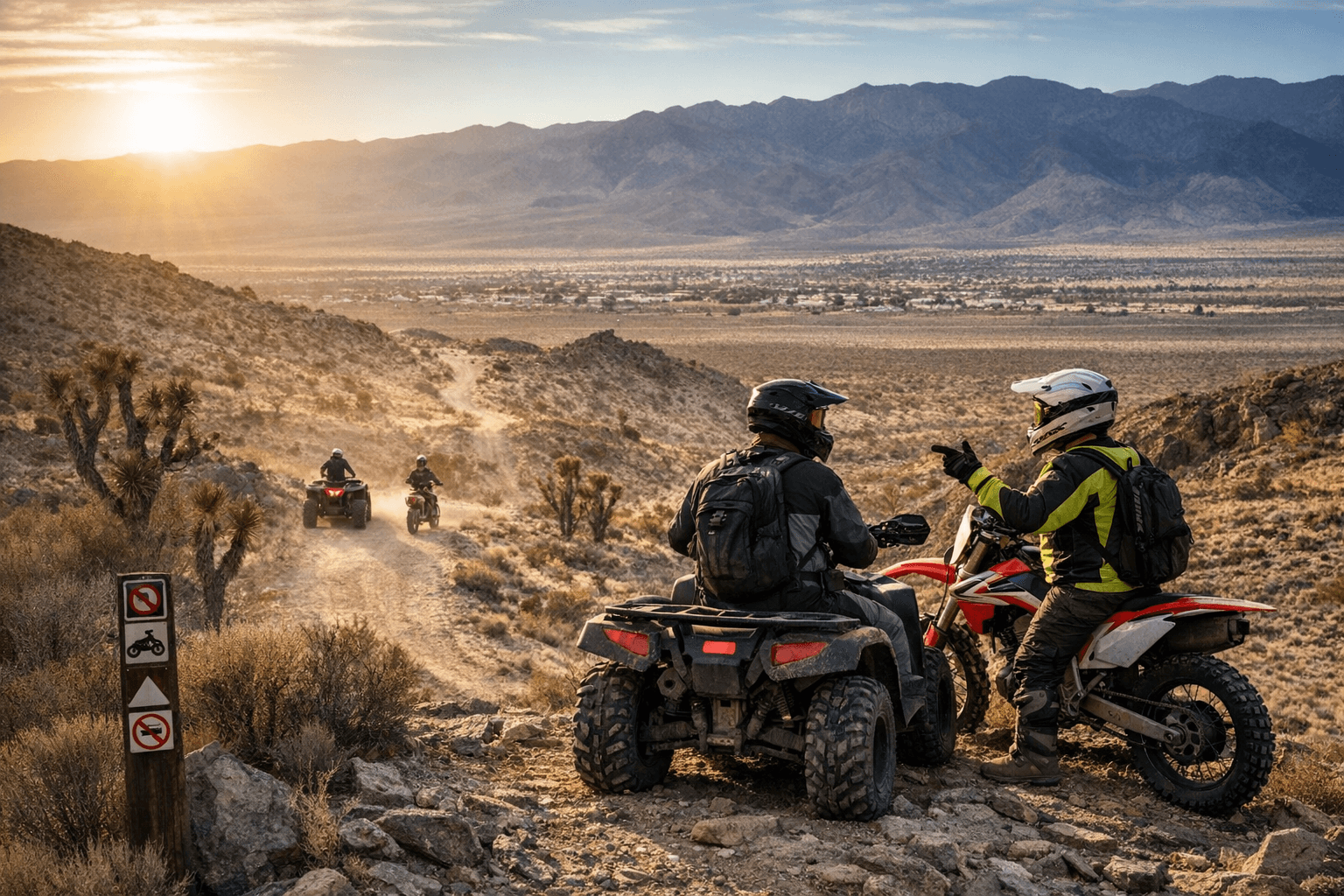
Responsible riding in Nye County's desert public lands isn't just about following the law; it's about keeping access open for future riders. Land managers have closed OHV areas in Nevada before, and the reasons typically involve documented resource damage or persistent violations. Protecting that access starts with individual behavior.
Stay on designated routes in route-specific areas. Cutting new lines across open desert, even to avoid an obstacle, widens disturbance footprints and can trigger erosion in desert washes that affects the trail for years. Avoid disturbing wildlife, particularly during spring nesting seasons when desert tortoise and migratory bird activity increases across the Pahrump Valley region.
When passing other trail users, including hikers, equestrians, or slower OHV riders, reduce speed and give wide berth. Dust and noise affect the experience of everyone sharing the terrain, and courtesy goes a long way toward keeping multi-use designations intact.
Camping With Your OHV
Dispersed camping on BLM land near Pahrump is permitted in most areas without a fee, provided you follow Leave No Trace principles and observe any posted restrictions. The general rule is to camp at least 200 feet from water sources, roads, and trail edges. Fire restrictions in Nye County fluctuate seasonally and are enforced; check current restrictions through the BLM Southern Nevada District before building any campfire.
Pack out everything you pack in. OHV staging areas near Pahrump have faced trash accumulation problems in the past, and land managers monitor these sites. Leaving behind fuel containers, food waste, or camping debris is a citation risk and directly threatens continued access for the broader riding community.
Before You Go: Practical Checklist
A few logistics worth confirming before any ride in the Pahrump area:
- Verify your OHV registration is current with the Nevada DMV
- Download or print the relevant BLM surface management map for your riding zone
- Check current fire and travel restrictions through the BLM Southern Nevada District office
- File a float plan with a trusted contact that includes your vehicle description, intended route, and return window
- Fuel up in Pahrump; remote fuel sources are scarce once you're beyond the valley
The riding country around Pahrump rewards preparation. Riders who invest thirty minutes in logistics before leaving the pavement consistently have better, safer days in Nye County's desert than those who improvise once they're out there.
This article was produced by Prism’s automated news system from verified source data, official records, and press releases, then run through automated quality and moderation checks before publishing. The system is built and supervised by the people who set the standards it runs under. Read our full AI policy.
Did this article answer your question?