Pahrump bumblebee survey calls on volunteers to fill data gap
Pahrump sits in a high-priority survey cell, and scientists need at least two local bee counts to close a major data gap.
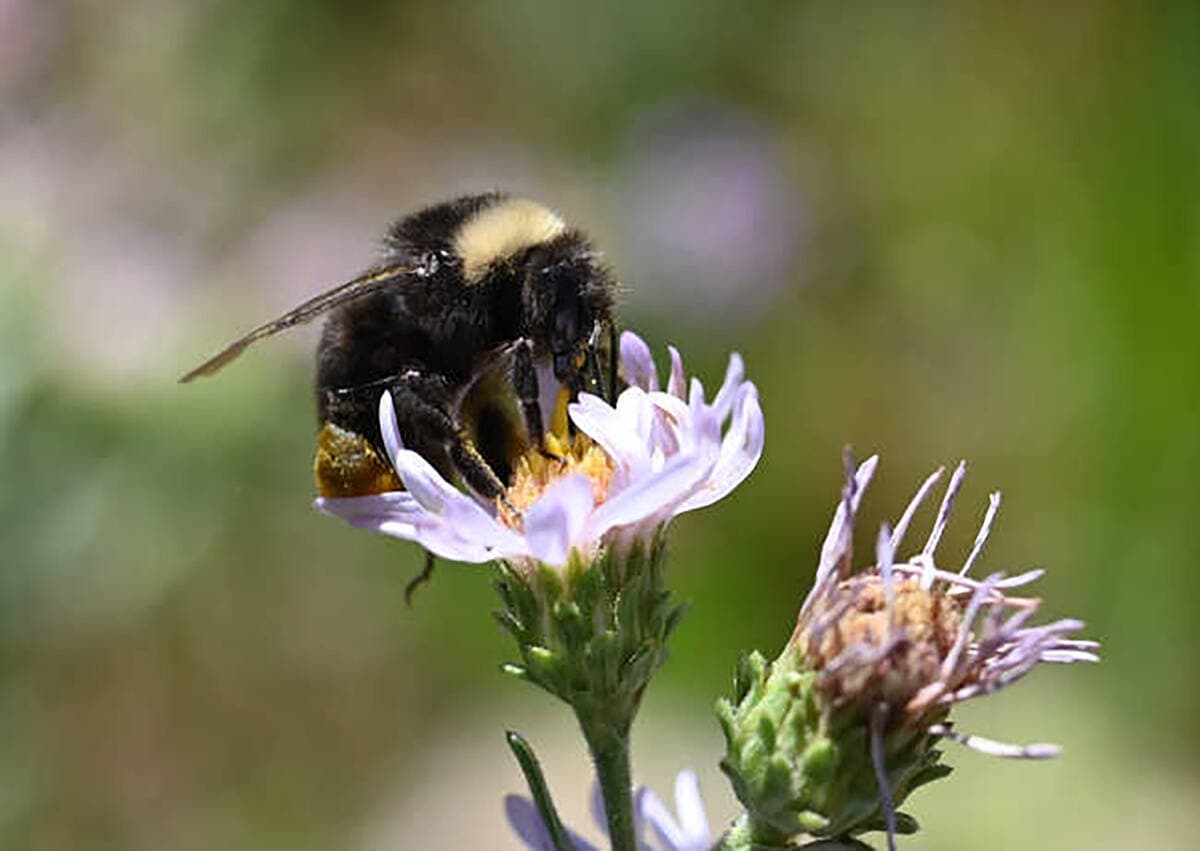
A single missing survey can leave Pahrump’s bumblebee picture blurry, and that gap matters for more than insects. Scientists still need basic local answers about where bees are showing up, which flowers they use and how they are faring across southern Nye County’s gardens, small farms and desert habitats.
Why Pahrump is on the map
The Mountain States Bumble Bee Atlas has flagged the Pahrump grid cell as high priority, and it needs at least two surveys. That makes local volunteers unusually important, because the area is not just another stop on a regional checklist. It is a place where researchers still do not have enough information to tell a clear story about bumblebee abundance and habitat use.
That information gap has practical consequences. In a place like Pahrump, where water, heat and development already shape what can grow, bumblebee data can help show whether gardens and small agricultural plots are still providing the flowers pollinators need. It can also help reveal how desert habitats are changing around roadsides, shrublands and other everyday landscapes that people see but scientists have not fully documented.
What the atlas is trying to learn
The atlas is a community science project run through the Xerces Society for Invertebrate Conservation. Launched in 2018, the broader Bumble Bee Atlas was created to track where bumble bees live and which habitats they use, so conservation groups and land managers can spot declines before they become harder to reverse.
The Mountain States effort covers Colorado, Utah, Wyoming and Nevada. Xerces says the expansion was designed to fill a key data gap in a region that includes many at-risk species, and that the volunteer-collected information helps inform conservation actions. That matters in Nevada, where the state has historically been understudied in biology, leaving wildlife managers with fewer baseline records than they have for better-sampled places.
The species list also helps explain the urgency. Xerces identifies the western bumblebee, the Morrison bumblebee and the Sonoran bumblebee among species of concern. Morrison’s bumblebee is especially troubling: Xerces says it has declined in relative abundance by 74% in recent years, and Colorado Parks and Wildlife says declines of about 74% began in the 1990s. Xerces also says more research is needed on Morrison bumblebee status in western Nevada, which is exactly the kind of uncertainty the Pahrump surveys can help reduce.
The western bumblebee adds another layer of complexity. Xerces notes that the species has multiple color variants, and some scientists still debate its classification. Colorado Parks and Wildlife says it occupies a wide range of habitats, including meadows, grasslands, roadsides, shrublands, agricultural fields, urban areas and forests. That broad footprint is one reason local sightings matter: a bee seen in a roadside wash or a backyard garden may help fill in a map that is still incomplete.
How residents can contribute data
The survey process is designed to be accessible to people who are willing to learn the method and follow it carefully. Xerces and Bureau of Land Management training events teach volunteers to net bees, photograph them, release them and complete data sheets. Images are then uploaded so specialists can identify the bees and add the observations to the broader record.
A simple volunteer workflow looks like this:
1. Sign up for Mountain States Bumble Bee Atlas training.
2. Learn how to safely net a bee, move it to a vial, take clear photographs and release it.
3. Record the date, location and habitat details on the data sheet.
4. Upload the images and observations so experts can review them.
The payoff is not small. Xerces says Bumble Bee Atlas projects produced nearly 21,000 observations from 20 states in 2024, along with more than 7,800 incidental sightings through Bumble Bee Watch. That scale shows how individual volunteers, working in ordinary places, can generate records that would otherwise take agencies years to assemble.
Amy Dolan, who joined Xerces in June 2024 to coordinate the Mountain States Bumble Bee Atlas in Colorado, Nevada, Utah and Wyoming, represents how seriously the program treats the region. This is not a casual nature walk project. It is a structured effort to turn local sightings into usable science, especially in places where the record is thin.
Why the data matters for Nye County decisions
The local stakes reach beyond species lists. The Bureau of Land Management says 67% of Nevada, or 48 million acres, is public land, and much of the habitat in and around Pahrump falls within a landscape shaped by federal management, permits and access rules. The BLM Pahrump Field Office is the place residents can go with questions about permits, regulations, access and ways to get involved.
That connection matters because the BLM’s threatened-and-endangered species program emphasizes maintaining functioning ecosystems and restoring habitat. Pollinator surveys can help land managers decide where habitat is holding up, where restoration may be needed and how future land use decisions could affect sensitive species. In plain terms, a volunteer’s bee photo today can help shape habitat decisions tomorrow.
For Nye County, the immediate question is not whether bumblebees matter in the abstract. It is whether the county will have enough local evidence to understand what is happening in Pahrump before habitat pressures, heat and drought narrow the options further. A high-priority grid cell with at least two surveys still waiting is a sign that the record is incomplete, and that community reporting may be the fastest way to close it.
This article was produced by Prism’s automated news system from verified source data, official records, and press releases, then run through automated quality and moderation checks before publishing. The system is built and supervised by the people who set the standards it runs under. Read our full AI policy.
Know something we missed? Have a correction or additional information?
Submit a Tip