Pahrump garden tour showcases lush, water-wise desert landscapes
Six Pahrump yards will open for a self-guided tour that shows how lush, water-wise desert landscaping can look at home. Visitors will see practical ideas they can copy in their own yards.
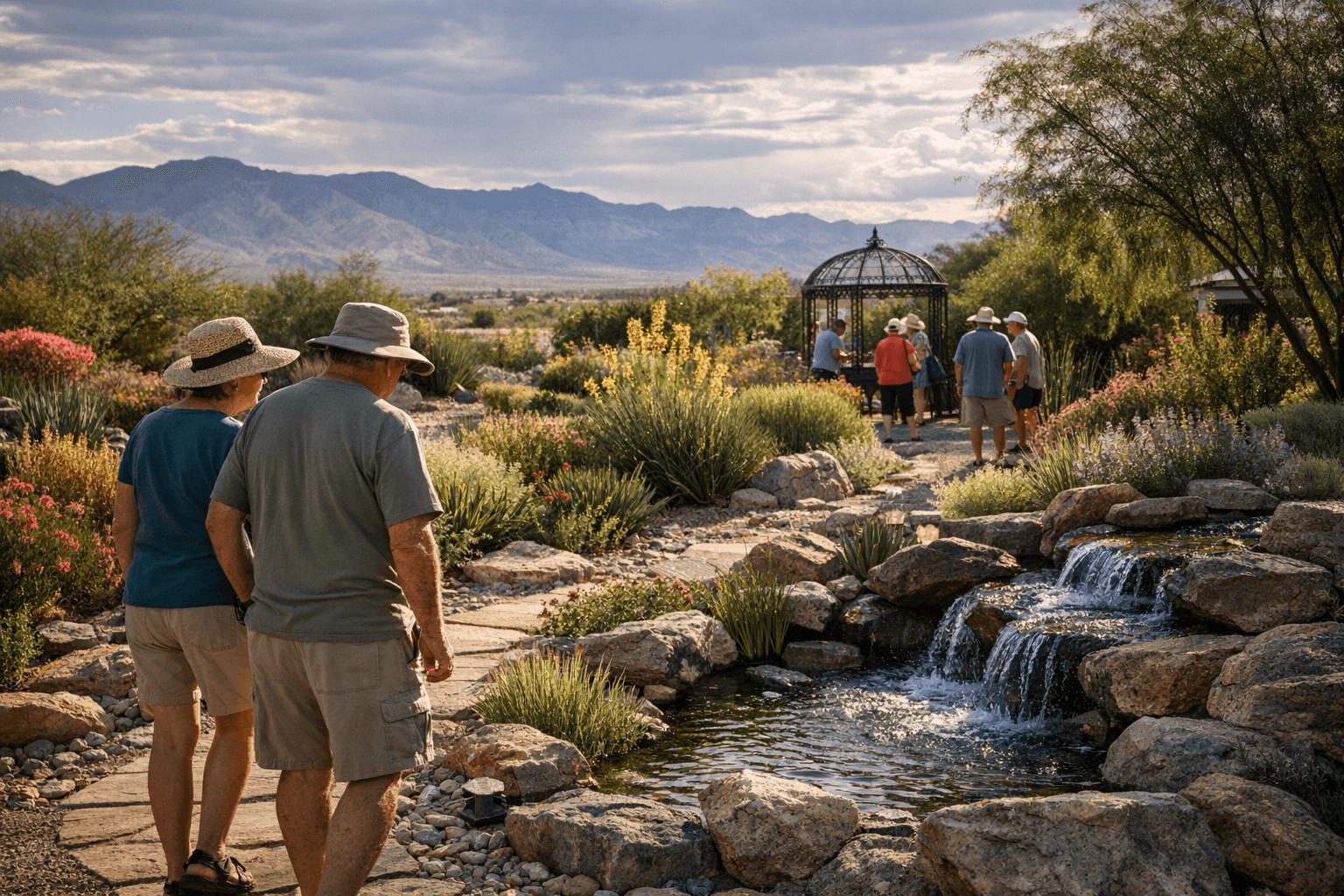
What the tour puts on display
Pahrump homeowners looking for a real-world model of a lush desert yard will get six of them on display when the Pahrump Valley Garden Club stages its 18th Annual Self-Guided Landscape Tour on Saturday, May 9, from 8 a.m. to noon. The route includes five local properties and the UNR Cooperative Extension Demonstration Garden, turning one morning into a practical lesson on what can grow, and thrive, in Nye County when plant choice, water use and layout all work together.
The club’s message is straightforward: a desert climate does not have to produce a sparse yard. Pahrump still has plenty of plant potential, and the tour is built to show how residents can use trees, flowers, shrubs, cacti, vegetables and fruits to create outdoor spaces that feel full, lived in and distinctive. Yard art and structural features also play a role, giving each landscape a personality that goes beyond plants alone.
Two of the featured properties were designed and built by the homeowners, which makes the tour especially useful for anyone wondering what a yard can look like without a landscape architect or a huge blank check. The six stops are intentionally different, so visitors can compare approaches rather than see one repeat pattern from house to house.
Because the event is self-guided, attendees can move at their own pace and follow site signs to each stop. That setup matters for a tour like this, because the most useful takeaway is not a single perfect yard. It is the ability to pause, study details and leave with ideas that can be adapted to a front yard, side yard or back patio at home.
What to look for at each stop
The best way to use the tour is to pay attention to how each property balances beauty with survival in a dry climate. Some yards will be more plant-heavy, while others may lean on structure, path layout or decorative elements to create a finished look. The common thread is not excess water. It is smart choices.
Practical ideas to watch for
- How shade is created without turning the yard into a water-hungry lawn.
- How shrubs, cacti and flowering plants are grouped so they look intentional.
- How edible plants, including vegetables and fruits, are tucked into a landscape that still feels attractive.
- How yard art and structural features break up open space and give a property identity.
- How the overall design keeps maintenance manageable in a hot, arid environment.
That mix is the tour’s real value. It shows that “water-wise” does not have to mean plain, and that a desert yard can still feel welcoming from the sidewalk.
The demonstration garden is the most instructional stop
The UNR Cooperative Extension Demonstration Garden is one of the tour’s biggest draws because it adds a public, instructional piece to the private homes. The garden is free and open to the public, and it is maintained by Master Gardener volunteers. It features landscape and fruit trees, shrubs, Mojave Desert-suitable plants and seasonal vegetable beds, all of which give local residents a chance to see what can be grown successfully for a household, not just for display.
For anyone trying to decide whether to add more shade, try vegetables or swap out thirsty turf, that garden offers a useful, local answer. It is not a theory piece. It is a living example of what works in Pahrump’s climate when the right plants are matched with the right care.
That practical focus is one reason the tour has endured. It is part inspiration, part demonstration and part neighborhood guidebook. Visitors can see how color, texture and structure can be built into a yard without fighting the reality of desert water demands.
Why water use is part of the landscape story
The tour also fits into a bigger Southern Nevada conversation about water. The Southern Nevada Water Authority says outdoor landscape watering is the biggest use of the community’s water supply, which is why grass removal and desert landscaping remain so closely watched across the region. The authority’s Water Smart Landscapes Rebate is one tool available to homeowners who want to convert grass to desert landscaping.
That context gives the landscape tour an economic edge, not just an aesthetic one. A well-designed desert yard can help reduce irrigation demand while still improving curb appeal, adding shade and making a property feel cared for. In a place like Pahrump, where every gallon matters, the most attractive landscape may also be the most efficient one.
For local homeowners, the lesson is not to copy a single formula. It is to see how different yards handle the same climate with different combinations of plants, hardscape and maintenance. Some will lean into cacti and drought-tolerant shrubs. Others will show how trees, flowers and vegetables can still fit into a desert setting when they are chosen carefully and maintained the right way.
A club with a long local footprint
The Landscape Tour has been part of the Pahrump Valley Garden Club’s work since at least 2007, when it was suggested as a new club activity. Over time it has grown into both a showcase and a fundraiser. Earlier proceeds and dues have supported club projects, a scholarship program through Nevada Garden Clubs, Inc., and local donations such as a $500 gift to the Floyd Elementary School garden.
The turnout has also climbed. The 2023 tour drew about 150 patrons, while the 2025 event brought an estimated 240 people, the largest turnout noted in that coverage. That growth suggests residents are not just curious about pretty yards. They want ideas they can use.
The club’s beautification work reaches beyond the tour. It maintains the cactus garden and cotton patch at the Pahrump Valley Museum, and the museum grounds garden is part of the club’s wider presence in town. Monthly meetings are held the second Saturday of the month at 10 a.m. at the Pahrump Valley Museum, except in May because of the landscape tour.
Tickets for the tour are available through three local businesses, and the club can be reached at 775-537-7553. Sandy Nelson, the club secretary, said preparations are going well, and the event is meant to give visitors inspiration they can carry back to their own properties.
For Pahrump, that is the point. The best desert yard is not the one that fights the climate. It is the one that works with it, using water wisely, creating shade where it matters and still looking like a place people want to come home to.
This article was produced by Prism’s automated news system from verified source data, official records, and press releases, then run through automated quality and moderation checks before publishing. The system is built and supervised by the people who set the standards it runs under. Read our full AI policy.
Did this article answer your question?