Pahrump Resident Warns Others Escaping Las Vegas After Neighborhood Homes Sink
A Pahrump homeowner says several properties in her neighborhood are sinking due to unstable "puff dirt," raising concerns for buyers fleeing higher Las Vegas prices.
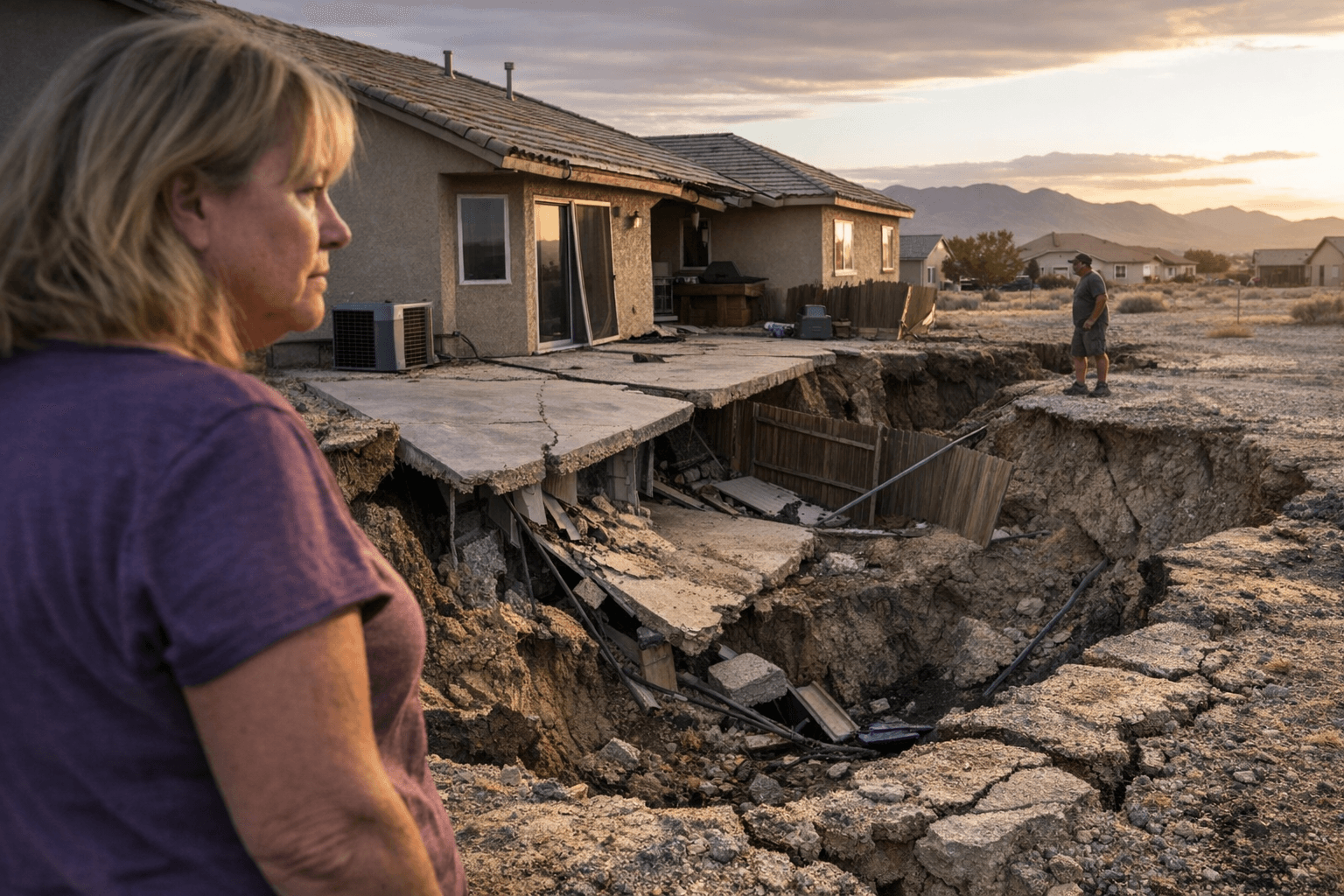
Kathy Magee moved to Pahrump seeking relief from rising Las Vegas home costs, but she found more than small-town charm. Magee discovered cracks in her patio, doors catching on carpeting, and a slipped chain link fence, and she pointed to an abandoned concrete foundation about 100 feet from her lot that appears to have sunk. Soil investigators and home inspectors have confirmed a localized sinking condition tied to a powdery soil known locally as puff dirt, which engineers say shifts and compacts when wetted.
The problem has drawn attention because many buyers have been leaving the Las Vegas valley as median single-family home prices there crested $300,000 for the first time in a decade. Pahrump’s MLS median for single-family homes was $236,477, making the town an attractive, lower-cost alternative. Magee said the town felt welcoming when she moved in: "It's a cute little town, everyone is so friendly." She also said the discovery of structural issues prompted further investigation: "Once I moved in and things started to happen, I realized I needed to really do some research." Magee has filed complaints with the Nevada Attorney General and the Nevada Real Estate Division and described her situation bluntly: "I'm in a home that I feel I cannot sell."
Nye County officials and soil experts have identified a rough zone of concern bounded by Highway 160 to the north, Homestead to the east, Deer Skin to the south, and Dandelion Street to the west. Dan Schinhofen, vice chairman of the Nye County Commission, said the soils in that zone contain puff dirt: "There were some homes sinking, but the areas that we are referring to have puff dirt." Local estimates suggest the condition has affected up to 100 homes, and several neighbors have spent thousands of dollars shoring up foundations and repairs.
The issue highlights a policy and market fault line. County building codes enacted in the late 1990s and tightened a few years later now require thicker, reinforced foundation pads and gravel layers under construction to limit water intrusion and settlement. Homes built before 2001, like Magee’s, were not subject to those modern requirements, leaving older properties exposed to geotechnical risk. Schinhofen urged caution in the marketplace: "First off, buyer beware. Make sure you have a reputable real estate agent and they disclose everything to you."
For local buyers and sellers, the economic implications are concrete. A cluster of properties with known soil instability can depress resale values, increase insurance and remediation costs, and slow real estate turnover precisely as Pahrump experiences a population and construction boom. Prospective buyers should confirm a property's build year and foundation details, obtain targeted soil or geotechnical testing, and work with agents familiar with Nye County disclosure histories. County officials may face pressure to map affected tracts and consider inspection or disclosure requirements as demand from Las Vegas-area buyers remains strong.
The story is a reminder that lower sticker prices do not eliminate site-specific risk. For Pahrump residents and those considering a move from the Las Vegas valley, the next steps will be technical: soil testing, clearer disclosures, and potentially coordinated county action to identify at-risk neighborhoods and limit future losses.
This article was produced by Prism’s automated news system from verified source data, official records, and press releases, then run through automated quality and moderation checks before publishing. The system is built and supervised by the people who set the standards it runs under. Read our full AI policy.
Did this article answer your question?