Pahrump Valley Museum expands to preserve Nye County history
Pahrump Valley Museum is adding 4,500 square feet, giving Nye County more room to see the artifacts, photos and documents that explain the valley’s past.

The Pahrump Valley Museum is adding 4,500 square feet to its existing 5,000 square feet of exhibit space, a visible sign that Nye County is making room for its own history even as the valley keeps growing. At 401 E Basin Ave, the free, donation-supported museum gives residents, school groups and travelers a place to see how Pahrump took shape. For families trying to understand the community they now call home, it is one of the clearest places to start.
Why the museum matters to Pahrump now
The museum is more than a collection of old objects. It is a public record of how the town and the wider county developed, and it gives people a way to see that story instead of only reading about it in files or watching it recede into memory. That matters in a place where new residents arrive regularly and where the pressures of growth can make local identity feel harder to pin down.
The Pahrump Historical Society says its mission is to collect, preserve and study the objects, photographs, crafts and documents that tell the story of the people and landscape of the area. That mission makes the museum a civic tool as much as a cultural one. When a community is changing, the ability to point to concrete evidence of where it came from helps anchor conversations about where it is going.
What is inside the collection
The collection ranges from Native American artifacts to pioneer relics, which gives the museum a broad view of life in the valley across different eras. Those kinds of items do more than decorate a display case. They help explain the layered history of the land, the movement of people through the desert, and the daily realities that shaped settlement in Nye County.
That range is especially useful for new residents and families who want more than a quick overview of the town. Native American artifacts connect visitors to the deeper history of the region, while pioneer relics point to the hard, practical work of building a life in an arid landscape. Together, those exhibits show why Pahrump’s identity is tied to settlement, ranching, desert life and a long frontier past.
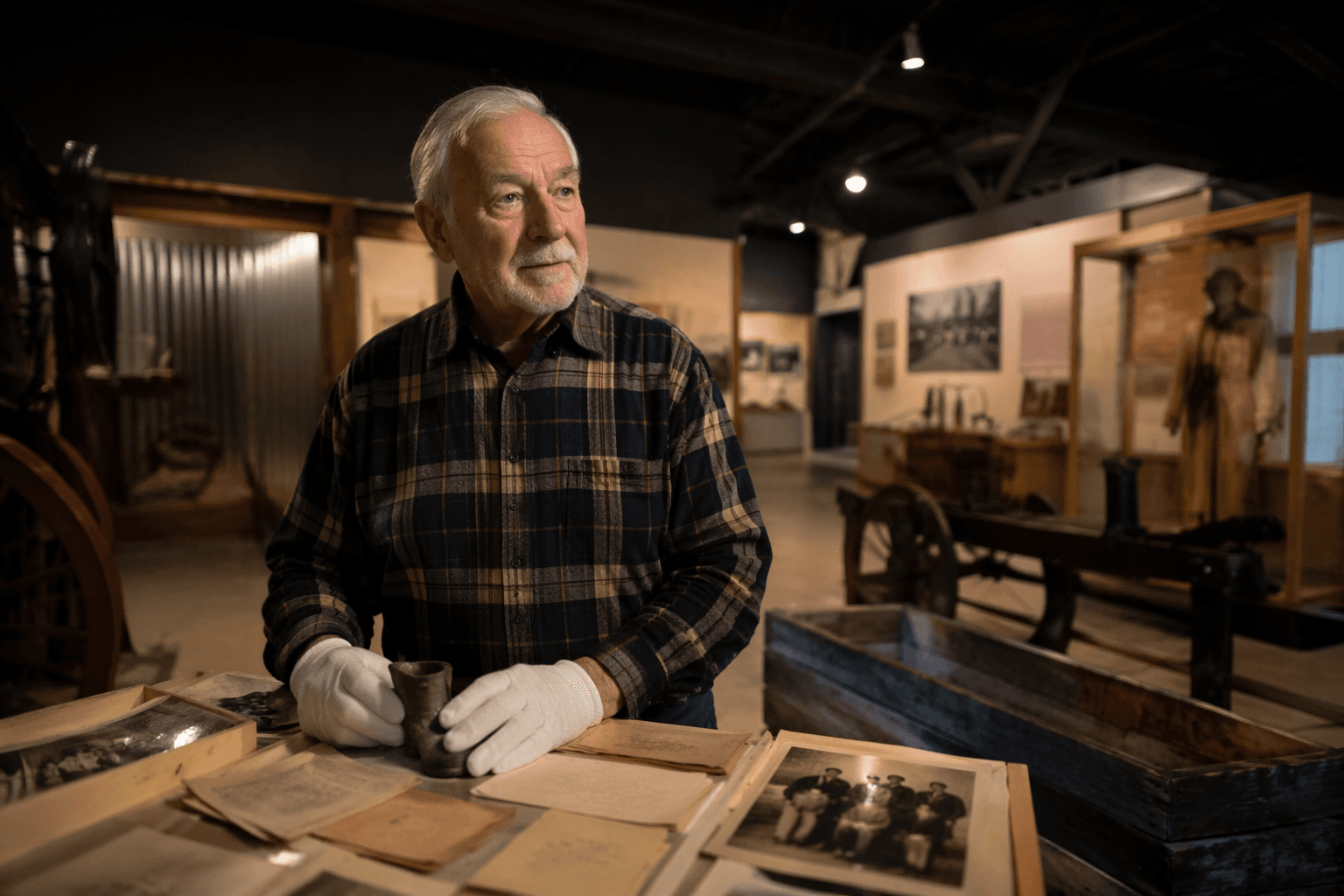
The historical society behind the museum was founded in 1991 by Harry “Button” Ford and Charles Gallivan. That founding date is part of the museum’s own story, showing that preserving the county’s memory has been an organized local effort for decades, not a recent trend. The institution exists because residents decided the valley’s history was worth saving in public view.
What the expansion will change
The current expansion is significant because it nearly doubles the museum’s footprint. Adding 4,500 square feet to an existing 5,000 square feet of exhibit space gives the museum room to grow beyond a static display model. More space can mean more artifacts on view, more room for interpretation and more flexibility for educational programming.
That added capacity also matters for schools and families. A larger museum can support more visits and create a better setting for learning about local history in a way that feels immediate and tangible. In a county where the next generation will inherit the consequences of today’s decisions about growth, land use and community character, that kind of learning has practical value.
The expansion also reflects a larger reality in Pahrump: history is not separate from current life. As the valley develops, the museum becomes a place to keep older stories visible while the built environment changes around them. The more the community grows, the more important it becomes to preserve the records of how it began.
When to go and what to expect
The museum is open Tuesday through Saturday from 9 a.m. to 5 p.m., which makes it an easy daytime stop for residents, school groups and visitors passing through the valley. Those hours are practical for locals who want to fit a visit into a weekday outing, a family errand or a school day. The free-admission model also makes it one of the most accessible cultural stops in rural Nye County.
That no-cost entry is not a small detail. In a county where families are careful about expenses and where low-cost options matter, the museum offers an opportunity to learn without a ticket price standing in the way. The donation-supported model also reflects a community-centered approach, with preservation sustained by public goodwill rather than exclusivity.
Visitors coming through Pahrump on the way to Death Valley, Las Vegas or other desert destinations may see the museum as a convenient stop. Locals should see it as something more useful than a waypoint. It is a place where the town’s past is organized into a story that can help explain the present.
A local guide to Nye County memory
For anyone trying to understand why Pahrump looks and debates the way it does today, the museum offers a useful starting point. The artifacts, photographs and documents inside it show a county shaped by adaptation, persistence and life on the desert edge. That perspective matters when communities are deciding how to grow without losing the qualities that made them distinct in the first place.
As the expansion moves forward, the museum is positioned to do more of that work in public. With more space for exhibits, educational programs and school visits, it can help turn Nye County’s history from something stored away into something residents encounter directly. In a fast-changing valley, that may be one of the most valuable public services the town can offer.
This article was produced by Prism’s automated news system from verified source data, official records, and press releases, then run through automated quality and moderation checks before publishing. The system is built and supervised by the people who set the standards it runs under. Read our full AI policy.
Know something we missed? Have a correction or additional information?
Submit a Tip