Round Mountain gold mine remains active, driving Nye County’s economy
Round Mountain still produces gold and still shapes Nye County’s economy. In a town of 1,577, the mine anchors jobs, services and the county’s long mining cycle.
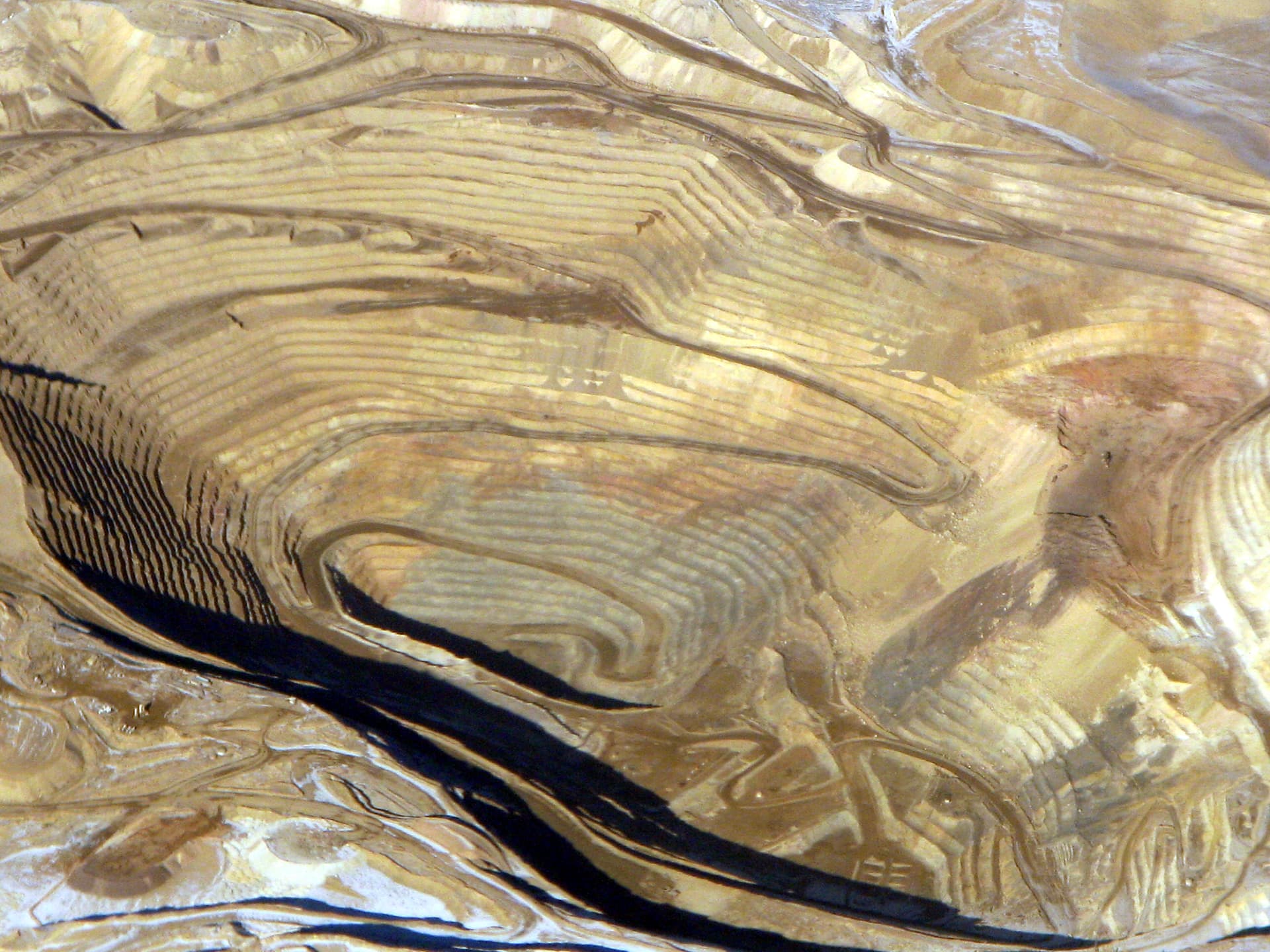
Round Mountain is more than a dot on the map in Smoky Valley. It is a working mining community where the Round Mountain Gold Mine still defines the local economy, the pace of investment and the county’s long-term outlook. In a place this small, an active mine is not background noise. It is the reason the community keeps moving, hiring, drilling and expanding.
A mine with a long life and a new phase
The Round Mountain district first produced gold in 1906, and by 2006 it had reached 10 million ounces poured. Nye County’s community profile adds another marker of how the district kept changing: the mine later expanded with a satellite pit five miles north of the existing operation. That matters because it shows Round Mountain did not peak and fade into memory. It kept adapting as mining technology, reserves and ownership changed.
Kinross Gold Corporation still lists Round Mountain among its Nevada operations, and its most recent public materials show the site is active now, not historical. In 2024, Kinross said mining of Phase S had commenced and that the Phase X exploration decline was approaching target mineralization, with drilling ramping up through the year. By 2026, Kinross said Round Mountain Phase X is one of three new U.S. growth projects expected to contribute about 3 million ounces of life-of-mine production and extend mine lives at its Nevada assets well into the 2030s. For Nye County, that points to a mine that is still being worked as a growth asset rather than managed as a legacy site.
The broader Nevada gold industry adds another layer. Barrick Mining Corporation says Nevada Gold Mines was formed in 2019 as a Barrick-Newmont joint venture and is the world’s largest integrated gold-producing complex. Round Mountain sits inside that larger state mining landscape, which means its future is tied not just to a single pit, but to one of the most important gold systems in the world.
Why Round Mountain is economically different from a typical mining town
Round Mountain’s population was 1,577 in the county’s 2010 Census-based profile, with a median age of 36.7 and a mostly working-age population. That is a small labor market by any standard, which is exactly why the mine matters so much. In a town that size, an operating mine helps sustain payrolls, contractor demand, fuel sales, equipment services, housing needs and day-to-day spending that would not exist if the district were idle.
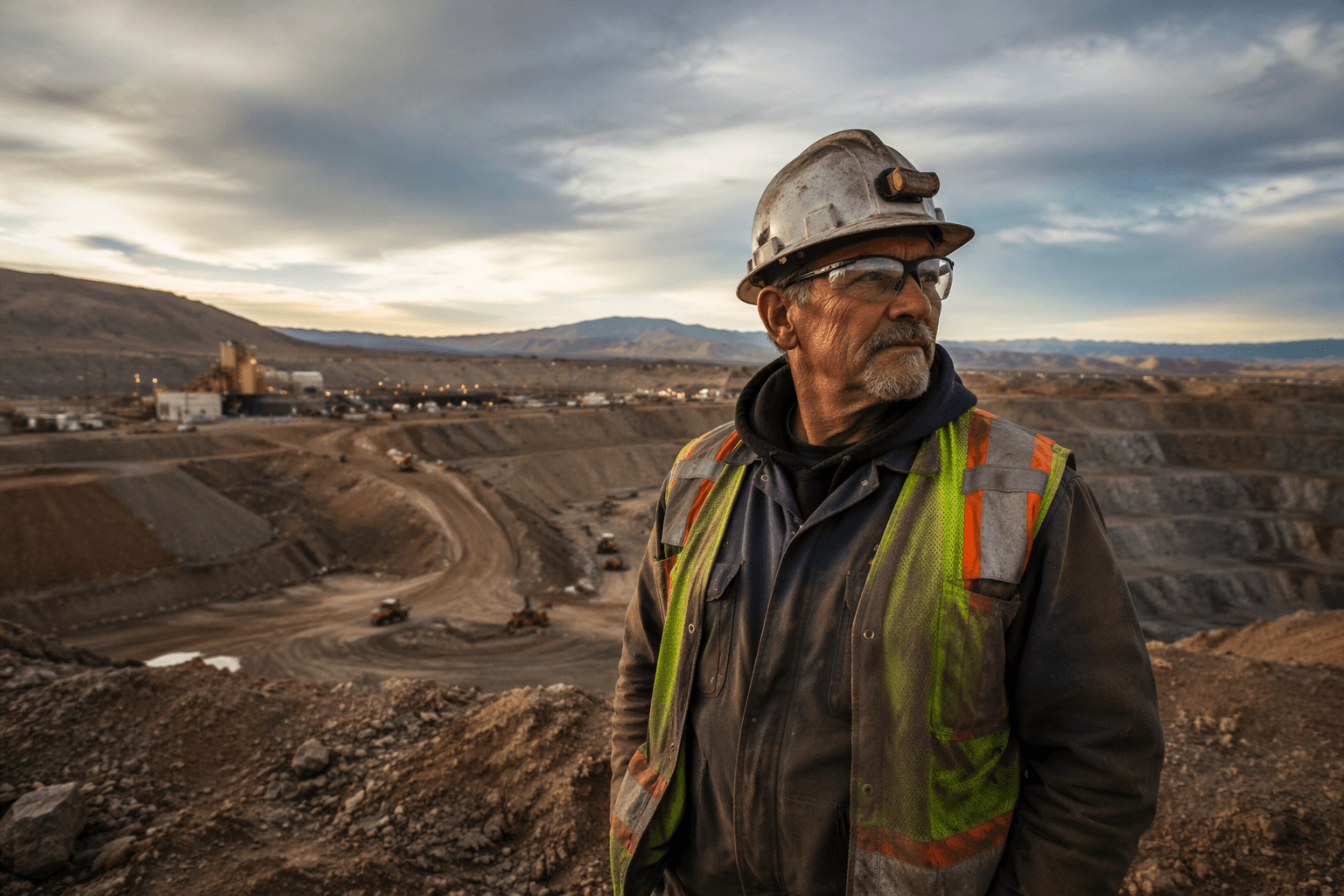
The town’s setting makes that dependence even clearer. Nye County describes Smoky Valley as a long rural corridor with mountains as high as 12,000 feet, plus alfalfa and cattle ranches spread across the valley floor. Round Mountain is not a desert subdivision or a commuter suburb. It is a place where mining, ranch country and open space coexist, and that mix makes the local economy more exposed to shocks in any single sector. When gold is strong and the mine is active, the effects ripple outward into local services and county revenue. When mining slows, a town with this little population cushion feels the change quickly.
That is the central vulnerability of a one-industry community. Round Mountain benefits from the mine’s steady presence, but it also depends on a commodity cycle, a limited labor pool and continued capital spending. Any slowdown in gold prices, permitting, reserve development or exploration momentum could quickly affect activity on the ground. The town’s economic strength is real, but it is concentrated.
The geography behind the economics
Round Mountain’s mining identity also makes sense when viewed through its geology and history. A 1921 U.S. Geological Survey bulletin placed the district on the western flank of the Toquima Range, about 45 miles north of Tonopah, stretching toward Big Smoky Valley. A later 1966 USGS map caption shows Round Mountain as part of a broader mining landscape with Sunnyside and Fairview mines nearby. That history helps explain why the area remained attractive for repeated mining campaigns over more than a century.
The land-use picture matters too. The Bureau of Land Management says 67% of Nevada is public land, and it notes that mining-related actions on public lands move through the NEPA process with public review and comment. For Round Mountain, that means future expansion, exploration or reclamation does not happen in a vacuum. It sits inside a public-lands system where mining, ranching, hunting, fishing and outdoor recreation all compete for the same landscape. That is one reason Round Mountain is a county story, not just a company story.
A small town with functioning civic life
Even with a mine at the center, Round Mountain is still a community with its own civic rhythm. The Round Mountain Town Board meets on the second and fourth Tuesdays each month at the Daniel R. Sweeney Public Safety Building. County materials also place Round Mountain contact information at 101 Radar Road and list a town hall location at 100 Hadley Circle in the Hadley Subdivision. Those are small details, but they matter because they show the town has an operating public identity, not just an industrial address.
The county profile also notes camping, hiking, fishing, hunting and golf among the local recreation options. That combination of civic structure, outdoor access and mine activity is what makes Round Mountain distinct inside Nye County. It is a high-desert community with a live industrial base, a functioning town board and a geography that still shapes daily life.
Why Nye County should keep watching Round Mountain
Round Mountain’s importance goes well beyond the pit edge. It helps keep a small town economically viable, supports work for residents and contractors, and gives Nye County a continuing industrial base in a remote part of the county. Its long production record, from the 1906 first gold to the 10 million-ounce milestone in 2006, shows how deep the district runs. Its current Phase S and Phase X work shows the district is still generating new investment.
That combination is what makes Round Mountain different from a story about old mining heritage. It is a live economic engine, and in a county shaped by distance, public land and thin population, that still matters every day.
This article was produced by Prism’s automated news system from verified source data, official records, and press releases, then run through automated quality and moderation checks before publishing. The system is built and supervised by the people who set the standards it runs under. Read our full AI policy.
Did this article answer your question?