Stranded Loon Rescued From Pahrump Park Lake, Relocated to Deeper Water
Diane Bedell photographed a Common Loon stranded at Calvada Eye Park; the bird needed up to 600 feet of open water to take off, and the small pond fell far short.
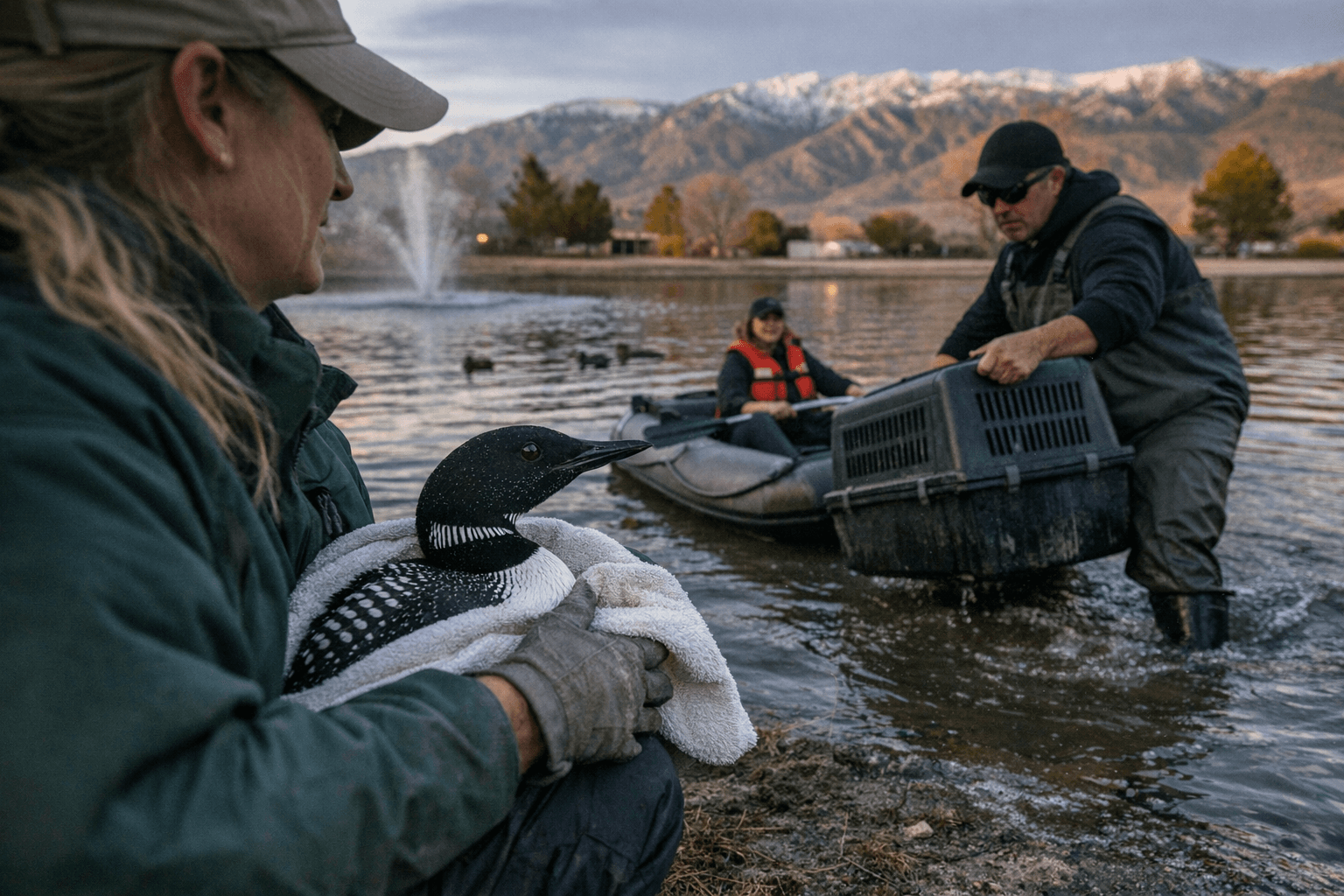
When Diane Bedell photographed a Common Loon floating in the small lake at Calvada Eye Park, the bird was not resting. It was stuck.
The loon, a species built for broad northern lakes and open coastal bays, had almost certainly touched down during spring migration, drawn by the glint of water visible from altitude. But the Pahrump park pond offered no way out. Common Loons require up to 600 feet of open water surface to build the running start their dense, heavy bodies need for liftoff; the Adirondack Center for Loon Conservation puts the typical requirement at roughly a quarter mile. Calvada Eye Park's lake is nowhere close to either figure.
Rescuers relocated the bird to deeper water where it had sufficient room to run the surface and take flight. Bedell captured the grounded loon on camera before the rescue.
A loon appearing in a Pahrump park is a sharp mismatch of habitat. The species migrates through Nevada but is most reliably sighted at large open-water stopover sites such as Walker Lake in Mineral County. In Pahrump, a desert community in Nye County, open freshwater is scarce, and Calvada Eye Park — 33 acres of grassland and walking trails along Calvada Boulevard — is defined far more by its lawn than by any sizable body of water. To a loon cruising at altitude, however, any glint of open water can trigger a landing attempt, and the outcome on a pond this size is predictable.
Once down on insufficient water, the bird had no further options. Loons are functionally helpless on land, their legs positioned so far back on their bodies that walking is nearly impossible, leaving them vulnerable to predators, heat, and injury until help arrived.
If you spot a grounded waterbird at a park or on a street in Pahrump, do not attempt to capture or move it without expert guidance. Loons carry sharp, dagger-like bills and defend themselves aggressively when cornered. The Nevada Department of Wildlife is the appropriate first contact for wildlife emergencies in Nye County. Keep people and pets clear of the bird and maintain distance until a trained responder can assess the situation.
Calvada Eye's ponds were among the features overhauled during county-funded renovations completed in fall 2025, after years in which the site had fallen into disrepair. The improved water features may be more visible to birds crossing the valley during migration. Spring migration peaks across the Mojave in April, and the conditions that grounded this loon will return on the same schedule next year.
This article was produced by Prism’s automated news system from verified source data, official records, and press releases, then run through automated quality and moderation checks before publishing. The system is built and supervised by the people who set the standards it runs under. Read our full AI policy.
Did this article answer your question?