Tonopah quake swarm stirs warnings of larger Walker Lane rupture
A Tonopah swarm has hit a previously unknown fault east of town, and scientists say Walker Lane’s history of M6-plus quakes keeps the risk real.
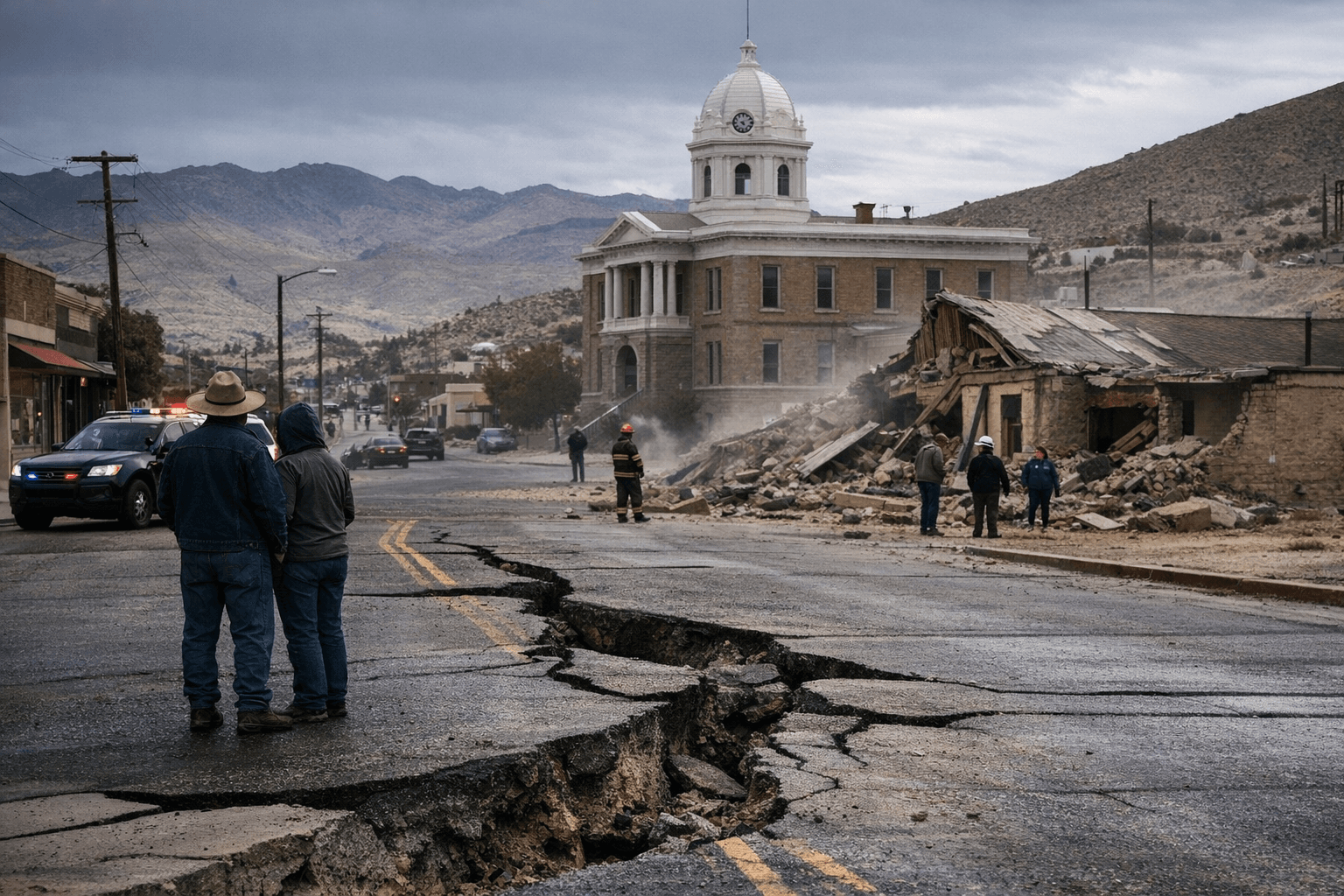
A string of earthquakes near Warm Springs east of Tonopah has put Nye County on alert, not because the swarm is dangerous by itself, but because it is unfolding in the Walker Lane, one of the West’s most active fault systems and a place where a much larger rupture has happened before.
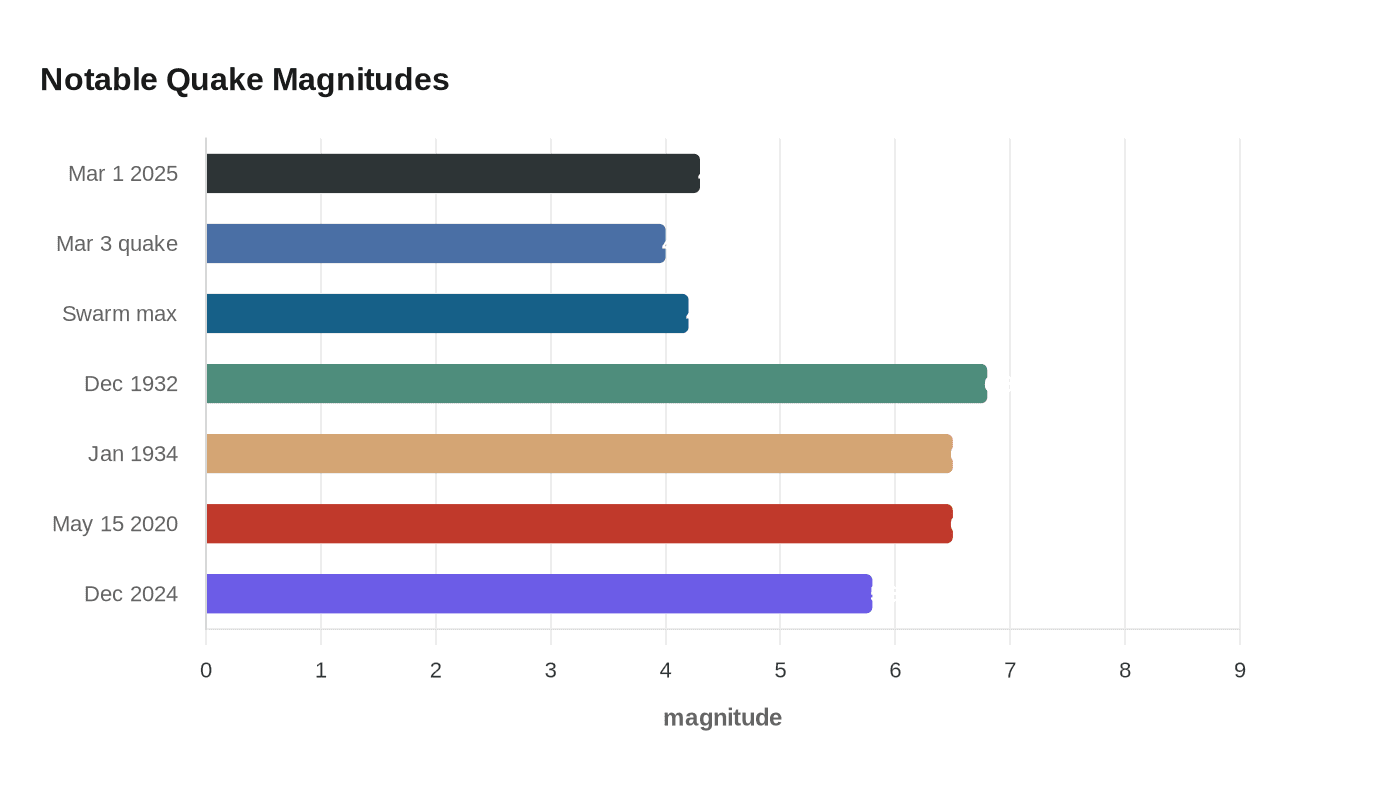
The March 3 sequence included a magnitude 4.0 quake near Tonopah, and the largest event in the swarm so far was magnitude 4.2. Another magnitude 4.3 earthquake was recorded 78 kilometers northeast of Tonopah on March 1 at 16:37:53 UTC, underscoring how persistent the seismic activity has been in central Nevada.
Christie Rowe, director of the Nevada Seismological Laboratory, said the quakes were occurring on a previously unknown fault along the southern edge of the Monitor and Antelope ranges near Warm Springs. The lab is watching the sequence closely, but it does not plan to send in additional temporary sensors unless the activity climbs to around magnitude 5 or higher.
That caution reflects the broader landscape beneath Tonopah. The Walker Lane, which runs along the California-Nevada border region, accommodates up to 25% of the motion between the North America and Pacific plates. In the same region near the 2020 Monte Cristo Range event, the U.S. Geological Survey says two magnitude 6-plus earthquakes struck in the past century, a magnitude 6.8 in December 1932 and a magnitude 6.5 in January 1934.
The most recent major benchmark came on May 15, 2020, when a magnitude 6.5 earthquake near the Monte Cristo Range became the largest quake in Nevada in more than 66 years. It also produced a 28-kilometer surface rupture, a reminder that the state’s quake history is not limited to small tremors.
Nevada seismologists say the current swarm is worth monitoring, but not yet cause for alarm. They point to events such as the magnitude 5.8 earthquake near Yerington in December 2024 as part of the state’s normal seismic cadence, with similar quakes typically coming every eight to 10 years.
The practical takeaway for Tonopah families, schools, mobile homes and older buildings is simple: this is a warning to be ready before the stronger shaking arrives. The Nevada Seismological Laboratory is working as the state moves toward ShakeAlert coverage, and the U.S. Geological Survey says that system can provide alerts seconds before shaking reaches a community. The lab is also urging residents to report shaking through the USGS Did You Feel It? system, since even small quakes help scientists map the faulting more accurately.
This article was produced by Prism’s automated news system from verified source data, official records, and press releases, then run through automated quality and moderation checks before publishing. The system is built and supervised by the people who set the standards it runs under. Read our full AI policy.
Did this article answer your question?