Tonopah Water Reservation Secures Supply for Potential Lithium Project
On Dec. 29, 2025 American Lithium Corp.’s subsidiary Tonopah Lithium Corp. signed a binding Water Reservation Agreement with the Town of Tonopah and Tonopah Public Utilities that reserves roughly 900–1,250 gallons per minute for potential future use. The deal, which includes an initial community payment and infrastructure commitments, could shape local water management, economic development, and long-term planning as hydrology and engineering studies proceed.
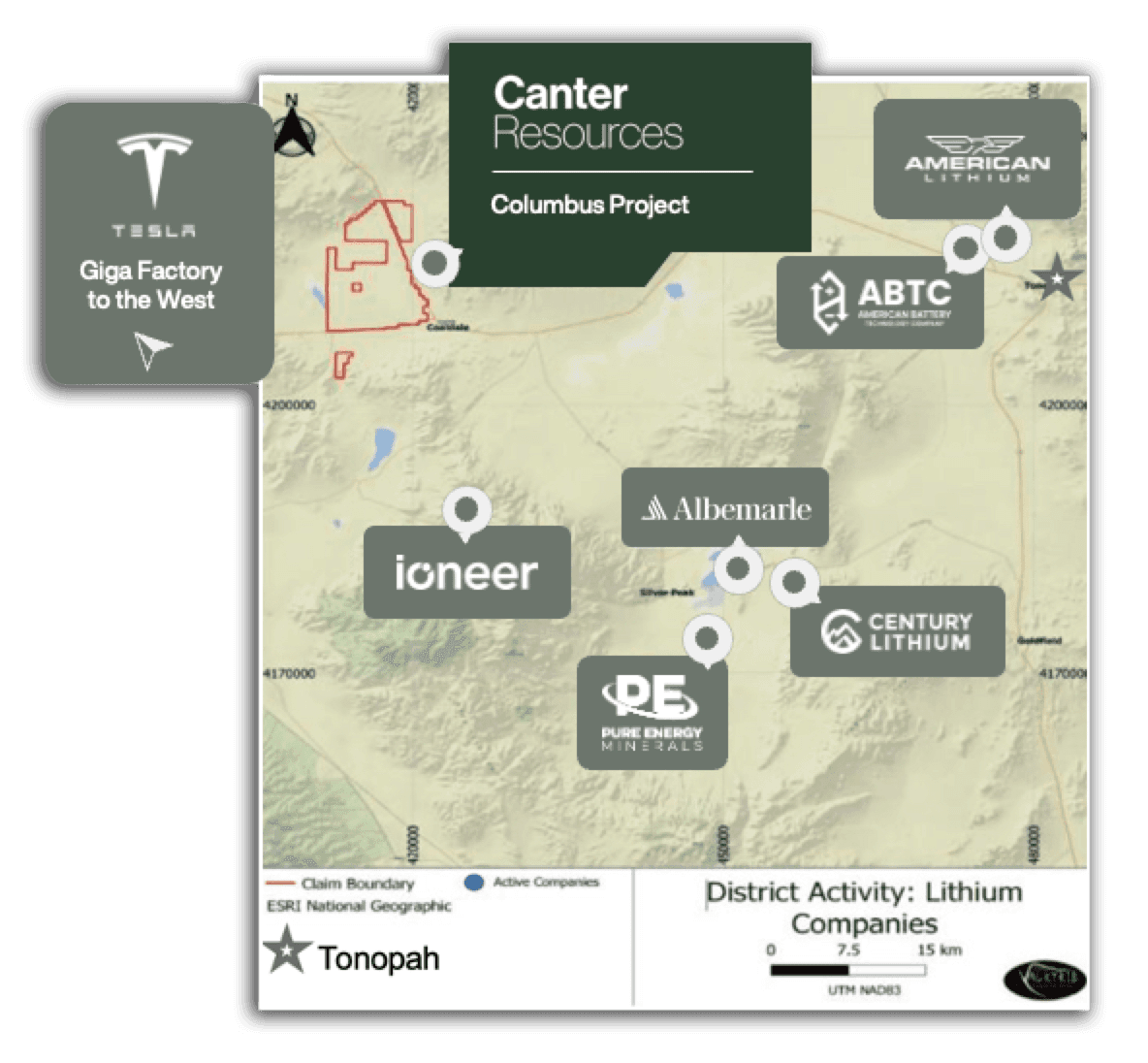
Tonopah Public Utilities agreed to reserve a water supply range of approximately 900 to 1,250 gallons per minute for Tonopah Lithium Corp., under a binding Water Reservation Agreement announced Dec. 29, 2025. The company estimates that reservation equates to roughly 1,450 to 2,000 acre-feet annually, subject to the outcome of hydrology and engineering studies to be funded by the company.
The agreement sets out that Tonopah Lithium Corp. will pay an initial community payment and carry the cost of the technical work needed to determine sustainable availability. If the studies support withdrawal, the company will build delivery improvements - wells, pipelines and storage - and transfer that infrastructure to Tonopah Public Utilities. The reservation is structured as a multi-year arrangement with renewal provisions, and company materials frame it as supporting a phased, scalable plan for lithium production near Tonopah.
For local residents the most immediate implications are twofold: water resource management and potential economic activity. The reserved amount converts to roughly 472 million to 652 million gallons per year; using a common benchmark of 300 gallons per household per day, that is roughly the annual water use equivalent of 4,000 to 6,000 average U.S. households. Those comparisons underline the scale of water under consideration in a semi-arid basin where groundwater is a focal point of community and regulatory concern.

Economically, the agreement signals a readiness by the company to invest in local infrastructure and to provide an upfront community payment, which could bolster municipal finances and create construction and operations activity if the project advances. The infrastructure transfer provision means TPU could gain new assets without fronting initial capital, altering utility balance sheets and future maintenance responsibilities.
Key next steps are the hydrology and engineering studies now funded by Tonopah Lithium Corp., and subsequent permitting and approvals tied to use and construction. Those technical results will determine whether the reservation converts into an active supply contract and when delivery infrastructure would be built. For Tonopah residents and officials, the agreement creates a defined process and timeline for evaluating water availability against economic opportunity, while placing groundwater sustainability and long-term utility planning at the center of community discussions.
Know something we missed? Have a correction or additional information?
Submit a Tip