Tonopah’s Mizpah Hotel tells story of Nevada’s silver boom
The Mizpah Hotel turned Tonopah’s silver rush into lasting tourism, with restored rooms, restaurants and a casino still driving downtown traffic.

The Mizpah Hotel still does what Tonopah needed most in 1908: pull people into downtown. Its stone walls and five stories turn the town’s silver-boom past into a working business asset today, with guest rooms, dining and gaming keeping visitors on Main Street instead of just passing through Nye County.
A boomtown landmark built to impress
Tonopah’s rise began with the Butler silver strike in 1900, when Jim and Belle Butler set off one of the richest mining booms in the West. The Tonopah Historic Mining Park now sits on the ground where those original claims sparked the rush, and by 1921 the National Park Service says Tonopah had produced $121 million in silver. That money changed the scale of the town quickly, and the Mizpah was built to match that ambition.
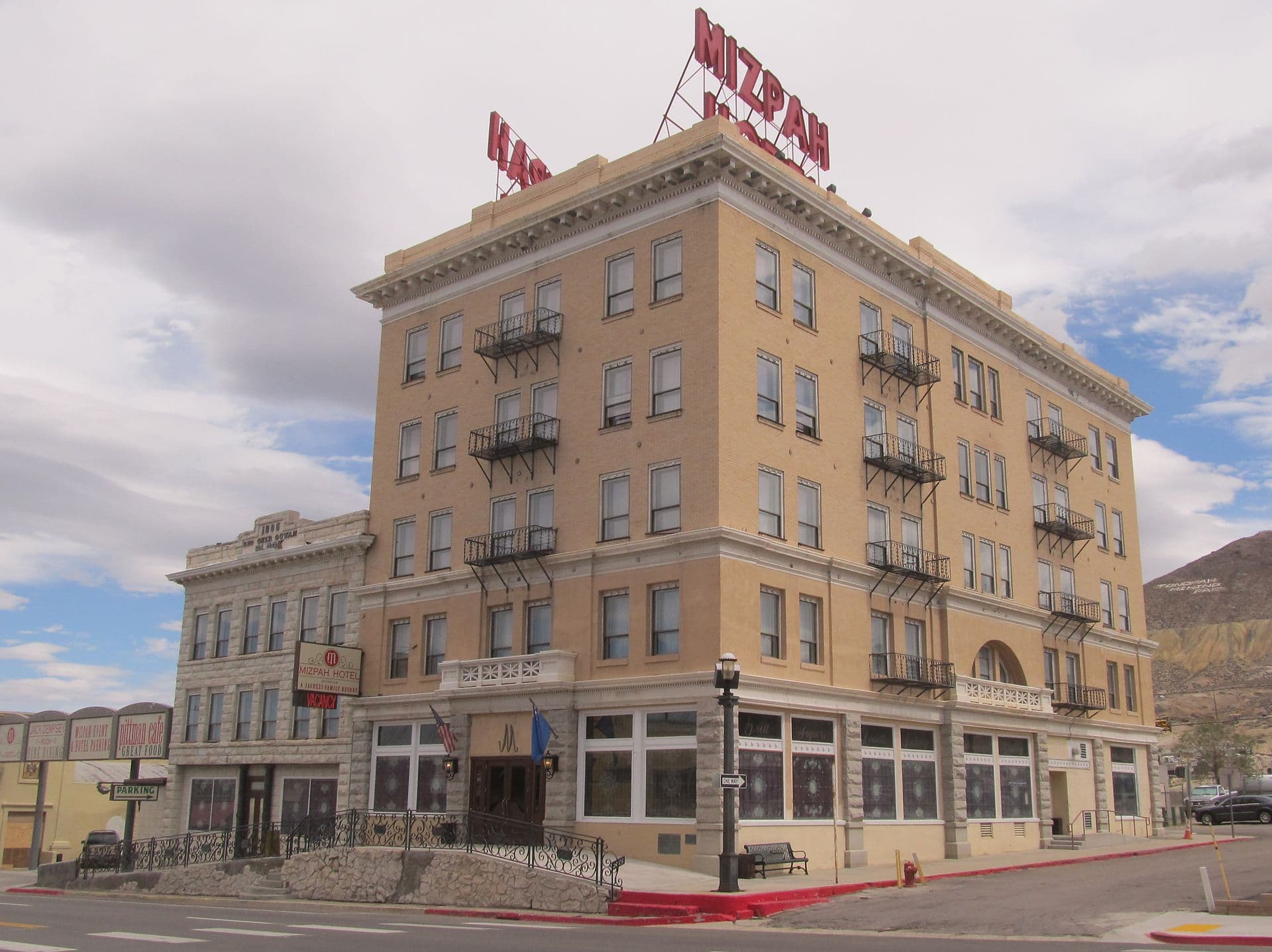
The National Register nomination traces the Mizpah’s earliest form to 1901, when it opened as a saloon and became the first permanent structure in Tonopah. By 1905 it had grown into a three-story hotel, and on November 17, 1908, the five-story version opened at a cost of $200,000. At five stories, it became the tallest building in Nevada, a statement piece in a desert mining town that wanted to look permanent, prosperous and modern.
Designed by Morrin J. Curtis, the hotel was built with solid granite walls, leaded glass windows, solid oak furniture, brass chandeliers, stained glass, steam heat and hot and cold running water. Historic Main Street Tonopah says it also had the first electric elevator west of the Mississippi, a detail that explains why the building drew attention far beyond Tonopah. In a place where most structures were still tied to the rougher edges of mining life, the Mizpah offered comfort, spectacle and status in one address.
Where miners, investors and politicians crossed paths
The Mizpah became more than a place to sleep. It was a social and business center for miners, investors, travelers and the political class moving through central Nevada, and its guest list became part of the building’s legend. The hotel’s history materials say Jack Dempsey is said to have worked there and Wyatt Earp reportedly spent time at the bar, while the National Register nomination names Tasker Oddie among the notable figures linked to the property.
That mix mattered because Tonopah itself was a stop where money, politics and mining interests overlapped. Main Street served as the town’s commercial heart, lined with saloons, hotels and businesses serving men chasing ore and the people financing the rush. The Mizpah sat at the center of that activity, and its architecture still reflects the confidence of a town that believed the silver strike would keep paying out.
For visitors today, those details are not just trivia. They explain why the hotel remains one of Tonopah’s most recognizable economic anchors. The building’s story connects the original boom to the present-day tourism economy, showing how one preserved landmark can carry both historical value and business value at the same time.
Decline, vacancy and a 2011 turnaround
Like Tonopah itself, the Mizpah went through a long downturn after mining weakened. The hotel eventually closed in 1999 and then sat vacant until Fred and Nancy Cline bought it in 2011. Their restoration gave the property a second life, and the hotel reopened in August 2011 after a careful effort to honor the original architecture while adding modern comforts.
That restoration is important because it changed the Mizpah from a fading relic into an operating downtown business. The rebuilt hotel now has 47 guest rooms, and Tonopah tourism materials describe it as having two restaurants and a casino. Clio also notes a bar as part of the restored property. In practical terms, that mix means the hotel does not only preserve history, it also keeps money circulating in town through lodging, meals and entertainment.
The Cline restoration also gave Tonopah a rare kind of asset: a historic property that still functions at commercial scale. In a town of about 2,500 people, a hotel with dozens of rooms is not a side attraction. It helps shape how long travelers stay, where they eat and how they move through downtown. That spending spills over to nearby businesses on and around Main Street, where a preserved landmark can do what a billboard never could, which is make people stop, walk, dine and explore.
Why preservation has economic weight in Tonopah
The Mizpah’s value today is not just that it looks impressive in photographs. Its preservation gives Tonopah a visible identity that ties the silver-boom era to present-day tourism, and that identity matters in a small rural economy where every visitor counts. Western Mining History describes the Mizpah as one of the West’s premier luxury hotels, and that reputation helps Tonopah compete for travelers who want a historic stay rather than a generic roadside room.
The hotel also helps define the kind of trip Tonopah can sell. A visitor who comes for the Mizpah can pair a night in the hotel with time at the Tonopah Historic Mining Park, a walk along Main Street and a stop at nearby historic buildings. That creates a fuller tourism experience than a single attraction would, and it extends the value of the original silver story into today’s economy.
For Nye County, that is the larger lesson of the Mizpah. Preservation is not only about saving a famous façade or keeping a haunted-hotel legend alive. In Tonopah, it has preserved one of the town’s strongest commercial drawcards, supported downtown foot traffic and helped keep the silver-boom identity visible in a place that still carries the imprint of 1900.
This article was produced by Prism’s automated news system from verified source data, official records, and press releases, then run through automated quality and moderation checks before publishing. The system is built and supervised by the people who set the standards it runs under. Read our full AI policy.
Did this article answer your question?