What Nye County Residents Should Know Before Visiting Ash Meadows Refuge
Ash Meadows is a spring‑fed desert oasis near Pahrump with crystal pools, rare endemic species, and limited services, plan fuel, follow Leave No Trace rules, and respect restricted areas like Devils Hole.
1. Quick take: what makes Ash Meadows unique
Ash Meadows National Wildlife Refuge is a spring‑fed wetland complex in the Amargosa Valley near Pahrump, managed by the U.S. Fish & Wildlife Service. Conservation groups call it “a true oasis in the desert” and even the “Galapagos of the desert” because ancient groundwater feeds the pools and supports an extraordinary concentration of plants and animals found nowhere else on Earth.
2. Where it sits and how far you'll drive
The refuge sits in the Amargosa Valley within driving distance for Nye County residents: about 90 miles from Las Vegas, 48 miles from Death Valley’s Furnace Creek Visitor Center, 40 miles from Beatty and Shoshone (CA), and 55 miles from Tecopa (CA). Travel Nevada warns that the nearest gas stations are roughly 25 miles from the refuge, so factor fuel and vehicle readiness into any day‑trip plans.
3. Visitor facilities and named viewpoints
USFWS lists the Ash Meadows Visitor Center, Crystal Springs Boardwalk, Devils Hole viewing area, Point of Rocks, and Longstreet Spring and Cabin as primary visitor sites. Miles of developed boardwalk and primitive trails let visitors approach spring pools like Crystal Spring and Kings Pool, while historic features include the stone cabin where Jack Longstreet lived.
4. Hydrology and the reason Ash Meadows exists
Ash Meadows exists because of ancient groundwater carried by the Amargosa River and supplemented by Spring Mountains runoff; The Nature Conservancy describes these as 10,000‑year‑old “fossil waters.” That groundwater sustains more than 24,000 acres of springs, sloughs and wetland areas according to Amargosa Conservancy and NPS plant guide text, and individual springs can be high‑volume, Travel Nevada reports Crystal Spring gushes about 2,800 gallons per minute.
5. How biodiversity concentrates here: endemic species and counts
The refuge provides habitat for a remarkable number of species found only at Ash Meadows; The Nature Conservancy states “at least 24” endemic plants and animals, while Travel Nevada lists 26, both figures underline the site’s uniqueness. TNC also notes that four fish and one plant are currently listed as endangered, emphasizing the refuge’s national conservation importance.
6. Devil’s Hole and pupfish protections you must respect
Devils Hole hosts the Devils Hole desert pupfish, the only place on Earth where that population lives, and its habitat is extremely sensitive and restricted. Travel Nevada describes viewing from a fenced tunnel within about 50 feet of Devils Hole; follow USFWS access rules and posted closures to avoid harming this federally protected system (historical claims about presidential actions are reported in some tourism materials and should be confirmed through USFWS records).
7. Key plants and where to spot them
Several site‑limited plants draw scientific and public interest: Ash Meadows Blazingstar (Mentzelia leucophylla) blooms May–September and can reach 20 inches, Ash Meadows Lady’s Tresses (Spiranthes infernalis) occurs within roughly 34.7 acres of springs and wet meadows and is a USFWS species of concern, seep willow (Baccharis emoryi) grows up to 12 feet and blooms Aug–Dec, and screwbean mesquite (Prosopis pubescens) can reach 25 feet and blooms May–June. The NPS plant guide lists these species and bloom windows, use them to time plant‑watching trips.
8. Trails, access realities, and what you can actually do
Boardwalks provide close, low‑impact views of major springs; Travel Nevada and Amargosa Conservancy note both developed boardwalks and primitive trails across the refuge. Expect short interpretive walks at Crystal Springs Boardwalk and fenced viewpoints at Devils Hole; primitive trails will require sturdy shoes and preparedness for desert heat and alkali soils.

9. Safety, logistics and the Dirt Road Code
Travel Nevada’s pro tips are pragmatic: spring and fall offer milder conditions and more wildlife activity, but always carry extra water, snacks, a spare tire, and tell someone your itinerary. Given the 25‑mile distance to the nearest gas in some directions, bring fuel and check vehicle condition before leaving Pahrump or Tecopa; primitive roads can become hazardous in poor weather.
10. Stewardship, rules and what agencies ask of visitors
USFWS “strives to conserve, restore, and protect this unique ecosystem through environmental education, outreach programs, voluntarism, and visitor services” and works with the Leave No Trace Center for Outdoor Ethics to “encourage visitors to practice the LNT 7 principles to minimize impact to Ash Meadows.” Expect permit rules for some activities, strict protections around sensitive springs and pools, and volunteer opportunities and reporting channels for wildlife crime on the refuge.
11. Conservation history and development threat averted
The Nature Conservancy bought a 13,320‑acre property in 1983 to stop a proposed 20,000‑lot subdivision, protecting over 20 plant and animal species and 12 major spring systems; that tract later became part of the Ash Meadows National Wildlife Refuge, established in 1984. This local conservation intervention is the direct reason much of the refuge remains intact today and illustrates how land‑use decisions can reshape long‑term biodiversity outcomes in Nye County.
12. What to expect to see (wildlife and visuals)
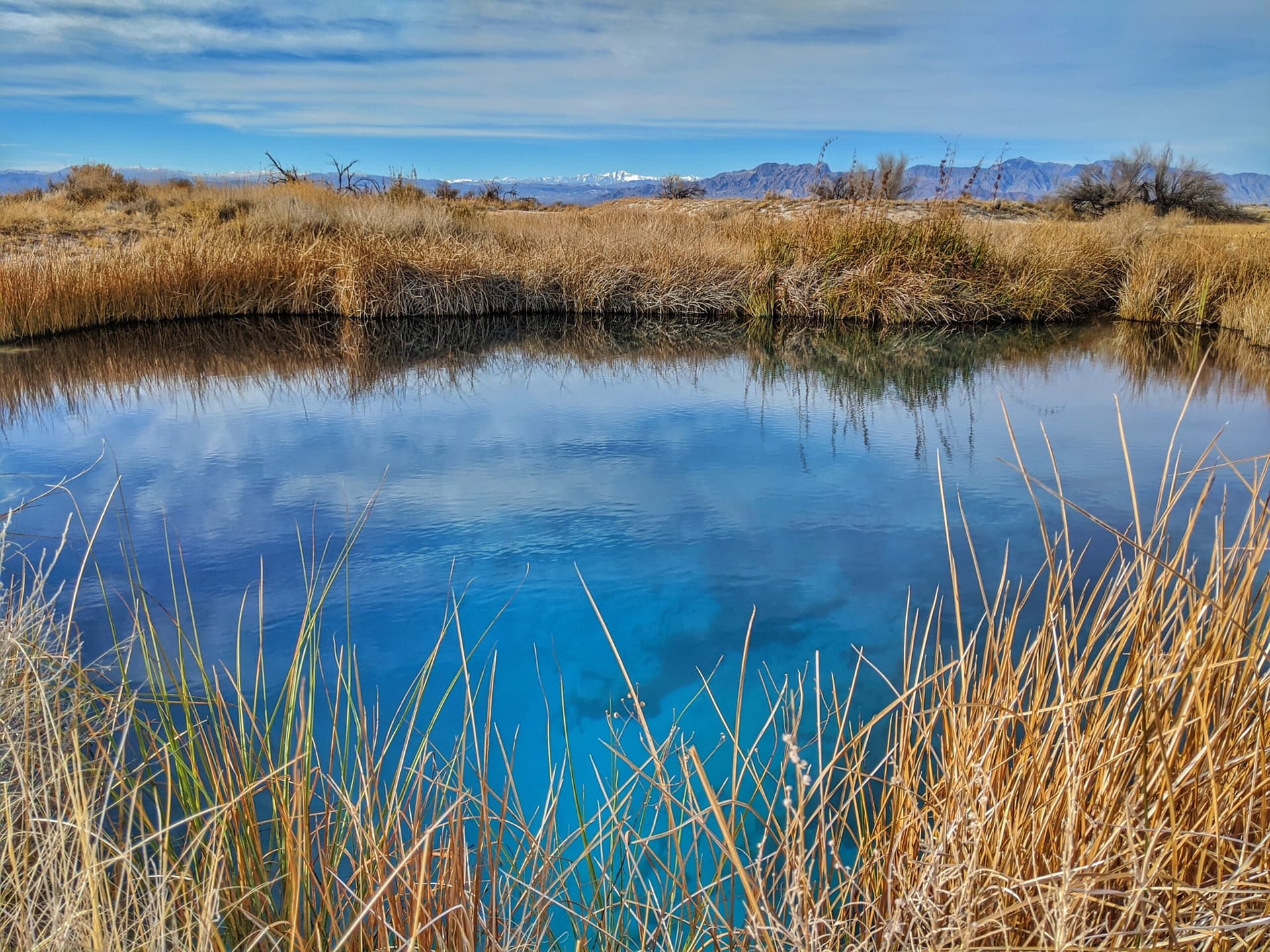
Expect to see small, site‑restricted fishes such as Amargosa pupfish, desert mammals like bighorn sheep and jackrabbits in spring and fall, and myriad invertebrates, tiny beetles and snails, that live in pebbled streams and marsh pools. Visual highlights include crystal‑clear pools “shimmering in shades of blue, green, cerulean, and aquamarine,” Kings Pool, and interpretive scenes at the visitor center and historic Longstreet Cabin.
13. Practical contacts, verification points and pre-trip checklist
USFWS lists an address and contact on refuge pages; one printed snippet shows “8757 Spring Meadows Road S, Amargosa Valley, NV 89020‑9632” and a phone fragment “372‑5435”, call the refuge or check official USFWS pages for current hours, access rules, and seasonal closures. Before travel, confirm current refuge acreage and the official list of endemic and federally listed species with USFWS or refuge biologists, and verify hydrology figures such as Crystal Spring’s flow if those specifics matter to your visit.
14. Photo, timing and neighborhood tips to make the trip count
Plan morning or late‑afternoon visits in spring or fall for cooler light and active wildlife; Crystal Spring and boardwalks offer close compositions while Devils Hole requires viewing from designated tunnels and fenced overlooks. Bring a telephoto for wildlife and a polarizer to reduce glare on blue springs; respect posted signs, habitat integrity depends on visitors staying on boardwalks and authorized trails.
Conclusion Ash Meadows is a local asset with national significance: its spring systems and endemic species are the product of millennia of groundwater flow and decades of targeted conservation work. If you visit from Nye County, plan for limited services, follow USFWS guidance and Leave No Trace, and treat restricted areas like Devils Hole as non‑negotiable protections for species that exist nowhere else.
This article was produced by Prism’s automated news system from verified source data, official records, and press releases, then run through automated quality and moderation checks before publishing. The system is built and supervised by the people who set the standards it runs under. Read our full AI policy.
Did this article answer your question?