Clark Reservation State Park showcases Ice Age geology in Jamesville
Clark Reservation folds Ice Age geology into a family-friendly outing, with trails, a nature center and a cliff overlook just outside Jamesville.
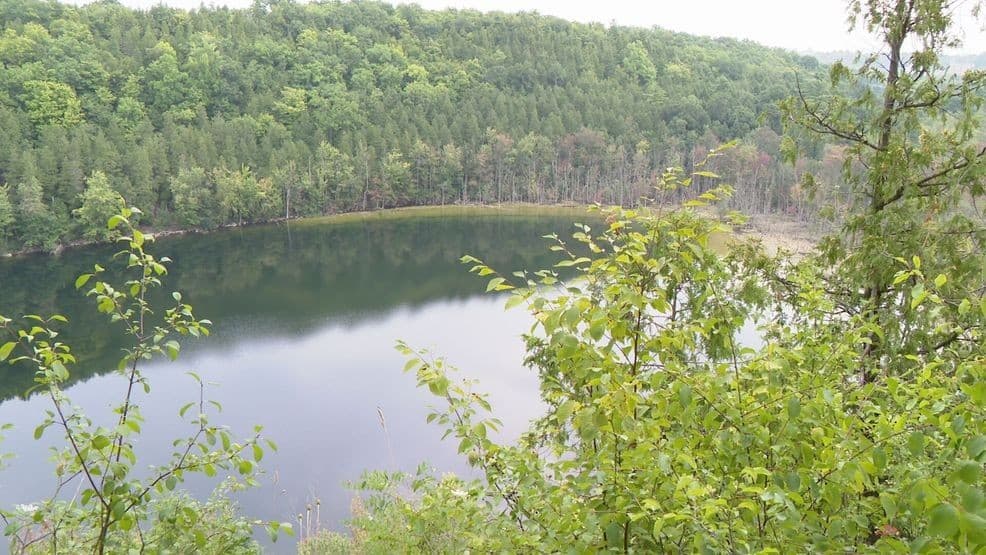
Clark Reservation State Park turns a short outing into a lesson in deep time. In just 365 acres, visitors move from rugged cliffs and rocky outcrops to woodland, meadow, wetland and a glacial plunge basin lake whose waters do not mix from top to bottom. That mix of easy access and real geological drama is what makes the park stand out in Onondaga County.
A compact park with a deep-time story
Set about five miles southeast of Syracuse and 1 1/4 miles west of Jamesville, the park is open year-round from sunrise to sunset, so it works as easily for a quick afternoon stop as it does for a planned family trip. The setting is close enough to feel practical, yet the landscape tells a story that reaches back hundreds of millions of years. Friends of Clark Reservation describes the park as one of the county’s strongest examples of glacially shaped terrain and fossil-rich limestone.
The geology is the point. Clark Reservation’s limestone strata were laid down about 400 million years ago in a shallow saline sea, when much of what is now the United States sat under water. Then, near the end of the last Ice Age about 10,000 years ago, geologists believe a huge waterfall formed as the glacier receded and carved the plunge pool that became Glacier Lake. The lake is meromictic, which means its surface and bottom waters do not mix, giving visitors a rare chance to see how a landform can preserve a very specific water structure.
What the trails reveal under your feet
The park’s five trails make the geology visible without demanding a strenuous day in the woods. The official trail network includes the cliff trail, which leads to a ledge overlook 175 feet above the water, a height that makes the lake and its surrounding bowl-like basin easier to read as a geological feature rather than just a scenic view. For families, that matters because the payoff comes quickly: the landscape explains itself almost immediately.

The trails also pass through the park’s other natural features, including woodland, meadow, wetland and the rocky edges that define the reservation. Hiking is the main draw, but fishing is part of the park’s everyday use as well, and the setting works for a wider range of visitors than a trail-only preserve might. Event rentals add another layer of public use, reinforcing that this is both a recreation site and a place where people gather.
The Nature Center makes the science easier to see
The Nature Center is where Clark Reservation becomes especially useful for children, students and curious adults who want more than a walk. It sits in a 1930s stone building that originally served as the park office, and it is operated by Friends of Clark Reservation. Inside, the exhibits cover wildlife mounts, glacial evolution, rock strata, plant life, park history and human-natural interaction, which gives the park’s scenery a concrete explanation.
The center is seasonal, open from mid-May through Labor Day, and the Friends group staffs a weekend naturalist during the summer months. Volunteers fill weekday shifts, which gives the place a local, hands-on feel that fits its mission. Outside, two native plant gardens extend the learning experience, one focused on Central New York natives and the other on plants native only to the park. That combination makes the Nature Center especially valuable for school groups and parents looking for a low-barrier outing with real educational payoff.
A park shaped by local advocates and local history
Clark Reservation is not just a place where geology happens to be visible. It has been used intentionally as an educational site for decades. Friends of Clark Reservation says the nonprofit was created in 1980 as the Council of Park Friends to promote appreciation of parks as educational resources, and one of its early trailblazers was Mildred Faust. Her Syracuse University botany course used the park as a classroom, a detail that captures the site’s long-running role in local education.
The park’s state-park history is equally important. Friends materials date its creation as a state park to 1926, which places it among the oldest state parks in New York. That long institutional history helps explain why Clark Reservation has remained a place where recreation and interpretation coexist, rather than a site that was left to stand on scenery alone. The New York State Office of Parks, Recreation and Historic Preservation now presents it as open year-round, with the landscape itself doing much of the teaching.
How to plan a visit
A trip to Clark Reservation does not require much advance planning, but a few details matter. The park office is open Monday through Friday from 8 a.m. to 4 p.m., and the vehicle entrance fee is $5 from Memorial Day to Labor Day. The Nature Center follows its own seasonal schedule, so summer remains the best time to catch the full interpretive experience, especially if you want the weekend naturalist on site.
A simple visit can be as short as a loop with a stop at the cliff overlook, but the site rewards a slower pace. A family can walk a trail, step into the Nature Center, look at the native plant gardens and then return to the lake with a better sense of how the Ice Age shaped the land underfoot. That is the park’s real value in Onondaga County: it makes a complicated geological history feel close enough to touch.
This article was produced by Prism’s automated news system from verified source data, official records, and press releases, then run through automated quality and moderation checks before publishing. The system is built and supervised by the people who set the standards it runs under. Read our full AI policy.
Did this article answer your question?