Erie Canal Museum brings 200 years of history to life in Syracuse
Inside a historic weighlock on Erie Boulevard East, Syracuse’s canal story becomes visible in boats, locks, pottery, and the building itself.

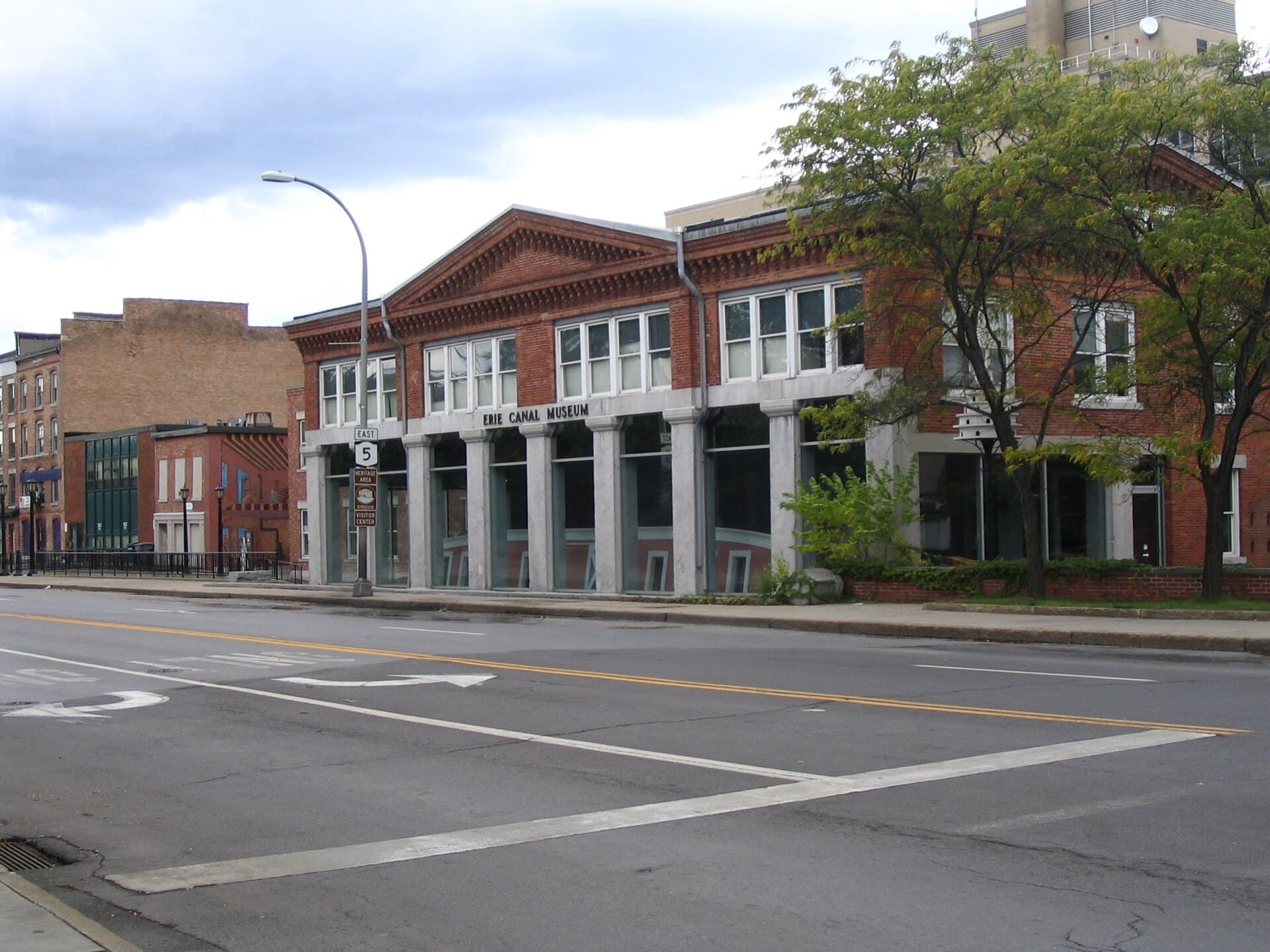
The Erie Canal Museum occupies the Syracuse Weighlock Building, where cargo was once measured and tolls collected. In downtown Syracuse, families and students can trace how the waterway shaped commerce, migration, industry, and the street-level growth that still defines Onondaga County.
What makes the first floor feel immediate
On the first floor, the museum centers on how the weighlock worked. The exhibits include the Weighmaster’s office, so the story starts with boats, cargo, and tolls rather than with abstract dates on a wall. Interactive displays show how locks operate, while murals and exhibits turn canal life, canal businesses, elevation changes, and lock operation into something that can be seen and followed room by room.
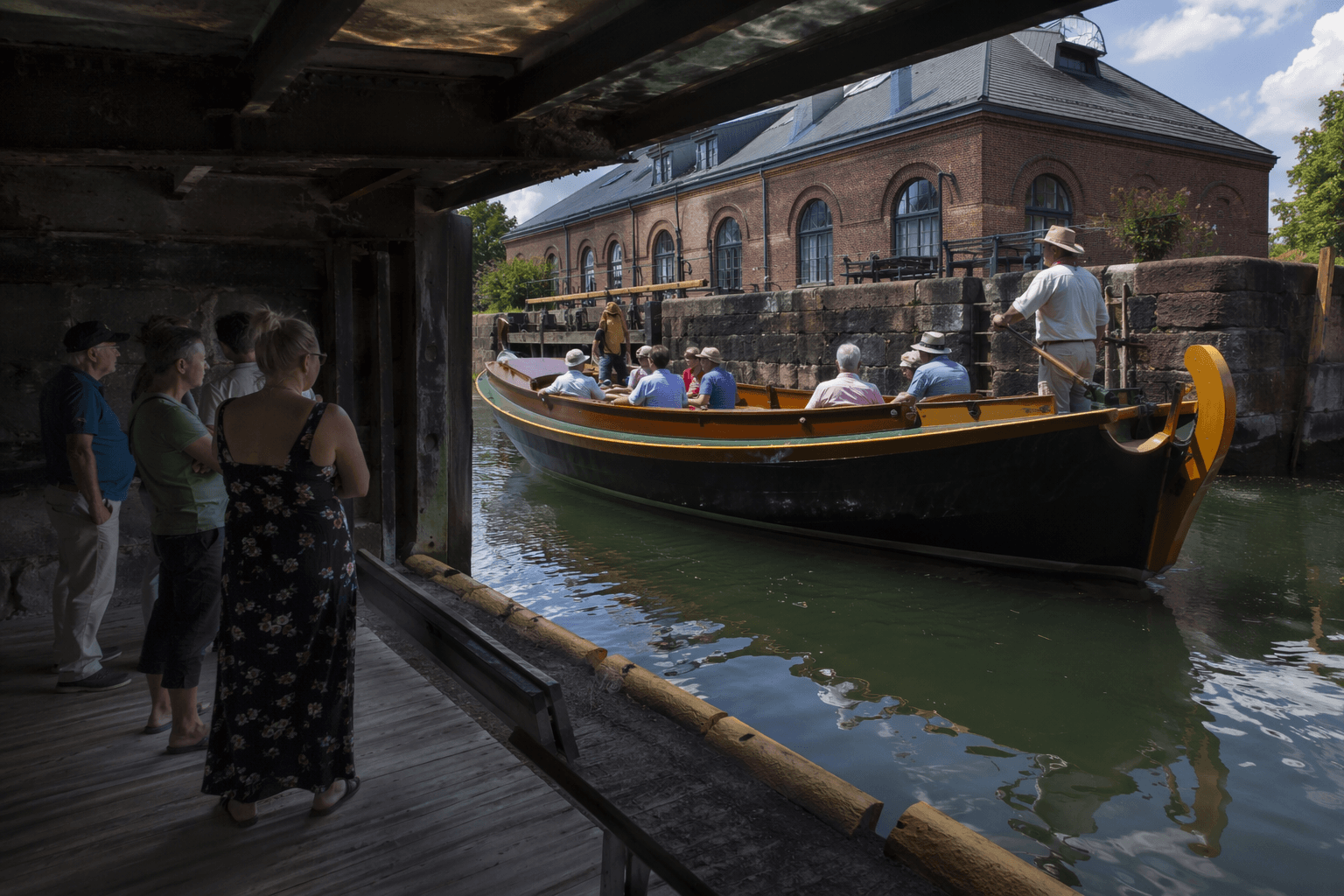
The hands-on pieces make the canal legible for a younger visitor. A full-sized replica canal boat, a canal-side general store, a canal-era tavern, and a theatre-style exhibit help explain what daily life looked like when the Erie Canal was the region’s main artery. An outdoor garden extends that experience beyond the building.
How the museum broadens the story beyond boats and locks
The museum does not present the canal as a simple engineering victory. It engages the public in the Erie Canal’s impacts on peoples and places in the past, present, and future, and its land acknowledgement places the museum on the unceded lands of the Onondaga Nation. The acknowledgement also recognizes that the canal disrupted Haudenosaunee ways of living.
The canal opened commerce, attracted new settlement patterns, and helped create a canal-town culture in Syracuse and across Onondaga County. It also left cultural and environmental consequences that the museum addresses directly.
The second floor ties the canal to Syracuse itself
The upper exhibits push the story into the city’s industrial and cultural life. One set of displays connects the canal to Onondaga Pottery Company, later Syracuse China, showing how canal-era commerce helped produce a manufacturing base that outlived the waterway’s early traffic boom. Another exhibit links the canal to folk musician Elizabeth Libba Cotten.
The museum also uses the second floor to tell a broader local history through canal-town life and 19th- and early 20th-century stone construction. In Syracuse, school lessons often stop at transportation or industry as separate topics. On the second floor, the canal, the city’s work force, and the materials used to build the region appear in one interpretive space.
Why the Syracuse Weighlock Building matters as much as the exhibits
Completed in November 1850 at a cost of exactly $8,283.37, the Syracuse Weighlock Building was built to weigh boats so the state could assess cargo tolls and pay for canal construction and maintenance. The Canal Collector and Inspector of Boats worked there while vessels passed beneath the second story and tolls were determined.
The Erie Canal’s tolls were discontinued in 1883 after more than $121 million had already been collected. The weighlock was a working piece of infrastructure that helped keep canal communities viable as railroads grew.
The Syracuse building is also rare because it is the only surviving weighlock of its kind. There were once seven such buildings along the Enlarged Erie Canal, and all the others were torn down. The Syracuse Weighlock Building was nearly lost again during Interstate-81 construction before preservation efforts by the Junior League of Syracuse and the Canal Society of New York helped save it.
What visitors learn about Syracuse that they do not get elsewhere
The museum shows how canal traffic helped shape the city’s industrial future, especially through Onondaga Pottery Company. Founded in 1871, the company brought in James Pass in 1885, began producing American-made vitreous china in the early 1890s, and was using the Syracuse China back-stamp by 1895.
A child can stand in front of a full-size canal boat, look at the Weighmaster’s office, and then move upstairs to see how that transportation network connected to pottery, stonework, and local culture. The museum’s digital collections through New York Heritage extend that learning beyond the building itself.
A downtown Syracuse stop that still functions as a living civic asset
The museum was established in 1962 and is housed in the National Register 1850 Syracuse Weighlock Building. It is open seven days a week, offers free admission, and draws more than 23,000 visitors each year from all 50 states and many foreign countries. Its address is 318 Erie Blvd. E. in Downtown Syracuse.
Onondaga County is also investing in renovations and repairs to the building, and construction may temporarily affect access.
This article was produced by Prism’s automated news system from verified source data, official records, and press releases, then run through automated quality and moderation checks before publishing. The system is built and supervised by the people who set the standards it runs under. Read our full AI policy.
Did this article answer your question?