Green Lakes State Park blends Ice Age lakes and old-growth forest
Ice Age lakes, a National Natural Landmark, and 300-year-old trees make Green Lakes a rare Onondaga County park, with trails, beach days, and winter skiing.

Green Lakes State Park is the kind of place that changes what a family expects from a weekend park trip. About 10 miles east of Syracuse in Fayetteville, it pairs two glacial lakes from the Ice Age with old-growth forest, a beach, cabins, trails, golf, and winter sports in one compact destination. The result is not just scenery, but a park where geology shapes every outing.
Why Green Lakes feels different
The park’s signature feature is its pair of glacial lakes, Green Lake and Round Lake, both of them meromictic. That means their surface and bottom waters do not mix seasonally, a rare condition that gives the lakes unusual chemistry and clarity. State materials describe each lake as nearly 200 feet deep, while outside reference materials put Green Lake at about 195 feet and Round Lake around 170 to 180 feet deep.
That depth matters because it helps explain why the lakes look and behave differently from the water at a standard county beach or pond. Green Lake is the better-known recreation hub, but Round Lake carries a different kind of status: it is registered as a National Natural Landmark. Together, the lakes give the park a scientific identity that is hard to find anywhere else in Onondaga County.
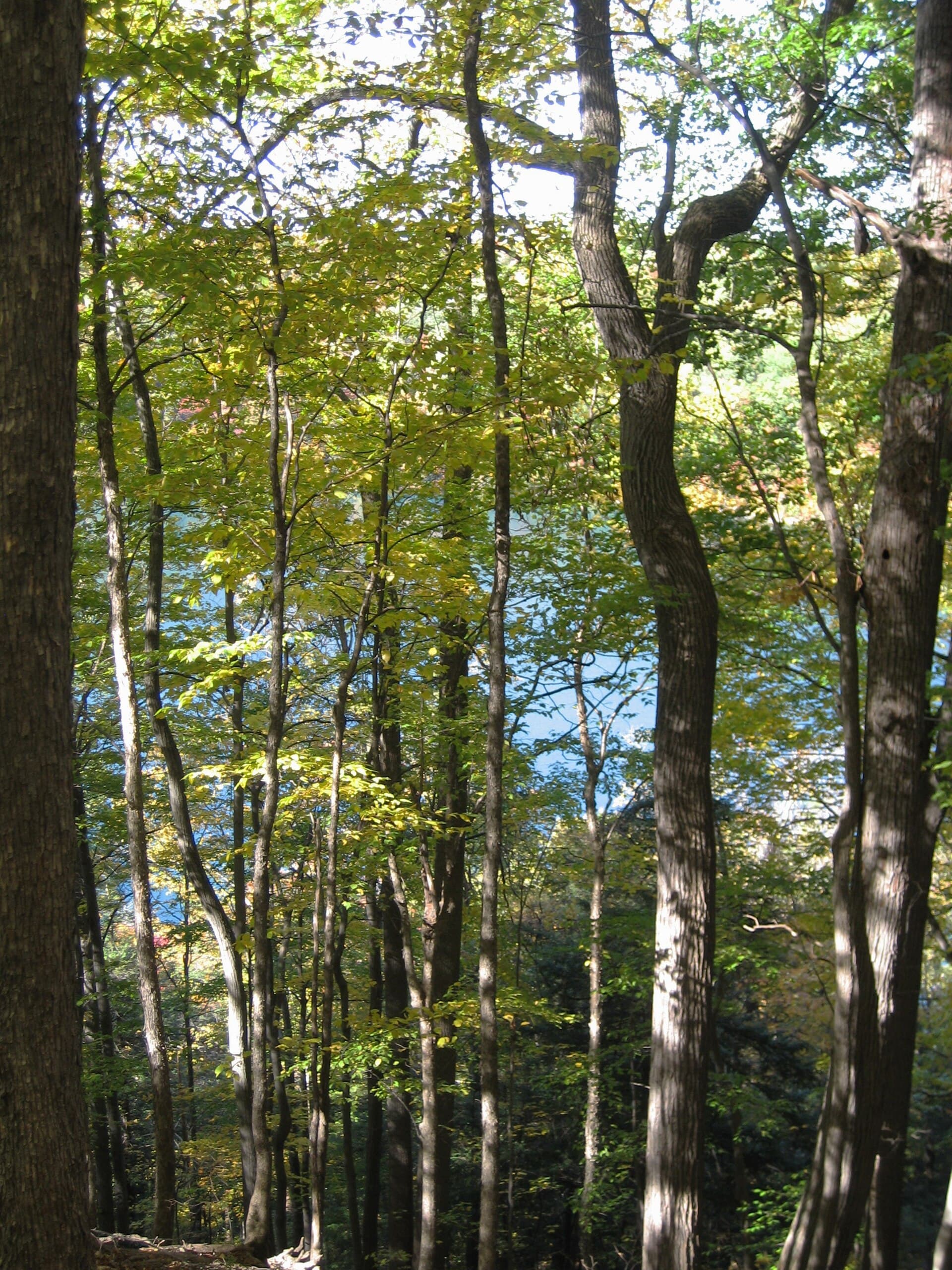
The water is only half the story. Around both lakes, enormous hemlocks and tulip trees create an old-growth forest that makes the park feel much older than the suburbs around it. The New York State Department of Environmental Conservation says Green Lakes is one of the most studied lakes in the world, which tells you how unusual this landscape is, even before you step onto a trail.
What you can do there
Green Lakes is built for a full day outside, not just a quick stop. Official park materials list boat rentals, campsites, cabins, golf, hiking trails, a nature center, a swimming beach, and cross-country skiing and snowshoeing. The park is open year-round from dawn to dusk, so the same landscape works for summer swimming, fall hikes, and winter trail time.
The waterfront nature center and boardwalk make the lakes easy to approach even if you are not planning to spend the whole day on the trails. The park also includes a canoe and kayak landing, but there is an important restriction: outside private boats, kayaks, and canoes are prohibited on the sensitive lakes. That rule is part of what keeps the water protected, and it also means the boating experience here is shaped by the park’s own controls rather than a free-for-all launch scene.
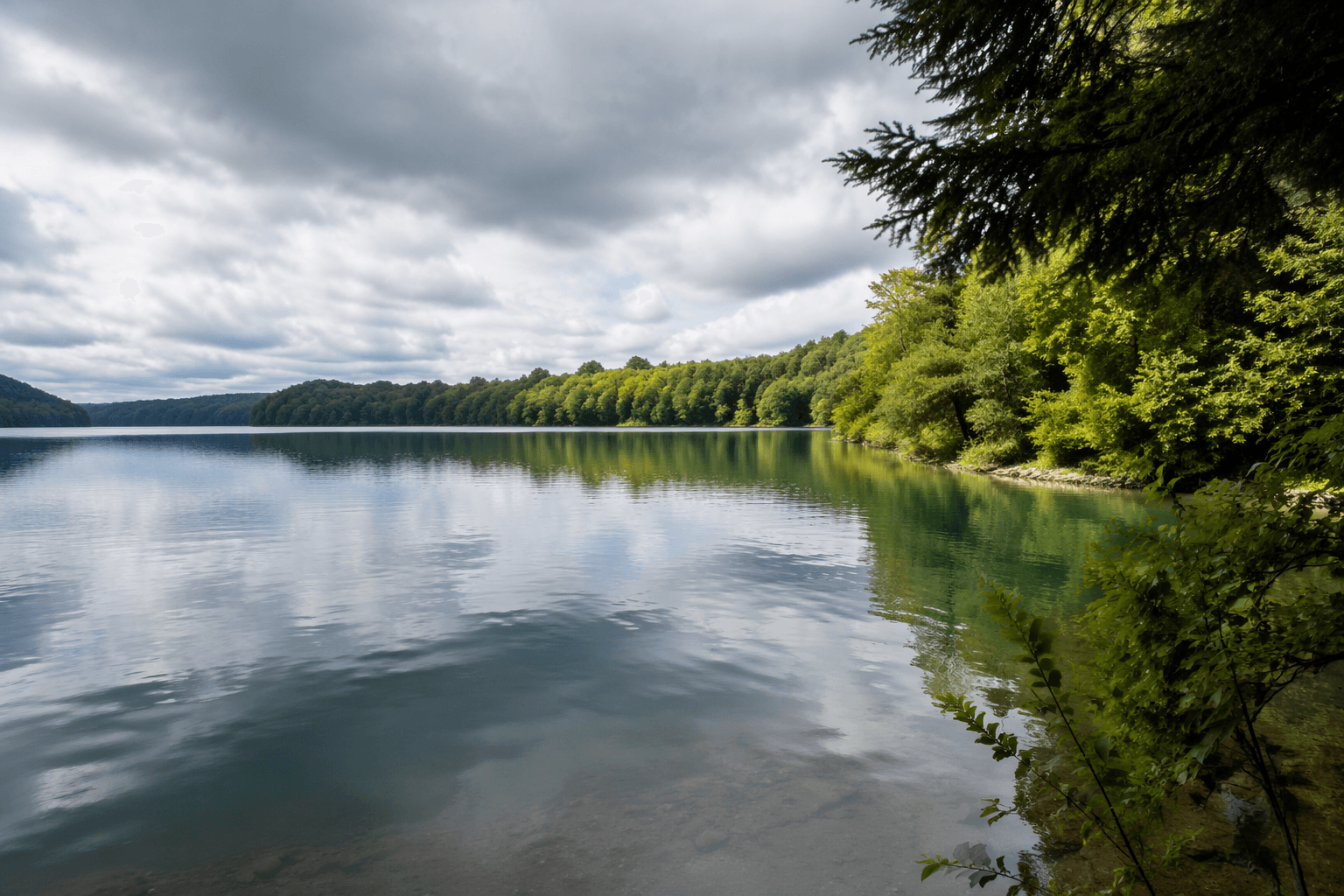
For a family deciding whether the drive is worth it, the payoff is simple. One destination covers beach time, short walks, longer hikes, overnight camping, and a fairway with a view. That mix is what separates Green Lakes from the usual either-or choice between a beach park and a trail park.
The trails tell the park’s story
The trail system is where the park’s history becomes visible. DEC says Green Lakes has more than 18 miles of trails, and the map includes the Old Growth Trail, Round Lake Trail, Green Lake Trail, and Old Erie Canal Towpath. Each one points to a different layer of the park, from shoreline walking to forest canopy and canal-era transportation routes.
The Old Growth Trail is the most distinctive of the bunch because it leads into the Tuliptree Cathedral. There, some tulip-poplars rise above 120 feet, and some of the trees are estimated to be about 300 years old. That makes the walk feel less like a casual loop and more like a passage through Central New York’s ecological memory.
The trail network also shows why Green Lakes has such broad appeal. You can stay close to the lakes for a shorter visit or push deeper into the forest for a longer hike, and the route itself becomes part of the experience. In a county full of parks, this is one of the few places where the walk explains the place.
Golf, views, and a park with deep roots
Green Lakes is also one of the region’s more unusual golf settings. The course is an 18-hole Robert Trent Jones championship course and one of the first courses Jones designed. The clubhouse has a public restaurant, and the panoramic view from there adds another layer to the park’s draw for people who want a scenic lunch as much as a round of golf.
The park’s history is tied to the Great Depression, when the New York State Department of Conservation and the Civilian Conservation Corps developed roads, buildings, cabins, the golf course, and trails. That legacy still shapes the layout today, which helps explain why the park feels planned around the landscape rather than imposed on top of it.
There has also been recent investment in the park’s future. In 2019, New York State Parks prepared an Addition Management Plan for roughly 261 acres added along the southern and eastern boundaries of Green Lakes State Park. That land was purchased to enhance natural buffers and protect viewsheds, which is a concrete sign that the park’s scenic setting is being managed as carefully as its facilities.
In 2023, the park also received a $3 million makeover that included a new playground, a bath house, and upgraded cabins for the Ladders to the Outdoors program. Those changes matter for local families because they widen the park’s appeal beyond day visitors and make it easier to turn a simple outing into an overnight stay.
How to plan a visit
If you are deciding when to go, Green Lakes offers different payoffs by season. Summer brings the beach, swimming, boating rentals, and the busiest use of the cabins and campsites. Winter shifts the same terrain toward cross-country skiing and snowshoeing, with the lakes and old-growth forest giving the park a much quieter feel.
The practical planning question is not whether Green Lakes has enough to do. It does. The better question is what kind of outing you want. If you want a place where one park can deliver a lake day, a forest walk, a golf round, and a lesson in Ice Age geology, Green Lakes is one of the strongest options in the New York State Parks system, which includes more than 250 properties and welcomes more than 88 million visitors a year.
This article was produced by Prism’s automated news system from verified source data, official records, and press releases, then run through automated quality and moderation checks before publishing. The system is built and supervised by the people who set the standards it runs under. Read our full AI policy.
Did this article answer your question?