Le Moyne program aims to close Central New York tech workforce gap
Le Moyne’s Erie21 is widening Central New York’s tech pipeline beyond campus. The real test is whether access turns into credentials, jobs, and talent for Micron-era hiring.

Le Moyne’s answer to a growing workforce squeeze
Le Moyne College is trying to do more than inspire interest in technology. Through its Erie21 initiative, the college is building a wider workforce pipeline for Central New York, one that starts as early as sixth grade and stretches into adulthood. The effort reflects a simple but pressing reality in Onondaga County: employers need more people with technical skills, and the region cannot rely on traditional degree tracks alone to supply them.
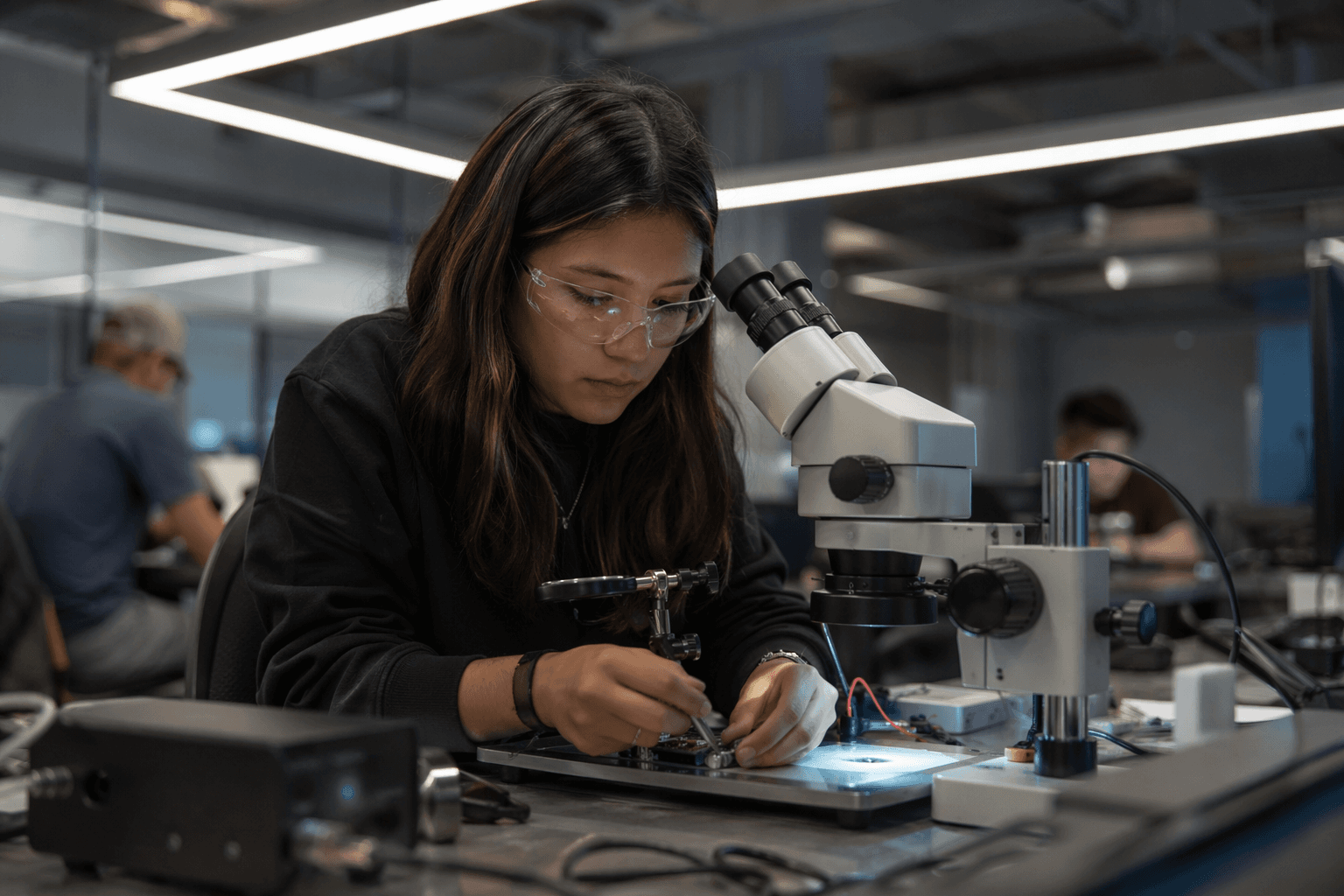
Program director Tylah Worrell has described Erie21 as a way to help the next generation while also supporting the community that shaped her. That local mission matters because the demand is no longer theoretical. With new investments and Micron-related growth expected to increase competition for skilled workers, the county’s education institutions are under pressure to connect classrooms, training and real openings in the labor market.
A pipeline that starts early and keeps going
Erie21 is built around the idea that workforce development cannot begin at graduation. Le Moyne says the initiative is meant to create opportunities in science, technology, engineering, arts and math from sixth grade through adulthood, which puts early exposure on the same level as retraining and college readiness. That approach recognizes that young students need a first look at technical careers, while adults already in the labor market may need a second chance to enter a growing field.
The college’s framing also broadens the definition of who belongs in the tech economy. Erie21 is not just for traditional college-age students. It is designed for students outside the usual pipeline, working adults, people looking to change careers and older residents who may need upskilling to stay competitive as the region’s economy changes.
Who the program is reaching in practice
Le Moyne says Erie21 has already helped more than 1,200 people gain access to STEAM education, training and workforce development. That figure is important, but the real measure for Onondaga County is not participation alone. The question is whether those 1,200 people were students looking for first exposure, laid-off workers trying to re-enter the labor force, career changers searching for a new path or older adults who need a practical route into technical work.
The program’s value lies in its reach beyond a single audience. A community college-style model is not the point here. Erie21 is operating as an on-ramp, connecting younger students to future possibilities while giving adults a way back into a pipeline that can otherwise feel closed. In a region where technical hiring is tightening, that kind of flexibility is becoming essential.
Why Micron and regional growth change the stakes
Central New York’s tech workforce gap is not happening in a vacuum. New investment, including Micron-related growth, is expected to raise demand for workers with advanced skills. That means the region is not only competing to keep talent local, it is also competing to prepare enough people for jobs that may not exist at full scale yet but are coming into view quickly.
For Onondaga County, the stakes are practical. If employers are looking for technicians, engineers, lab workers, software support, manufacturing specialists and other technical roles, the region needs a larger pool of residents who can move into those jobs. Erie21 is positioned as part of that answer, but the challenge is larger than one college program. It is a countywide workforce issue that touches schools, employers and families.
What a successful model should produce
Le Moyne’s program has already shown that access can be expanded. The harder part is proving outcomes. A strong workforce pipeline should be able to answer basic questions: How many participants earned credentials? How many landed jobs? How many were matched to openings tied to local employers? How many moved from exposure into actual employment in the region’s tech economy?
Those questions matter because workforce programs are often judged by attendance or enthusiasm instead of results. Erie21 appears intended to do more than host one-off events or short-term activities. Its stated purpose is to build sustained pathways, which means the public should expect evidence that training leads somewhere concrete, especially in a labor market where technical jobs are increasingly valuable and harder to fill.
Why colleges are being pulled deeper into workforce development
Erie21 also shows how the role of higher education is changing in Central New York. Colleges are being asked to do more than educate students who already enrolled. They are being asked to bridge classrooms and jobs, reach younger students before they choose a path and help adults adapt when the economy shifts.
That shift reflects a broader community-wide approach to workforce development. If the region wants a stronger tech sector, it cannot wait for talent to appear on its own. It has to cultivate that talent early, support it consistently and make it accessible to people who may never have imagined themselves in STEAM careers. Le Moyne’s message is that the pipeline must be built deliberately, not assumed into existence.
The local test for Erie21
For Onondaga County, Erie21 is best understood as a test of whether a college can help solve a regional labor problem that reaches far beyond its campus. More than 1,200 people have already been touched by the effort, but the future credibility of the program will depend on what happens next: who finishes training, who gets hired and how many of those hires fill the jobs emerging around Central New York’s tech expansion.
That is the standard now. In a county preparing for a tighter competition for skilled labor, access is only the first step. The real measure is whether Erie21 can turn early exposure, retraining and educational support into a durable workforce for the jobs Micron-era growth is bringing to the region.
This article was produced by Prism’s automated news system from verified source data, official records, and press releases, then run through automated quality and moderation checks before publishing. The system is built and supervised by the people who set the standards it runs under. Read our full AI policy.
Did this article answer your question?
!role~Preview!mt~photo!fmt~JPEG%2520Baseline&w=1920&q=75)
