Onondaga County leaders seek fixes for children stuck in hospitals
Children in crisis are spending weeks or months in hospital beds, and county leaders are now weighing fixes to move them into safer placements faster.
Children in crisis are being left in hospital beds for weeks or even months after they are medically stable, a costly bottleneck that strains families, ties up beds meant for acute care, and shifts more of the burden onto taxpayers.
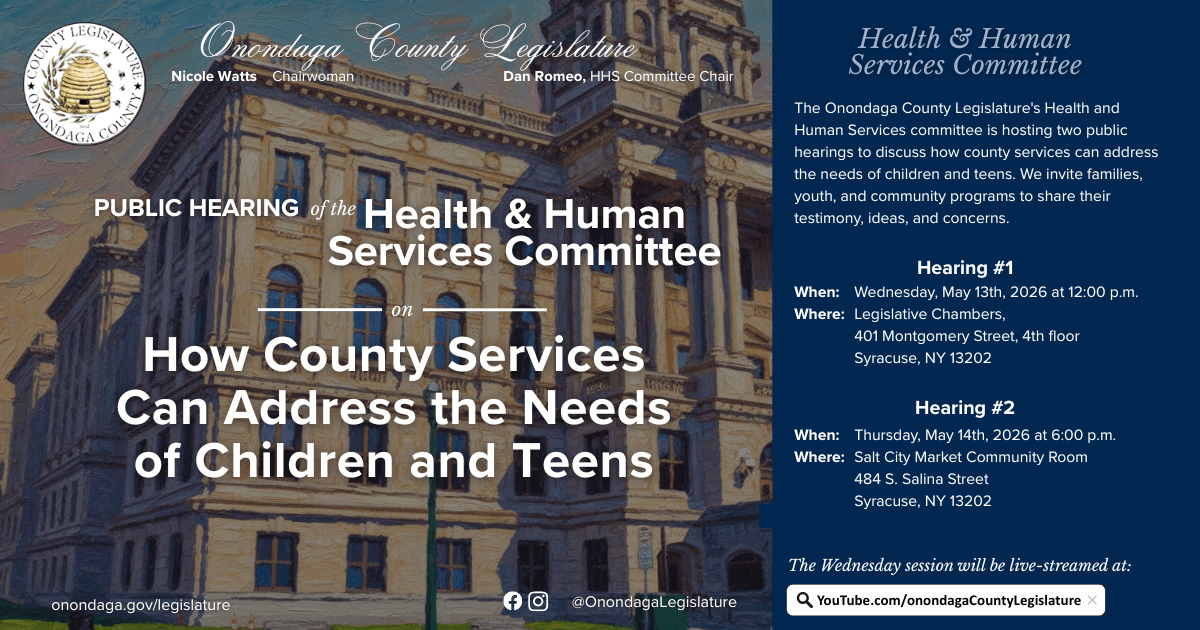
That problem surfaced again in Onondaga County after emotional testimony earlier in May at the Legislature’s Health and Human Services Committee hearings on services for children and teens. The committee met May 13 and May 14, and county officials said the May 14 hearing filled the legislative chambers with attorneys, advocates, doctors, educators and residents pressing for answers about why vulnerable children can still get stuck waiting for help even after a hospital no longer needs to keep them for medical reasons.

County leaders now say follow-up conversations are underway to look for practical fixes. The discussion is centered on where the breakdown happens, whether in child welfare, foster care, behavioral-health services, placement options or the handoff between agencies that are supposed to work together when a child is in crisis.
Onondaga County’s Children and Family Services department says its mission is to keep children, youth and families safe, secure and successful in home, school and community. The county’s Children’s Mental Health program says it provides community-based mental-health services and supports for children with emotional and behavioral challenges. The ACCESS Team serves children and youth ages 5 to 21 with emotional and behavioral challenges and acts as a clearinghouse for home and community-based services as well as out-of-home placements.
New York State also runs the Critical Time Transition Program for children, youth and families ages 11 to 17, a service meant to help them move back into the community from hospital settings. Local providers such as Elmcrest Children’s Center say community-based treatment, respite and family support can reduce emergency-room visits, hospital stays and out-of-home placements.
The stakes are practical and immediate. A child who is medically cleared but still has nowhere safe to go can lose school time, family routine and stability, while hospitals become holding areas for social-service and behavioral-health needs they were never designed to carry. County leaders now face the harder question behind the testimony: which placement options and mental-health services are missing, and which agencies have the authority to fix them before the next child is left waiting.
This article was produced by Prism’s automated news system from verified source data, official records, and press releases, then run through automated quality and moderation checks before publishing. The system is built and supervised by the people who set the standards it runs under. Read our full AI policy.
Know something we missed? Have a correction or additional information?
Submit a Tip