Skaneateles vineyard uses helicopters to fight spring frost
A 5 a.m. helicopter over Skaneateles Lake is helping one vineyard fight a frost that can wipe out a season in hours. At Anyela’s, the fix is cheaper than a fan and far cheaper than losing grapes.
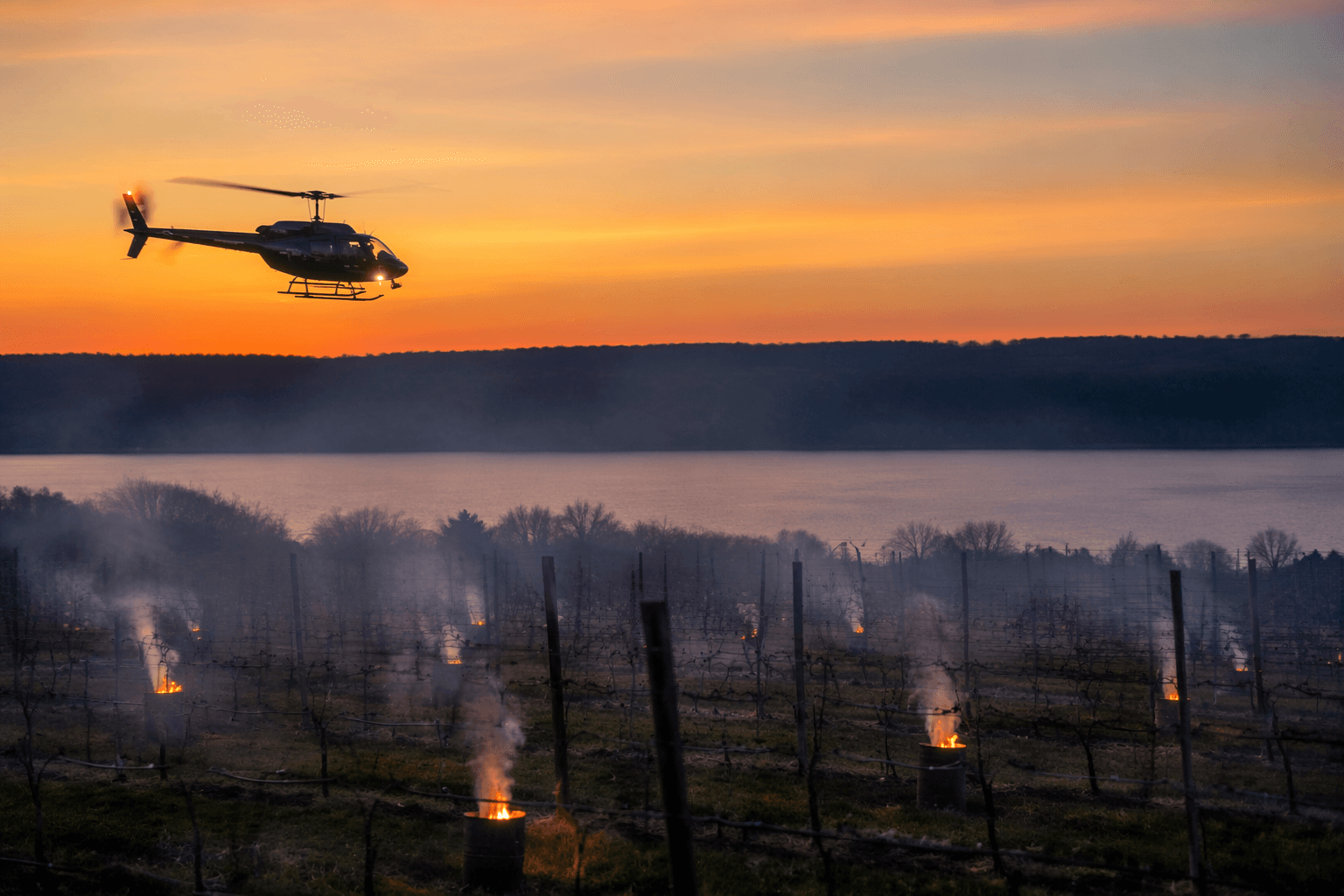
A helicopter skimming over the vines at 4:30 or 5 a.m. is not the kind of spring scene most people expect in Skaneateles. At Anyela’s Vineyard, owner Jim Nocek uses that early-morning flight to push warmer air down onto cold rows when a clear, calm night sets up a frost inversion above the vineyard.
The stakes are immediate. A single cold snap can damage newly budded vines, and Nocek said the April frost hit the vineyard, but not severely, with only about 1 to 2 acres meaningfully affected. The buds also came out slowly this year, a reminder that even a light frost can interrupt growth across a vineyard that sits on the hillside above Skaneateles Lake and is the only winery on the lake. Anyela’s says its family story began three generations ago in Eastern Europe, and the property has turned that lake-influenced setting into a business built around cold-climate grape growing.
The helicopter is only one part of the protection plan. In winter, Nocek covers sensitive vines with about 3 to 6 inches of hay, a layer that can provide roughly 10 to 20 degrees of insulation. That method costs about $1,000 an acre, or roughly $24,000 to $30,000 to cover the full vineyard. When the threat shifts from deep winter cold to spring frost, the helicopter becomes the faster, cheaper fix. Large fans can cost about $60,000 each, while helicopter rental for a few hours can run $2,000 or less.
That spending calculus matters well beyond one farm. The cost of labor, materials, equipment and backup plans all lands before a bottle is sold, and in a region where tourism depends on tasting rooms, lake views and a steady harvest, a frost loss can ripple into seasonal jobs and visitor traffic. Cornell University’s frost-protection guidance identifies temperature inversions and active frost control as key tools for fruit growers, and Cornell Cooperative Extension has been pushing frost information out to growers as spring now starts earlier in some parts of New York’s fruit regions.
The risk is not theoretical. In 2024, a late-April frost and freeze destroyed more than 40% of Concord grapes grown or produced for winemaking in New York State, prompting a state disaster determination from Agriculture Commissioner Richard A. Ball. State and Cornell officials have toured damaged vineyards in the Finger Lakes and Southern Tier after freeze events, a sign that Nocek’s helicopter is part of a broader, more expensive race to protect buds, yields and the vineyards that keep Central New York wine country alive.
This article was produced by Prism’s automated news system from verified source data, official records, and press releases, then run through automated quality and moderation checks before publishing. The system is built and supervised by the people who set the standards it runs under. Read our full AI policy.
Did this article answer your question?


