SU professor says Haudenosaunee values can guide climate, conflict response
Arnold says Haudenosaunee teachings are a practical guide for Syracuse, from climate planning to conflict and civic life.
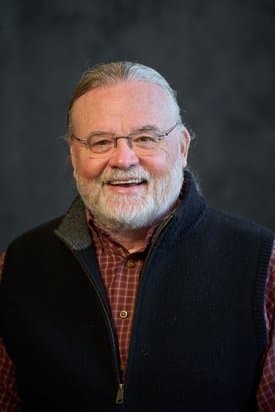
In Onondaga County, where the history of the Haudenosaunee is tied to the ground, the water, and the institutions around Syracuse, Philip P. Arnold is making a case that feels both ancient and immediate. The Syracuse University religion professor says the Great Law of Peace is not just a subject for classrooms or archives. It is a living framework for how communities think about climate pressure, social strain, and conflict.
Why this argument lands locally
A late-April JSTOR Daily article, *The Urgency of Indigenous Values*, put Arnold’s view in front of a wider audience. Syracuse University’s College of Arts & Sciences said the piece emphasized the Great Law of Peace’s relevance not only to climate change and global conflict, but also to American democratic ideals and the women’s rights movement. Arnold’s point is sharp: as crises multiply, the West is following a self-destructive path, and Indigenous teachings offer another way forward.
That matters in Central New York because this is not an abstract debate here. Syracuse and Onondaga County sit within a landscape shaped by Haudenosaunee history, and the decisions made about land, water, education, and public memory are still connected to that history. When Arnold talks about climate change, he is also speaking to the kinds of local choices that shape stewardship around Onondaga Lake, civic relationships with the Onondaga Nation, and the way colleges teach the region’s past.
What the Great Law of Peace means
The Haudenosaunee Confederacy’s Great Law of Peace, also known as Gayanesshagowa, is widely described as a foundational governing principle of the Haudenosaunee. Some historical sources date its establishment to 1142, and scholars and institutions have long pointed to its influence on democratic ideas in the United States.
The Great Law is also linked in public-history accounts to the women’s rights movement. National Park Service and PBS materials note that Elizabeth Cady Stanton and Matilda Joslyn Gage encountered Haudenosaunee women’s political and social roles, then drew inspiration from them in the fight for women’s equality. That connection gives the story an especially local resonance in Syracuse, where the history of reform movements overlaps with the region’s Indigenous presence.

For readers in Onondaga County, the point is not simply that the Great Law is old. It is that it has remained intellectually useful across centuries of pressure, and Arnold is arguing that its principles still speak to modern debates about power, responsibility, and collective survival.
How Syracuse University is grounding the conversation
Arnold is a professor in the Religion Department and core faculty in Native American and Indigenous Studies at Syracuse University. He is also the founding director of the Skä·noñh Great Law of Peace Center, a place tied to Onondaga Lake and designed to tell the story of the Haudenosaunee and the Great Law of Peace in the region where that story remains alive.
The center was created through collaboration among the Onondaga Nation, Onondaga County, Syracuse University, the Onondaga Historical Association, and area colleges. Syracuse University’s faculty profile says the center tells the ancient story of the formation of the Haudenosaunee tradition known as the Great Law of Peace and its influence on American culture.
That local collaboration matters because it gives residents a place to encounter Indigenous history as present tense, not distant heritage. In a county where school curricula, public land use, and environmental decisions all touch the same terrain, the center gives educators, students, and community leaders a shared starting point for discussion. It also underscores a basic point Arnold is making: climate response and community dialogue are stronger when they begin with the people whose knowledge is rooted in the land.
Arnold’s book extends the same message
Arnold expanded these ideas in his September 2023 book, *The Urgency of Indigenous Values*, published by Syracuse University Press. The press says the book uses a collaborative method derived from the Two Row Wampum and from Arnold’s 40-year relationship with the Haudenosaunee.
That detail is important because it shows the argument is not built from theory alone. It comes from decades of work with Haudenosaunee communities and from a framework that emphasizes coexistence, mutual respect, and long-term responsibility. In the press’s description, the book explores the urgent need to understand Indigenous values, support Indigenous Peoples, and offer a way toward humanity’s survival in the face of ecological and environmental catastrophe.
For Central New York, that places the discussion squarely in the present. Climate change is already reshaping how communities think about water, land, and infrastructure. Social change is testing institutions that serve Syracuse and the surrounding towns. And global conflict is making clear that durable responses require more than short-term fixes.
What this means for Onondaga County now
Arnold’s message lands in a region where history is not only studied but lived. The Haudenosaunee presence around Syracuse, the work of Syracuse University, and the collaboration behind the Skä·noñh Great Law of Peace Center give Onondaga County a rare opportunity: to treat Indigenous teachings as practical guidance for education, land stewardship, and public life.
That is the deeper local relevance of the story. The Great Law of Peace is not being invoked as a symbol from the past. It is being presented as a tool for making better decisions now, when climate stress, civic division, and questions of justice are all pressing harder on communities across Central New York.
This article was produced by Prism’s automated news system from verified source data, official records, and press releases, then run through automated quality and moderation checks before publishing. The system is built and supervised by the people who set the standards it runs under. Read our full AI policy.
Did this article answer your question?
!role~Preview!mt~photo!fmt~JPEG%2520Baseline&w=1920&q=75)
