Syracuse faces overtime shortfall as police, fire costs surge again
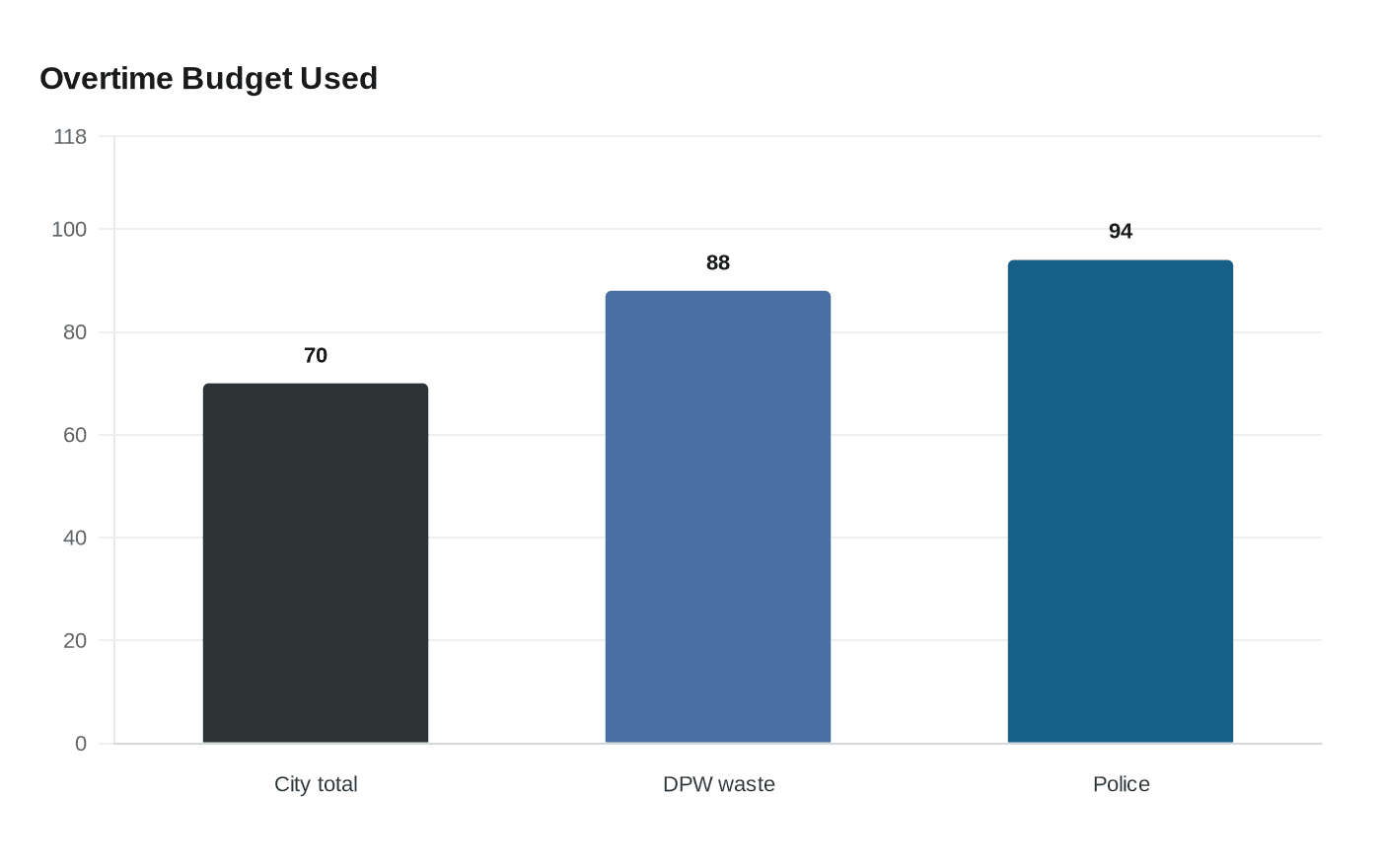
Syracuse had already spent 70% of its overtime budget by Jan. 1, with police at 94% of a $5.5 million allotment and public works at 88%.
Syracuse’s overtime problem is back in sharp focus, and the numbers show a city still struggling to keep a lid on a cost that keeps outrunning the budget. By Jan. 1, Syracuse had used 70% of its overall overtime budget, while the Department of Public Works waste collection division had spent 88% of its overtime allocation and uniformed Syracuse police officers had burned through 94% of a $5.5 million set-aside.
That spending comes inside a FY26 budget of $354 million, up from the $333 million approved by councilors last May. Police and fire together account for about one out of every four dollars in the city budget, with a combined total projected at around $100 million, and the pressure is not limited to overtime. Employee health insurance was budgeted at $50 million in FY26 and had already reached about $28 million by mid-year, another sign that core personnel costs are pushing harder against city finances.
City Auditor Alexander Marion told councilors the city needs to budget more realistically and ask harder questions about which work truly requires sworn officers. He pointed to police officers covering crossing guards and responding to non-injury crashes, jobs that could be organized differently if the city wants to slow the drain on its public-safety budget. The broader concern is not just one bad line item, but a pattern that keeps returning as the city moves from one budget cycle to the next.
Mark Rusin said Syracuse Police Department community service officers already help with parking enforcement, stop-arm work and records, giving the department a civilian layer that can absorb routine duties. The department also relies on bus stop-arm camera enforcement, with each infraction reviewed by SPD for accuracy. Even so, Rusin noted the time lost to repeated false alarms at homes and businesses, a recurring burden that can pull patrol officers away from other calls.
Councilors are now weighing whether to raise the city’s alarm-registration fee, which has been stuck at $30 since 2015, and whether to impose penalties on repeated false alarms. The Common Council, which already reduced Mayor Ben Walsh’s original $348.4 million proposal and rejected a 2% property tax increase, is scheduled to hold a public hearing Wednesday at 5:30 p.m. and vote May 8. The city auditor’s office said councilors also requested a comprehensive special audit of police and fire budgets going back to 2021, a sign that Syracuse is no longer treating overtime as a temporary spike but as a chronic budget leak that keeps landing on taxpayers.
This article was produced by Prism’s automated news system from verified source data, official records, and press releases, then run through automated quality and moderation checks before publishing. The system is built and supervised by the people who set the standards it runs under. Read our full AI policy.
Did this article answer your question?