Syracuse to receive $20 million in state aid for budget gap
Syracuse is set to get $20 million from Albany as Mayor Sharon Owens closes a $354.4 million budget that relies on reserves if needed.
Syracuse won $20 million in state aid just as Mayor Sharon Owens moved her first city budget toward final approval, giving City Hall a larger cushion as it tries to cover a tight fiscal year without leaning as heavily on reserves or city services.
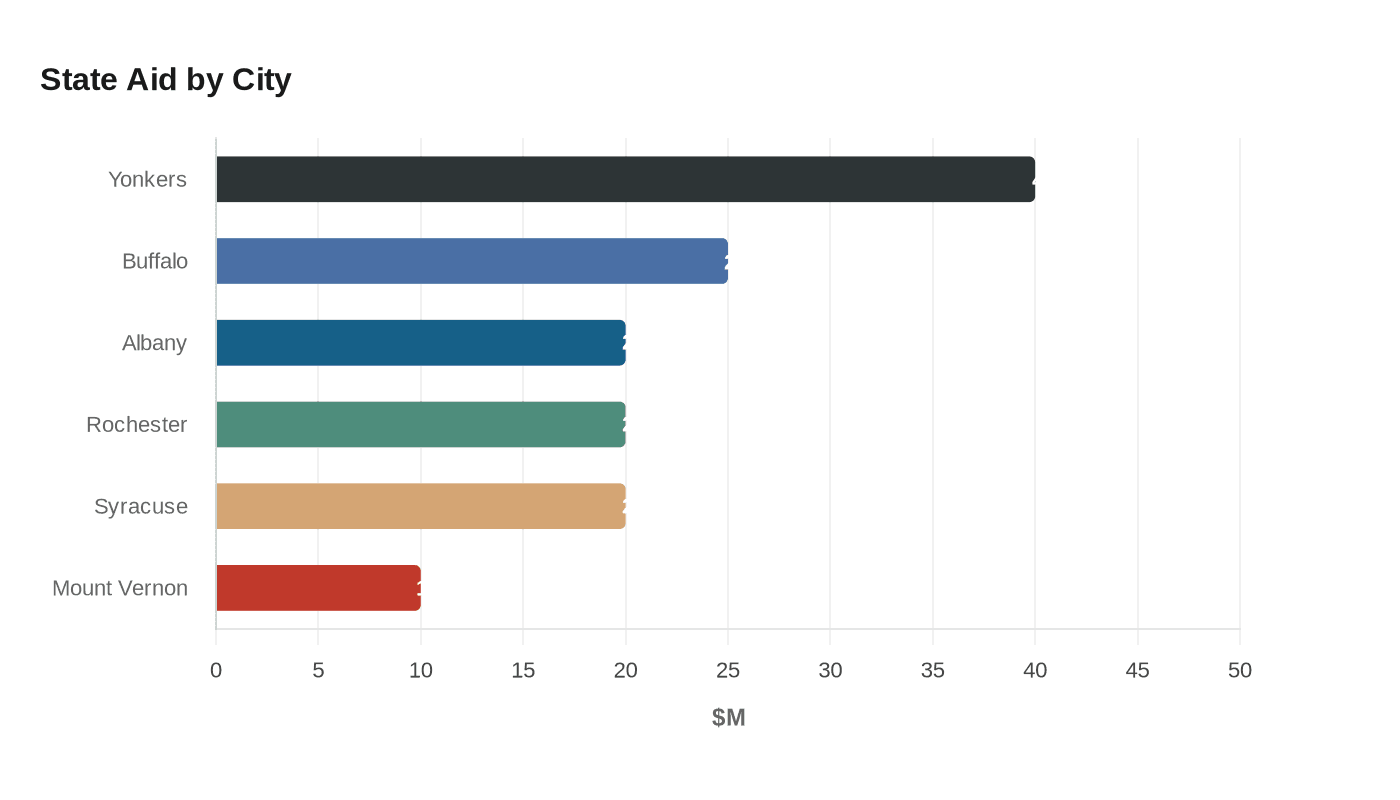
The New York State Assembly said the money is part of a $135 million package in the state fiscal year 2026-27 enacted budget for distressed cities. The aid is meant to help municipalities balance budgets and erase structural deficits in the SFY 2026-27 and 2027-28 budgets, with allocations of $40 million for Yonkers, $25 million for Buffalo, $20 million each for Albany, Rochester and Syracuse, and $10 million for Mount Vernon. Assembly Speaker Carl Heastie said the broader goal is to help cities manage increasingly complex needs with limited resources.
For Syracuse, the timing matters. Owens proposed a $354.4 million budget for fiscal year 2027, which runs from July 1, 2026, to June 30, 2027. The Syracuse Common Council approved that plan with 30 amendments, and the budget authorizes using $19.9 million from the city’s reserve fund if needed. Owens said she expected to sign off on the budget without opposition.
The state money does not erase the city’s fiscal pressure, but it gives Syracuse more room to maneuver while local leaders finalize spending decisions. That could help protect core services, delay deeper cuts, or reduce the strain on taxpayers as the city closes a budget gap that still has to be managed through the coming year.
The $135 million package also comes on top of $150 million in Temporary Municipal Assistance, according to the Assembly. The executive budget had already included $30 million for Buffalo, $20 million for Albany, and a $100 million increase in Temporary Municipal Assistance, underscoring how broadly the state is trying to stabilize local governments at once. For Syracuse residents, the immediate result is not a new project ribbon-cutting or a single visible program. It is breathing room, and that can shape everything from staffing levels to public services as the city enters the new fiscal year.
This article was produced by Prism’s automated news system from verified source data, official records, and press releases, then run through automated quality and moderation checks before publishing. The system is built and supervised by the people who set the standards it runs under. Read our full AI policy.
Know something we missed? Have a correction or additional information?
Submit a Tip