Tillie’s Touch founder uses sports to help Syracuse kids thrive
Tillie’s Touch is turning soccer, tutoring and mentorship into stability for Syracuse kids, in a county where 18.9% of children lived in poverty.
When a child is trying to keep up in school while home life feels unstable, sports can become more than a game. That is the gap Dale Johnson says Tillie’s Touch is trying to fill in Syracuse, and the need is sharpened by Onondaga County’s 2022 estimate that 18.9% of children ages birth through 17 were living below the federal poverty level.
Why Johnson built Tillie’s Touch
Johnson says the idea behind Tillie’s Touch came from his own upbringing around domestic violence and other hard circumstances. Sports, he says, were the place where he found relief, structure and a sense of belonging, and that experience shaped a nonprofit built around more than recreation.
The organization’s mission is direct: make children’s dreams of playing sports possible while helping them achieve academic excellence. Its website says it aims to provide the sports and school equipment or opportunities a child needs when a family cannot do so, which puts the work squarely at the intersection of youth development and basic support.
Tillie’s Touch is based at 211 Catawba St. in Syracuse and is organized as a 501(c)(3) nonprofit. That matters because the group is no longer just a small volunteer effort from Johnson’s own story; it has become a formal local institution trying to hold a wider set of needs in one place.
How the program grew from gear drives to direct programming
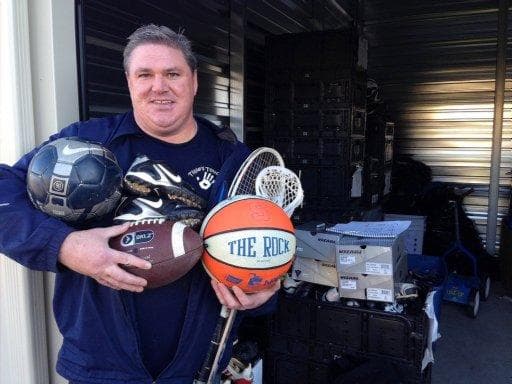
Johnson started Tillie’s Touch in 2009 with his daughter, and the early focus was equipment. By 2014, the group had collected more than 5,000 cleats and other pieces of sports gear for 3,000 children in need, a scale that showed just how many families were missing the most basic tools to get a child into a league or onto a field.
Over time, the work expanded beyond donations. In 2017, 41 children, most from Syracuse’s refugee community, took part in a summer soccer camp. That detail matters because it shows the program reaching kids who may not only need sports access, but also a setting where language, routine and trust can be built over time.
The organization also adapted to local conditions. In 2019, after the Syracuse City School District postponed fall sports, Tillie’s Touch created an independent boys soccer league, stepping in when the usual school-based path was disrupted. During the pandemic era, the group said it planned to deliver gifts to more than 300 children through its Holiday Wish Giveaway in 2020, then kept fundraising for school needs with a 13th annual volleyball fundraiser in 2022 and a school-supply effort in 2023.
The scale kept climbing. A 2025 report said more than 100 students from kindergarten through 6th grade took part in Tillie’s Touch’s year-end tournament, and a June 2026 opinion piece described the organization as a soccer club for boys from across the globe, with soccer, tutoring and mentorship layered together. Taken together, those details show a group that has moved from being a gear distributor to a year-round support system.
Who the program reaches now
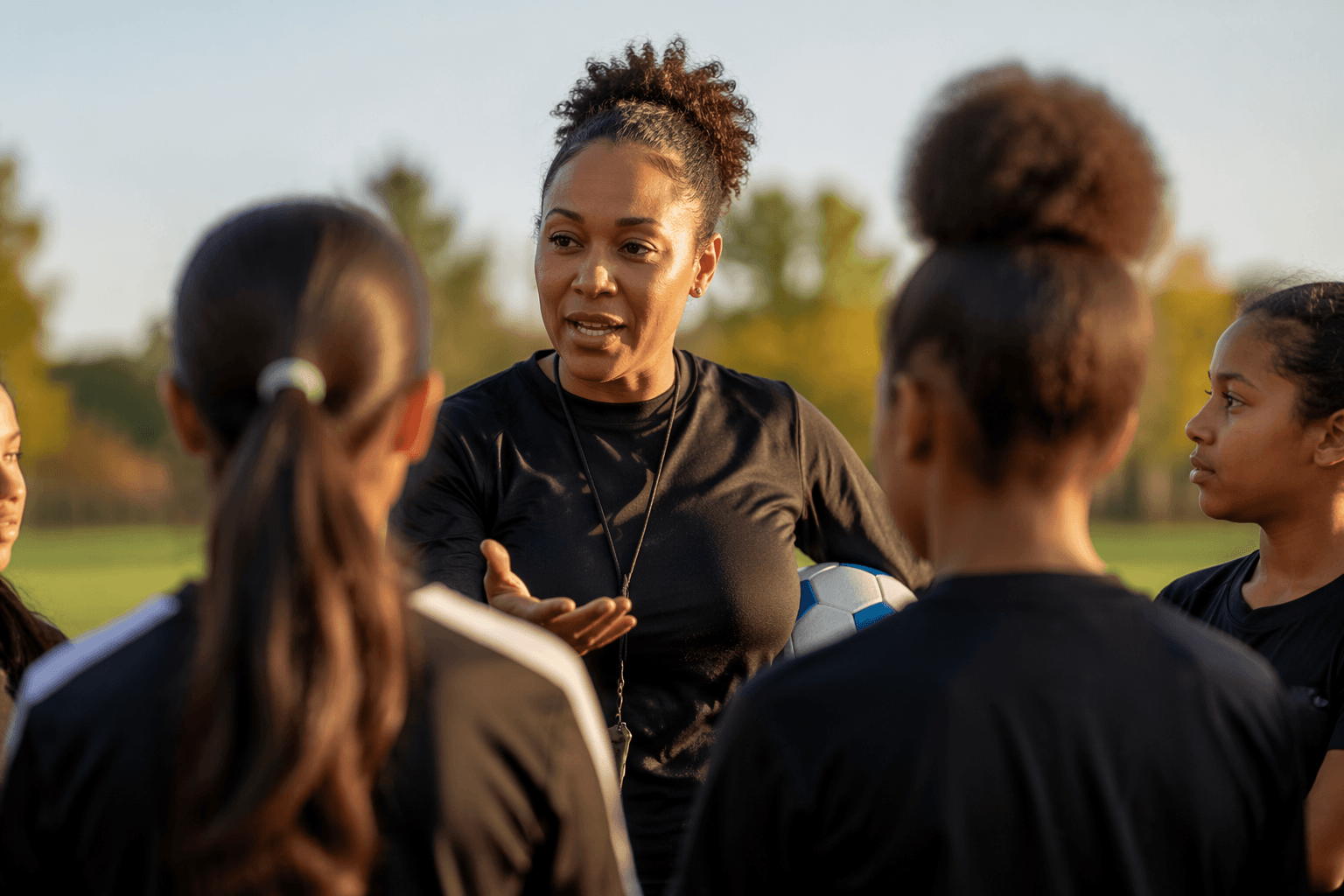
Tillie’s Touch’s current offerings still start with access. The group advertises a spring rec league for students in 1st through 6th grade, which puts its work directly in front of younger children who are still forming habits around school, teamwork and showing up consistently.
But the strongest evidence of impact comes from the kids themselves. Salehe Mkandama, a seventh-grade student who plays soccer with Tillie’s Touch, says the program helped him boost his grades and improve his soccer skills. That combination is important because it suggests the organization is affecting more than athletic ability: it is helping create the kind of daily structure that can spill over into classroom performance.
Johnson’s own description of the program fits that pattern. He sees sports as a place where children can learn discipline, make friends and stay engaged with school, especially when home life is uncertain. For a local nonprofit, that is a measurable goal, not just a hopeful slogan.
Why sports may work where other supports fall short
Onondaga County’s domestic-violence response network helps explain why Johnson’s story resonates locally. The New York State Office for the Prevention of Domestic Violence’s 2024 county profile and the county’s response infrastructure, including the Onondaga County Sheriff’s Office, Onondaga County Department of Social Services, Vera House and the Onondaga County Health Department, point to the reality that many families are navigating serious stress outside the classroom.
In that environment, a sports program can do something traditional supports often struggle to do alone: create a dependable place a child wants to go. The field, the gym and the team can become a stable routine, especially when a child may not have one everywhere else.
That is why Tillie’s Touch’s growth matters beyond the organization itself. The group now has its own community center, and it is also preparing its first-ever fundraiser, a fundraising dinner on Friday, June 12 at 6 p.m. Those are signs of a nonprofit trying to build a longer runway for work that is already reaching kids from Syracuse neighborhoods, refugee families and children who need help staying connected to school.
In a county where poverty and family stress remain real pressures, Tillie’s Touch is aiming to turn sports into a practical support system. The promise is simple, but the stakes are high: if a child can stay in the game, the hope is that child can stay on track in school and in life.
This article was produced by Prism’s automated news system from verified source data, official records, and press releases, then run through automated quality and moderation checks before publishing. The system is built and supervised by the people who set the standards it runs under. Read our full AI policy.
Know something we missed? Have a correction or additional information?
Submit a Tip