Battery Storage Fire in Warwick Raises Safety and Oversight Questions
A lithium ion battery storage facility on Church Street in Warwick caught fire late on December 22, and the site smoldered for days, prompting renewed public safety and air quality concerns. Town and county officials say the incident underscores lingering questions about siting and oversight as a proposed Warwick substation intended to back up power for thousands of homes faces heightened scrutiny.
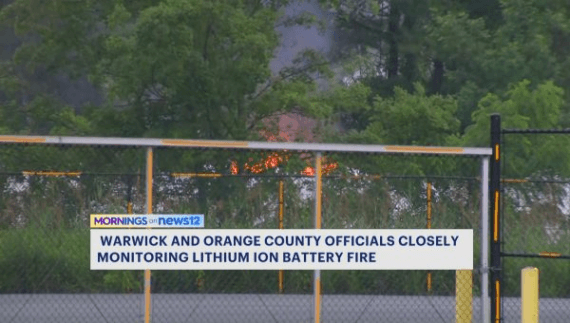
A fire broke out at the Convergent battery storage site on Church Street in Warwick around 10 30 p.m. on December 22, when a lithium ion storage system ignited and continued to smolder into the following days. Initial reports suggested water may have entered the storage system and triggered the blaze. Company officials said the fire was extinguished within 24 hours, but town readings showed thermal hotspots and continued heat emissions beyond that period, and local leaders maintained the incident and its impacts persisted.
Orange County hazardous materials teams monitored air quality around the site and reported no elevated toxic levels. Emergency responders and town officials nevertheless expressed concern about both immediate public safety and the long term implications of large battery installations sited near residential neighborhoods. The December event revived memories of a 2023 fire at the same location that required responders to let the blaze burn out because lithium ion battery fires are difficult to extinguish and can reignite through thermal runaway.
The facility is tied to a larger Warwick substation project that is designed to provide backup power for thousands of homes. Town officials said that project will face renewed scrutiny as municipal leaders review siting, permitting and emergency response plans. The incident raises practical policy questions about buffer distances between energy storage facilities and homes, mandatory monitoring and reporting requirements, and coordination among municipal, county and utility responders when battery installations experience thermal events.

For residents, the immediate priorities are clear. Air quality monitoring has so far not detected elevated toxins, but lingering heat and the possibility of reignition heighten concerns about evacuation protocols, notification systems and transparency from operators and regulators. The December 22 fire will likely prompt closer review of how resilient power infrastructure is balanced against localized safety risks, and whether additional safeguards are needed before large scale energy storage is placed near populated areas.
Know something we missed? Have a correction or additional information?
Submit a Tip