Deerpark veteran, 102, reflects on World War II service and local memorial
At 102, Harold Moore links Deerpark’s Memorial Day to a living World War II memory, and to the Sparrowbush monument that honors both Moore brothers.
A living bridge to Deerpark’s World War II generation
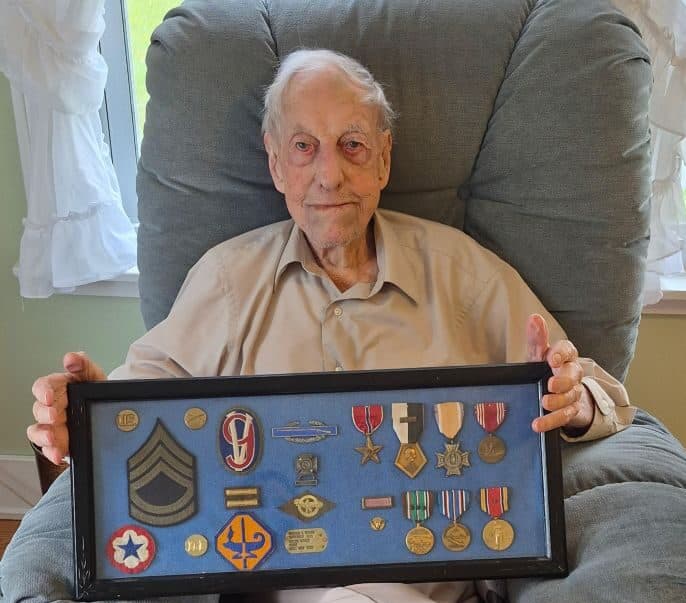
Harold Moore, 102, turns Memorial Day in Deerpark into something immediate and personal: a direct line from one Orange County family to the war that shaped the 20th century. Born and raised in Rio, educated in Port Jervis, and later honored at the Deerpark Veterans Memorial in Sparrowbush, Moore is part of the shrinking group of veterans who can still describe World War II from memory rather than from a history book.
That matters in 2026, the nation’s 250th birthday year, because the people who lived through the war are fewer every year. The National WWII Museum says more than 16 million Americans served in the U.S. armed forces during World War II, a staggering number that underscores how rare it is to still have a firsthand witness from that generation speaking for himself in Orange County.
From Front Street to Europe
Moore’s story starts close to home. He grew up on Front Street in Port Jervis and graduated from Port Jervis High School in 1940, carrying the kind of local upbringing that tied family, work, and duty together. He initially hoped to join the Air Force but could not qualify, and was drafted into the U.S. Army on March 3, 1943.
His active duty ran from March 10, 1943, to November 20, 1945, and his service took him to Europe. He later transferred into the infantry and served with Headquarters Company, 2nd Battalion, 378th Regiment, 95th Division, a unit that placed him squarely in the ground war that defined the last phase of the conflict.
Moore’s wartime path also shows how quickly World War II redirected young men’s lives. Students and trainees were pushed out of classrooms and training programs and into combat units as the Army sought more infantrymen, a change that would reshape military service for thousands of men like him.
The ASTP and the manpower crisis behind the war
Moore’s reflections on the Army Specialized Training Program help explain that shift. The ASTP was approved by the Secretary of War in September 1942, designed to provide the Army with technically and professionally trained men, but it was virtually liquidated in February 1944 because the Army faced a critical shortage of infantrymen.
That manpower crisis is the key to understanding why Moore ended up in the infantry and why his service fits into a much larger military story. The Army disbanded the program and sent trainees into units such as the 95th Division, turning would-be students into combat soldiers as the war demanded more men at the front.
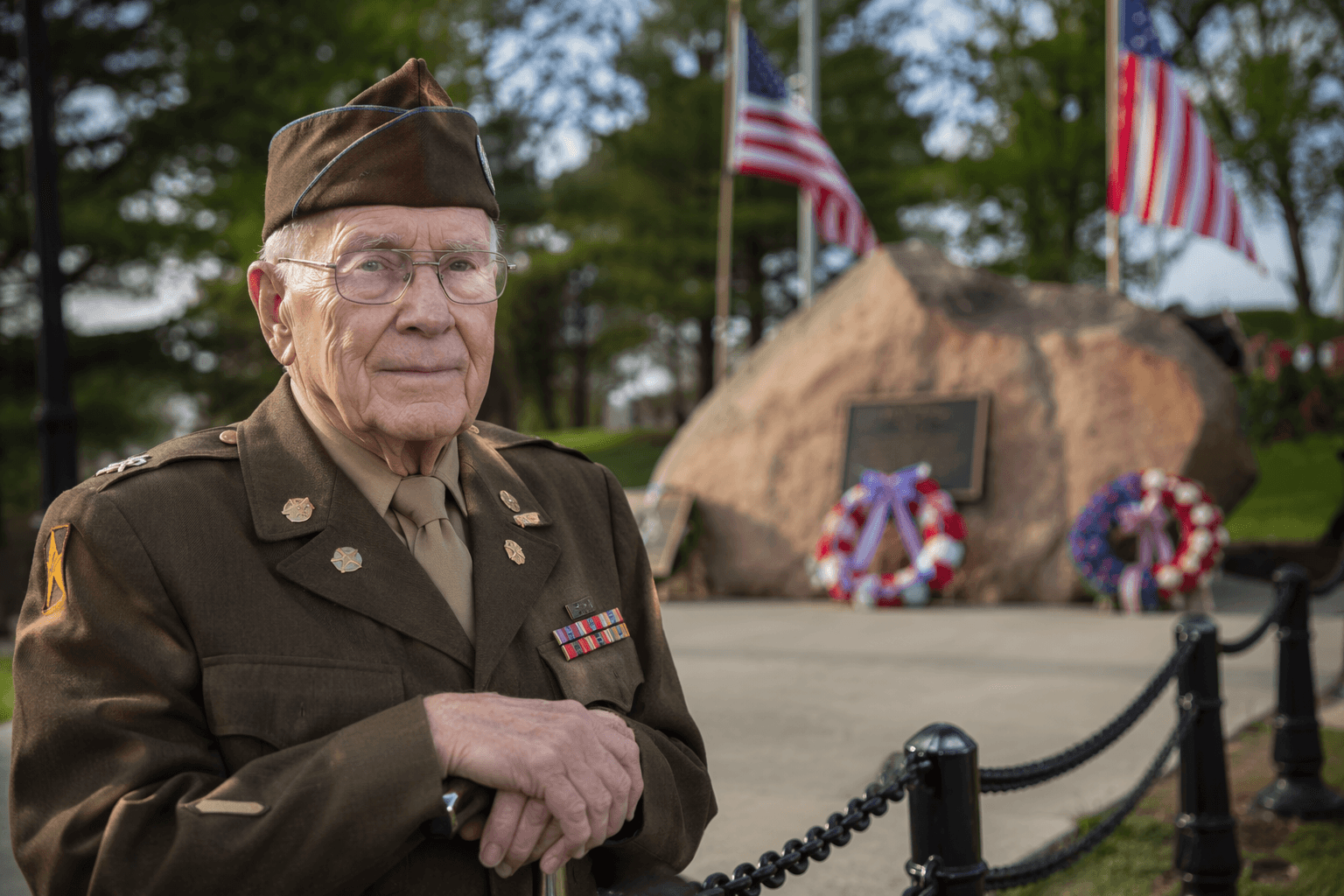
For Deerpark readers, that history gives Moore’s experience a clear local meaning. His service is not just a personal biography; it reflects how a generation from Orange County was swept into a national emergency that changed the direction of young lives, families, and local memory.
Two brothers, one memorial
Moore’s story is tied closely to his family, especially his older brother Robert Moore. Robert served in the Army’s Combat Infantry in Africa and Italy, and both brothers are honored at the Deerpark Veterans Memorial in Sparrowbush.
That memorial is more than a plaque. Town of Deerpark records say the site was conceived by the Town of Deerpark Veterans Committee to honor veterans from the Revolutionary War through the Afghanistan conflict, and it was placed at Sparrowbush Fireman’s Memorial Park. The scope is broad enough to connect the Revolutionary era to the post-9/11 generation, making the monument a civic record of Deerpark service across centuries.
The site has also become a community landmark in a very literal sense. A local report on the Deerpark veterans monument said several hundred people attended its dedication in September 2017, showing that this is an active place of remembrance, not a forgotten roadside marker. For families like the Moores, it gives a public face to private sacrifice.
Why Moore’s memory matters now
Moore’s account resonates because it brings Memorial Day back to the individual level. Instead of treating the holiday as a general salute to military service, his life asks readers to picture one man from Rio and Port Jervis, drafted in 1943, trained for one role and sent into another, then returning home with a story that still belongs to Deerpark.
That is especially powerful now, when firsthand World War II memories are disappearing from local conversation. Moore stands as a living connection to a war that involved millions, but is now carried by only a handful of veterans old enough to speak from experience. In Sparrowbush, his name and Robert Moore’s name are fixed in stone, giving Orange County a place to remember not only service, but the family histories that service leaves behind.
This article was produced by Prism’s automated news system from verified source data, official records, and press releases, then run through automated quality and moderation checks before publishing. The system is built and supervised by the people who set the standards it runs under. Read our full AI policy.
Did this article answer your question?