Hudson River Protection Act Bars New Barge Anchorages, Protects Water
The Hudson River Protection Act became law on December 19, prohibiting additional barge anchorages in the river to address pollution that threatens drinking water and habitat. The measure, attached to the FY2026 National Defense Authorization Act, responds to years of federal, state and local advocacy and alters how maritime activity will be regulated along the Hudson.
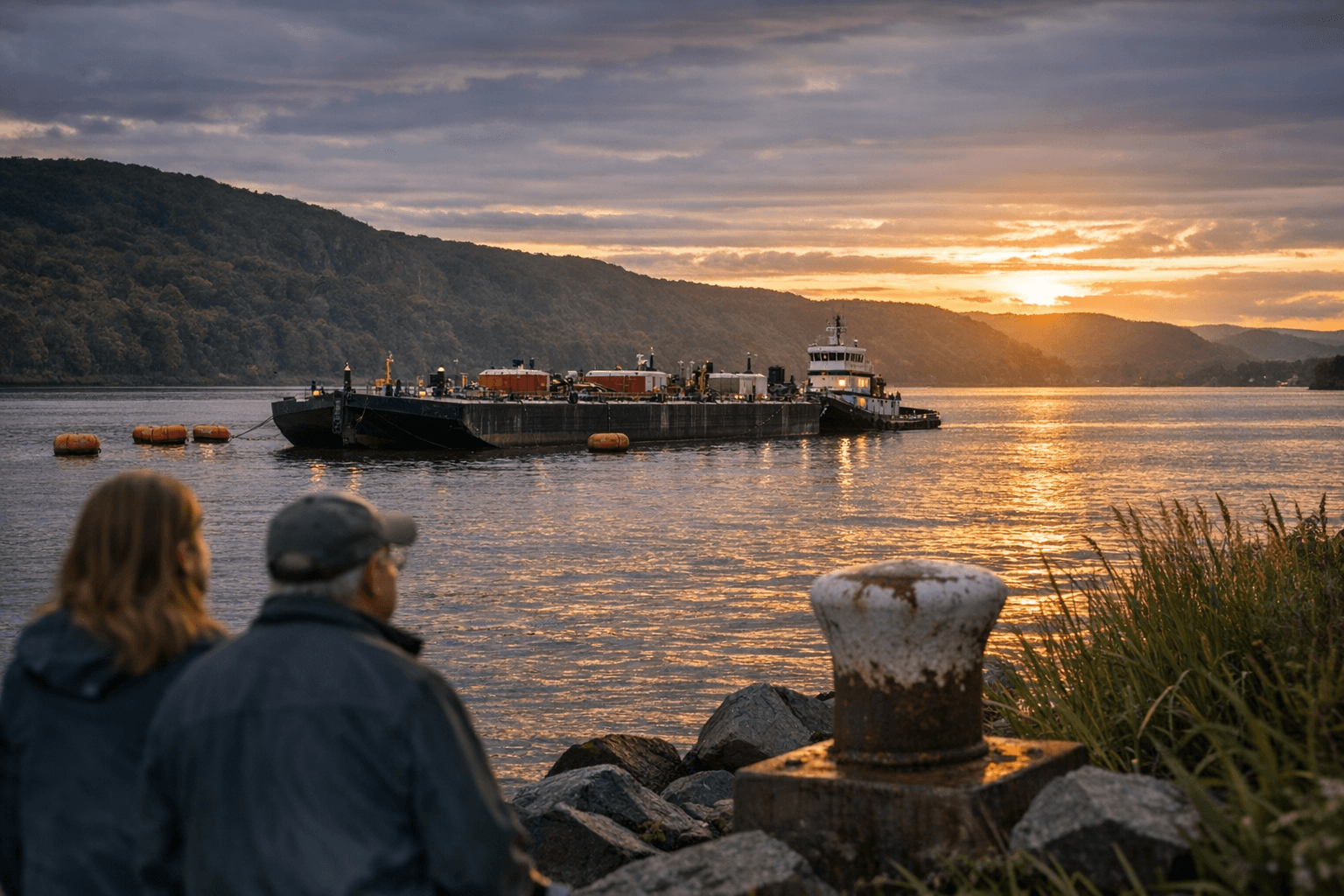
The Hudson River Protection Act, signed into law on December 19 as part of the FY2026 National Defense Authorization Act, will ban any additional barge anchorages in the Hudson River. Supporters framed the action as necessary to protect drinking water supplies serving more than 100,000 Hudson Valley residents and to reduce damage to the river's diverse ecosystem caused by anchored commercial vessels.
The bill traces to Representative Pat Ryan, who first introduced it in 2023 after the Coast Guard issued a Marine Safety Information Bulletin that advocates and officials saw as a move to weaken existing protections against commercial anchoring. In October of 2023, Representative Ryan joined Riverkeeper, Scenic Hudson and the Hudson 7 in urging the Coast Guard to uphold the anchoring ban. Those groups cited the frequent carriage of oil, asphalt and other hazardous materials on barges, as well as pollution linked to noisy generators and stadium style lighting, as primary concerns.
By incorporating the protection measure into the annual defense authorization, lawmakers placed river management squarely into federal statute. That approach creates a permanent prohibition on new anchorages, rather than leaving protections subject to administrative rule making. Implementation and enforcement will require coordination among federal maritime agencies and local water authorities, and will be watched closely by community groups and municipal officials who oversee regional water systems.
For Orange County and neighboring communities, the law has immediate implications for water quality, recreational use, and habitat restoration planning. Reduced anchoring is expected to lower the risk of spills and chronic pollution that can affect reservoirs and municipal intakes, and to improve conditions for fish and bird species that depend on the river. Local leaders will now need to engage with federal agencies to ensure the new legal standard is enforced and to track any regulatory changes that follow.
The law also highlights the influence of coordinated civic engagement. Advocacy by environmental groups and elected officials brought a localized concern into federal legislation. Residents should monitor agency implementation and hold officials to account to ensure the protections translate into cleaner water and healthier river habitat for the Hudson Valley.
Know something we missed? Have a correction or additional information?
Submit a Tip