Knox’s Headquarters in Vails Gate tells Orange County’s Revolutionary War story
A 1754 house in Vails Gate became Henry Knox’s wartime headquarters, and today it anchors a compact Orange County Revolutionary War corridor.
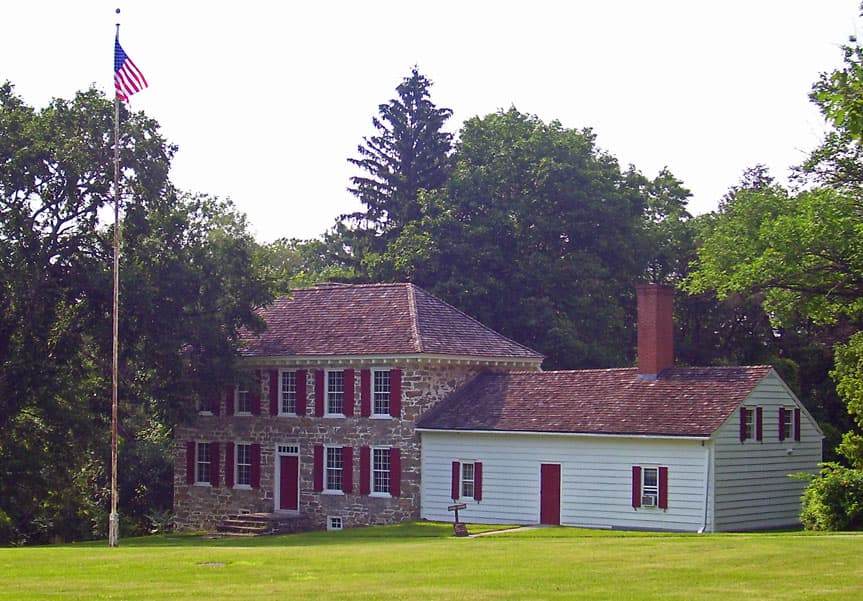
A 1754 Georgian-style house in Vails Gate sits at the center of Orange County’s Revolutionary War story, and it does so in a way visitors can still read on the ground. Knox’s Headquarters State Historic Site is small, but it ties together military command, civilian life, preservation history and a tight cluster of nearby landmarks that make New Windsor one of the most concentrated history stops in the Hudson Valley.
Why this Vails Gate house matters
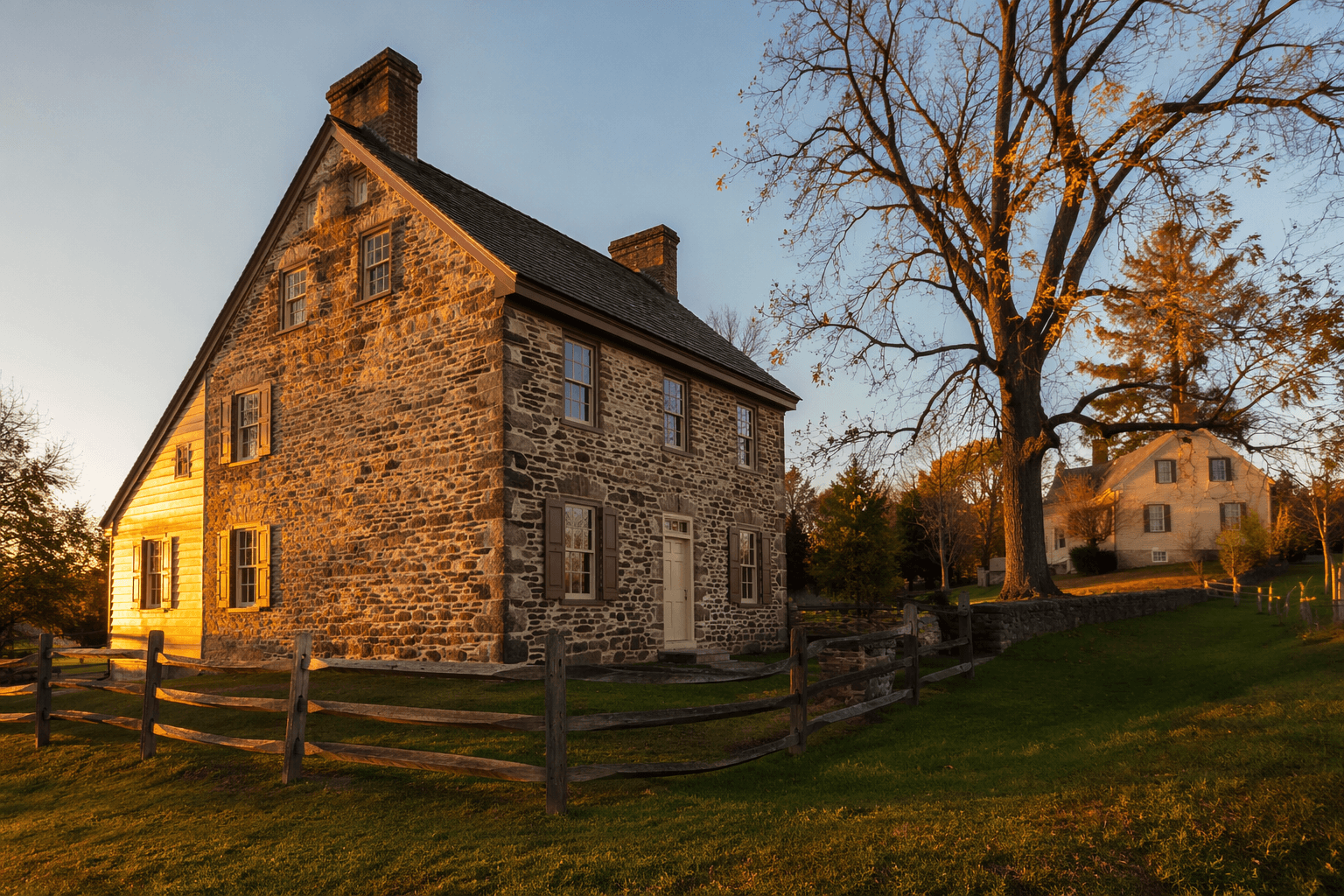
The house belonged to John Ellison before it became a command post, which is part of what gives the site its local weight. New York State Parks says Major General Henry Knox used the Ellison House on several occasions during the Revolutionary War, turning a private home into headquarters during the conflict’s final phase. The site also interprets the Ellison family story itself, showing how one Orange County household fit into the region’s prewar economy of milling and trade before the upheaval of war and the later effort to preserve its memory.
That layered story is what separates Knox’s Headquarters from a simple military site. It is not just about a famous officer passing through Vails Gate. It is about how Orange County looked before independence, how the Continental Army moved through the Hudson Valley, and how later generations decided that this particular house was worth saving, studying and marking for the public.
Inside the wartime command post
Knox was not the only general connected to the house. New York State Parks identifies the site as a place also used by Nathanael Greene and Horatio Gates, which places the Ellison House in the orbit of the Continental Army’s senior command structure. The Hudson River Valley heritage listing says Knox used the house in 1779 and during the winter of 1780-81, while Greene stayed there in the summer of 1779 and Gates lived there in the fall of 1782 as he commanded the nearby New Windsor Cantonment.
That timeline matters because it links the house to the army’s last movements in the Hudson Valley. From October 1782 until spring 1783, New York State Parks says about 7,000 soldiers and 500 camp followers were establishing winter quarters at New Windsor Cantonment. George Washington was lodged at Jonathan Hasbrouck’s house in Newburgh, and he issued cease-fire orders on April 19, 1783. George Washington’s Mount Vernon describes Newburgh-New Windsor as the last winter cantonment of the main Continental Army and places about 7,500 troops there, which underscores how closely this corner of Orange County was tied to the war’s end.
For readers deciding whether the site is worth a stop, that is the core answer: this is one of the few places where the final chapters of the Revolution can still be traced across a short drive. The house, the cantonment area and the river corridor together show how command decisions, troop movements and local households intersected in the closing months of the conflict.
What you can see today
The site is at 289 Forge Hill Road in Vails Gate, within the town of New Windsor. New York State Parks identifies the Ellison House as the 18th-century home at the center of the property, and seasonal guided tours offer a look inside the restored house. During special events, the site opens free of charge, giving local families and summer visitors a lower-barrier way to step into the space without committing to a full museum day.
There is more on the grounds than the house alone. The Jane Colden Memorial Garden was constructed there in 1957, and the property also includes the Jane Colden Native Plant Sanctuary. That adds another Orange County story to the visit: the legacy of Jane Colden, recognized as America’s first woman botanist, is folded into the same landscape that preserves Revolutionary War memory.
If you are planning a visit, the site is worth reading as a set of details rather than a single attraction.
- The 1754 Ellison House gives the site its architectural core.
- The Jane Colden garden and native plant sanctuary add a science-and-landscape layer to the visit.
- Seasonal guided tours make the house itself the main interpretive stop.
- Free special events can make the site an easy addition to a summer outing.
How Knox’s Headquarters fits into a larger Orange County route
One of the strongest reasons to visit now is proximity. New York State Parks says Knox’s Headquarters sits about one mile from both New Windsor Cantonment and the National Purple Heart Hall of Honor. That makes Vails Gate and New Windsor a compact Revolutionary War corridor, not a scattered set of unrelated sites. For Orange County, that clustering matters because it gives the region a clear, place-based identity that can draw day-trippers, school groups and history travelers into the same small area.
The nearby New Windsor Cantonment State Historic Site extends that experience. Its visitor center exhibits are open year-round, and annual living history programs take place in cooperation with Knox’s Headquarters. In practice, that means visitors can pair the house with a broader look at the army’s last winter encampment, then connect it to the National Purple Heart Hall of Honor without leaving the neighborhood.
The site is also part of the Hudson River Valley National Heritage Area Revolutionary War trail, which places it within a larger network of heritage tourism stops. That designation helps explain why the house still matters beyond local memory: it is one node in a historic corridor that can keep visitors in Orange County longer, moving between Vails Gate, New Windsor and nearby Newburgh rather than treating the area as a quick pass-through.
A preserved landmark with local staying power
Knox’s Headquarters has also been formally recognized as a historic place in its own right. The property was added to the National Register of Historic Places on November 9, 1972, and designated a National Historic Landmark on November 28, 1972. Those designations reflect more than architectural survival. They mark the house as a place where military command, civilian enterprise and postwar remembrance all left visible traces.
That combination is why the site still works as a guide to Orange County’s Revolutionary War story. It shows the county before the war through the Ellison family, during the war through Knox, Greene and Gates, and after the war through preservation, commemoration and the landscaped grounds visitors see today. In a county built on layers of older roads, river crossings and settlement patterns, Knox’s Headquarters remains one of the clearest places to see how local history was made and how it continues to shape the area’s identity.
This article was produced by Prism’s automated news system from verified source data, official records, and press releases, then run through automated quality and moderation checks before publishing. The system is built and supervised by the people who set the standards it runs under. Read our full AI policy.
Did this article answer your question?