Low Cloud Over Orange County Sparks Safety and Oversight Questions
A dense, unusually low cloud appeared over Orange County on December 21, prompting residents to demand answers after officials traced its origin to skies above the Middletown and Minisink area. The incident highlighted tensions between local activists, county emergency managers, and a nearby power plant over air quality monitoring and regulatory accountability.
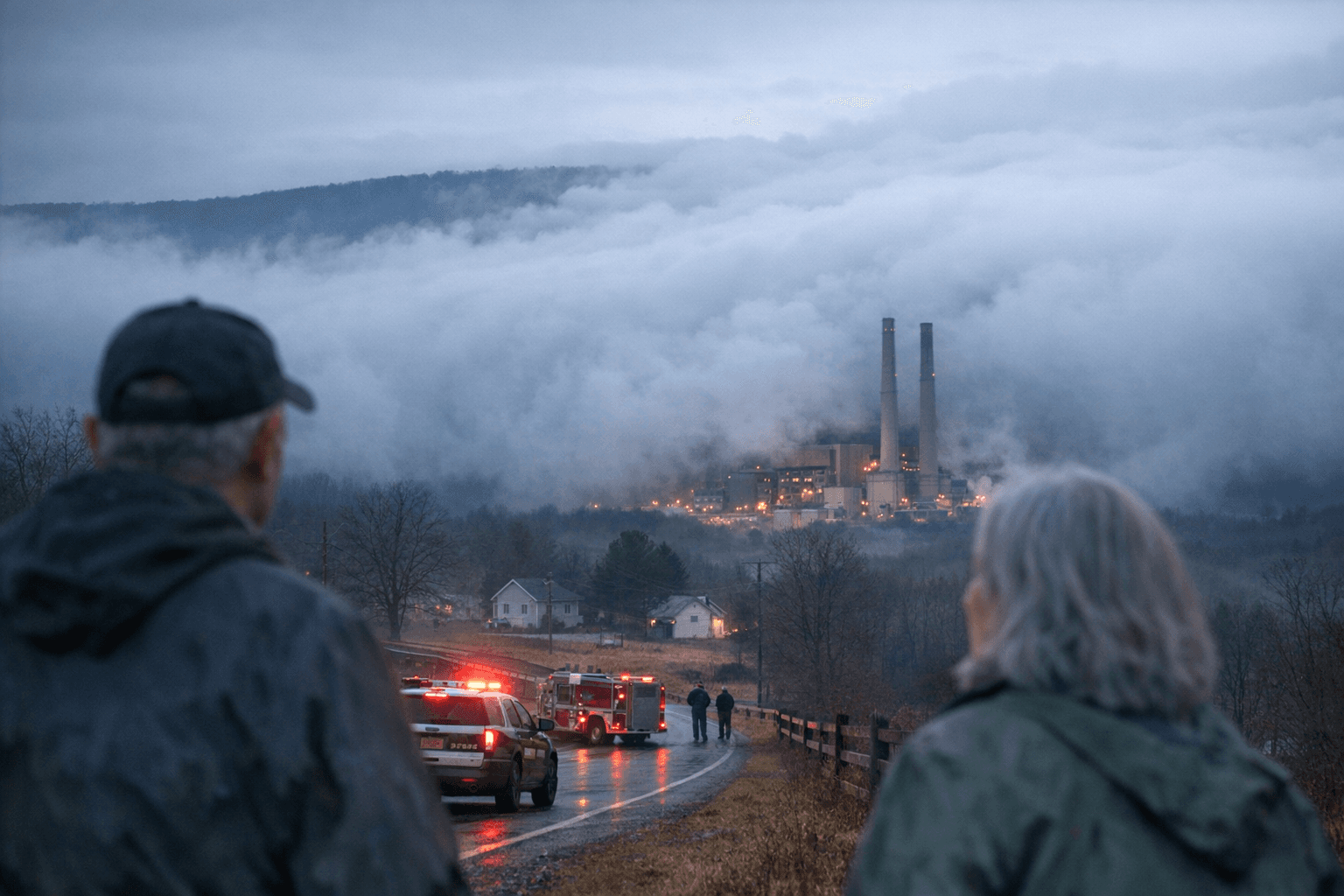
Residents across western Orange County reported an unusual plume in the sky on December 21, prompting calls to local authorities and widespread concern about air quality and public safety. The Orange County Office of Emergency Management traced the cloud to the atmosphere above the Middletown and Minisink area and said there were no reports of fires or explosions connected to the event. Officials described the cloud as unusually low compared with typical atmospheric plumes, but offered no definitive source publicly.
Local activists quickly suggested the plume originated at the CPV Valley Energy Center in Wawayanda, a fossil fuel fired power station located in the southwestern part of the county. County officials responded that there is no evidence linking the plant to the cloud and that their investigation had not established a definitive origin. A representative for the plant maintained that the plume did not originate at their facility and emphasized the plant s emissions record, regulatory inspections, and continuous monitoring data as context for that position.
The episode has immediate local consequences. Residents near the path of the plume expressed concern about short term health effects and longer term environmental implications. The appearance of an unexplained emission has also intensified scrutiny of monitoring systems and regulatory oversight. For communities adjacent to large industrial facilities, unexplained events can erode trust in both corporate statements and agency assurances unless investigations provide clear, transparent results.
Policy questions now on the table include whether existing monitoring and notification mechanisms are sufficient, how county and state agencies coordinate on atmospheric incidents, and whether additional sampling or independent analysis should be used to resolve disputes about source attribution. The New York State Department of Environmental Conservation has authority over emissions compliance and inspections, and activists say regulators should review monitoring logs and any available air sampling.
As investigators, local officials, and plant operators work to reconcile differing accounts, the incident underscores the role of civic engagement in demanding transparency. For voters and community leaders, the episode will likely shape conversations about industrial oversight, emergency management capacity, and the standards used to assess air quality impacts in Orange County.
Know something we missed? Have a correction or additional information?
Submit a Tip