Newburgh board weighs rail study amid Hudson Valley revival push
Newburgh leaders weighed a west-shore rail study that backers say could cut commutes and traffic, while the proposal won more regional backing and state budget support.
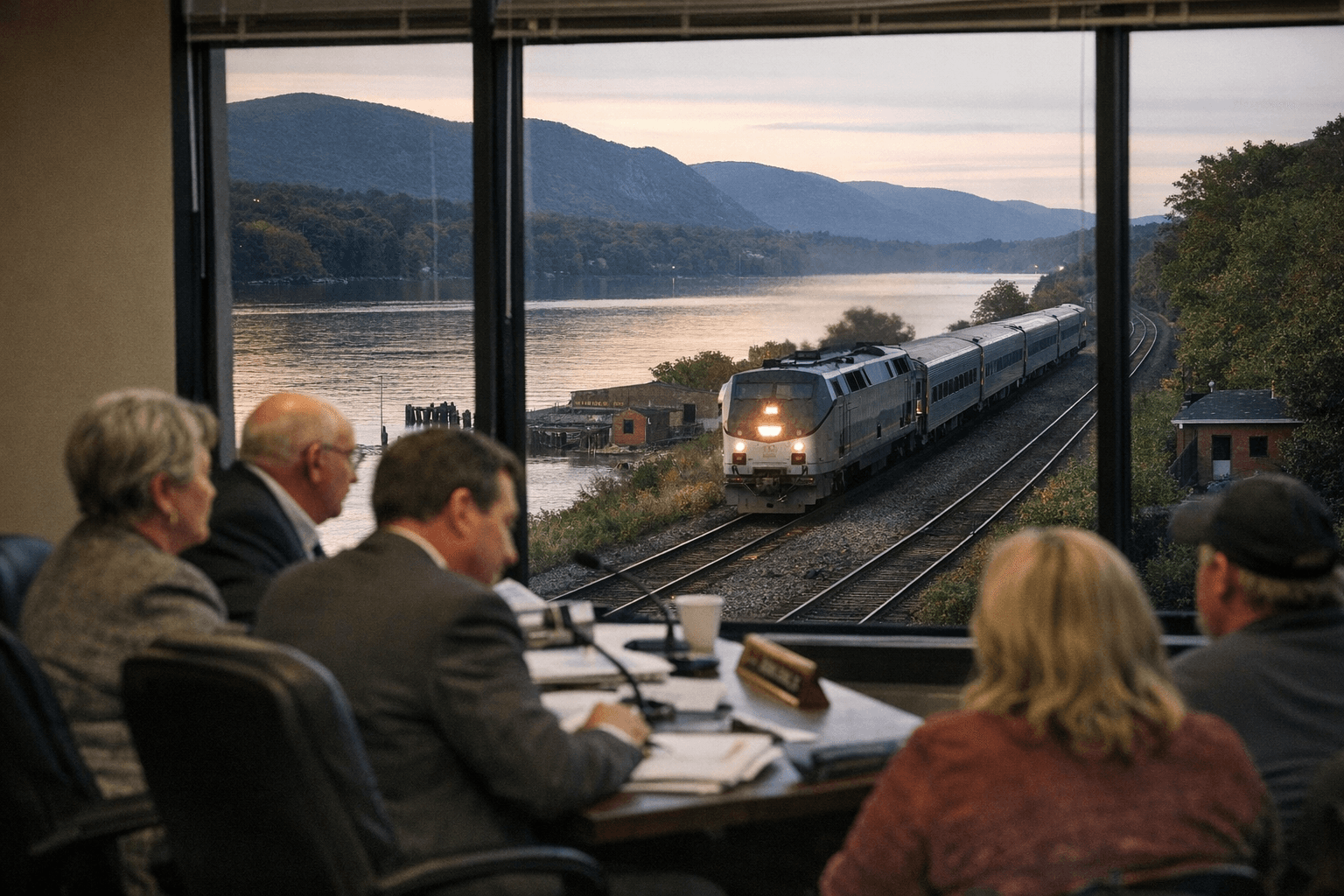
A west-shore passenger rail study moved onto the Town of Newburgh Board agenda, a step supporters say could one day shorten Hudson Valley commutes, ease traffic on the Newburgh-Beacon bridge and change land values around future station areas.
The board’s April 13 agenda listed a resolution for a feasibility study for West Shore Passenger Rail Service, putting Newburgh into a widening regional campaign led by All Aboard Hudson Valley. The advocacy group has been pressing towns and counties to line up behind the study, and it has also been in conversations with the City of Newburgh and the City of Kingston about possible resolutions.
The effort has spread quickly. Town of Cornwall unanimously approved its resolution on Jan. 20 after early discussions that included Supervisor Josh Wojciechowski, the Village of Haverstraw adopted its supporting resolution on Feb. 3, the Rockland County Legislature followed on Feb. 4 and the Orange County Legislature approved its own support on Feb. 5. The Town of Highlands also signed on, turning what began as a local rail revival idea into a coordinated lower-Hudson campaign.
State Sen. James Skoufis added political weight on March 16, saying the West Shore Passenger Line feasibility study had been included in the New York State Senate’s one-house budget proposal. That matters because the study is the immediate prize, not full service. If the region gets that far, supporters say restored rail could help Orange, Rockland and Ulster county residents reach New York City without the constant car dependence and transfer headaches that now define travel across the Hudson.
Daniel DeFalco of All Aboard Hudson Valley has described the corridor as a transit desert, arguing that restored service could make commutes easier, support transit-oriented housing development and strengthen tourism. He has also pointed to the Newburgh-Beacon bridge and the long train-transfer experience many riders face as evidence of how much the region still relies on road travel.
The west shore line is not a new idea. Historical accounts say passenger service ended in the 1950s, with one source placing the final run in 1959, after the corridor had linked the west side of the Hudson with ferries to Manhattan via Weehawken. That history is why supporters call this a restoration effort, not a brand-new rail scheme, and why the vote in Newburgh is being watched as a sign of whether local governments are ready to turn nostalgia into transportation policy.
This article was produced by Prism’s automated news system from verified source data, official records, and press releases, then run through automated quality and moderation checks before publishing. The system is built and supervised by the people who set the standards it runs under. Read our full AI policy.
Did this article answer your question?