Newburgh council debates graffiti enforcement after repeated vandalism
Repeated tagging at a Lake Street funeral home has left Newburgh weighing whether code fines hit vandals or the victims left to clean up.
Repeated graffiti at Rhodes Funeral Home on Lake Street has turned a vandalism problem into a code-enforcement burden, with the property receiving multiple violations even though the funeral home does not own the adjacent lot that residents say appears to be drawing the tagging back behind the building. One of the tags reads “ZVS, NBNY,” and neighbors said the overgrown lot invites vandalism out back, especially at night.
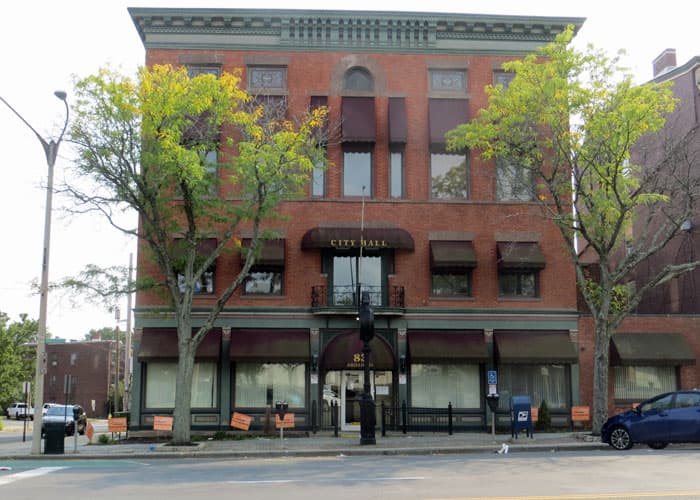
At the May 28 City Council meeting in Council Chambers on the third floor of City Hall at 83 Broadway, At-Large Councilman Robert McLymore pushed the administration and police department to look for a response that goes after the vandals without punishing the people left to deal with the damage. “He’s not the one who’s defacing his own property,” McLymore said, arguing that the city should focus on preventing the crime rather than citing the victim. The City of Newburgh Council has seven elected part-time members, including two at-large seats.
The dispute also put a spotlight on how Newburgh handles neighborhood complaints. The Bureau of Code Compliance sits under the Fire Department, and Quanetta Inman is listed as the current code compliance supervisor. City materials encourage collaboration with residents on neighborhood problems, and non-emergency property complaints can be reported through SeeClickFix or by calling the Code Compliance and Building Department at 845-569-7400. That structure helps explain why graffiti and exterior property conditions can trigger enforcement even when the owner is also the one being victimized.
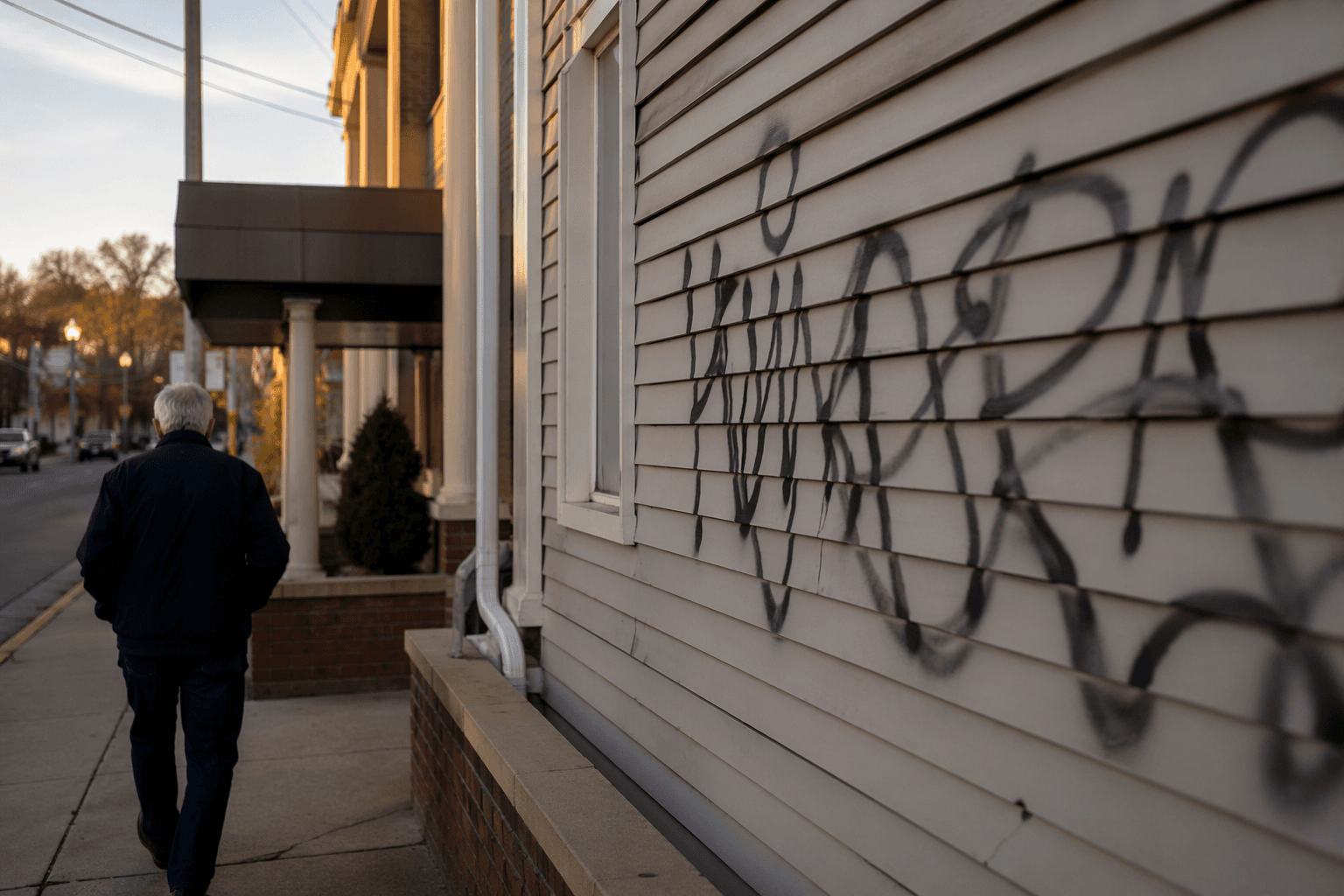
For Rhodes Funeral Homes, the stakes are more than cosmetic. The business is listed at 18 Lake St., Newburgh, NY 12550, and repeated tagging at a funeral home carries a different weight than graffiti on an empty wall. It is an intrusion into a place tied to mourning, family service and public dignity, while the city’s current response can leave owners absorbing the cost of cleanup and the friction of dealing with bureaucracy on top of the vandalism itself.
The wider background is familiar in Newburgh. In 2019, a state probe found the city had insufficient fines for violations, inadequate procedures for vacant buildings and a lack of resources. In 2017, the city hired a part-time code enforcer focused on vacant buildings. Those earlier steps show how long Newburgh has wrestled with enforcement, and why the council debate on Lake Street has become more than a single-property dispute: it is now a test of whether city policy can distinguish neglected properties from people who were targeted.
This article was produced by Prism’s automated news system from verified source data, official records, and press releases, then run through automated quality and moderation checks before publishing. The system is built and supervised by the people who set the standards it runs under. Read our full AI policy.
Know something we missed? Have a correction or additional information?
Submit a Tip