Riverkeeper fish migration celebration brings flotilla to Newburgh
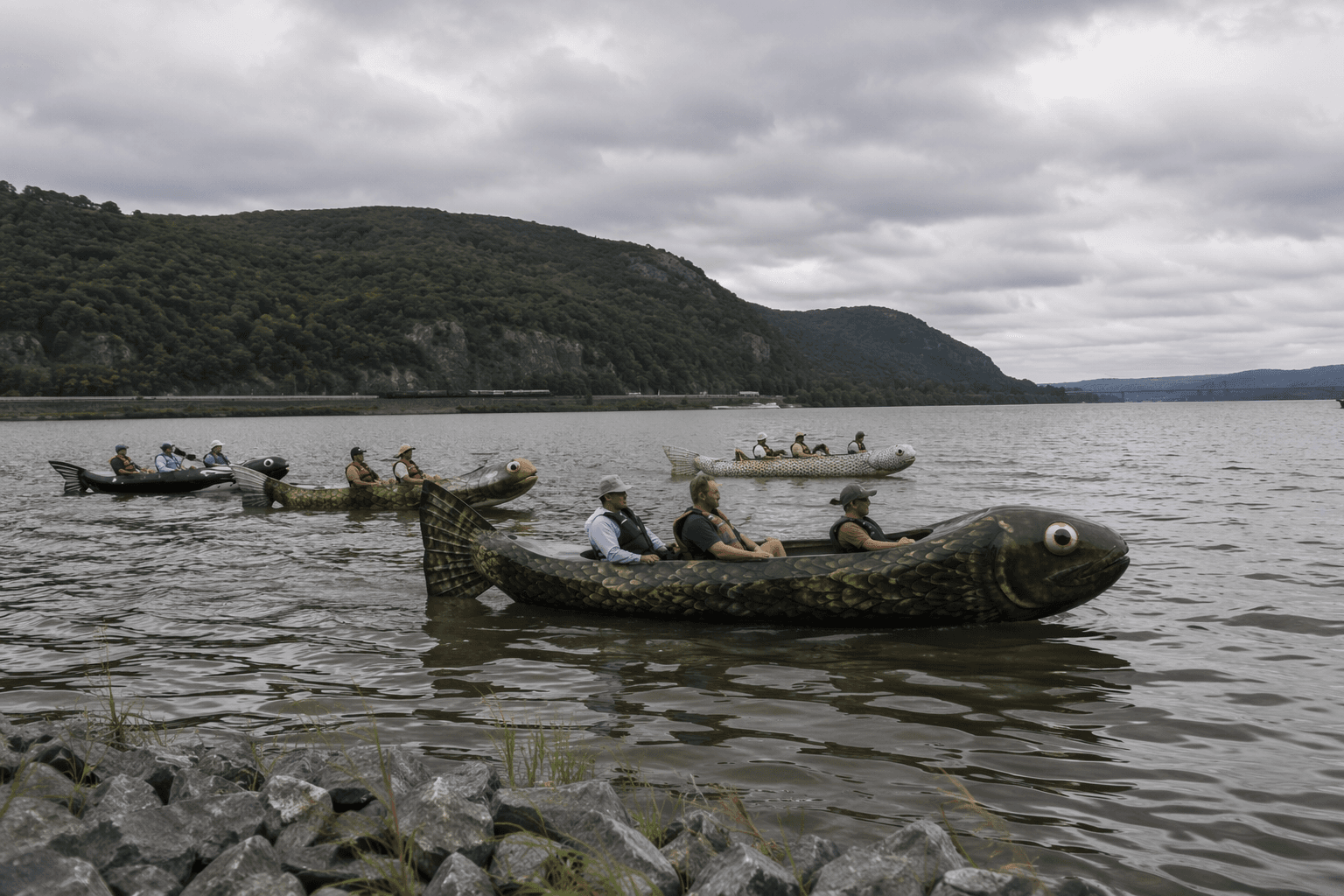
A flotilla of four fish-themed boats traced the Hudson from Yonkers to Unico Park, turning Newburgh’s waterfront into a moving lesson in river recovery.

The second annual Riverkeeper Fish Migration Celebration reached Newburgh on Saturday with a flotilla of four fish-themed boats, turning the City of Newburgh waterfront and Unico Park into a rolling display of Hudson River ecology. The procession moved north from Habirshaw Park in Yonkers to make the river’s fish migration visible to communities along the banks.
Riverkeeper built the day around species that move through the Hudson each year, including Atlantic sturgeon, American eel, river herring, American shad and striped bass. The Hudson supports an annual spring return of millions of fish that have migrated for thousands of years.
At the Newburgh stop, the celebration mixed science with public art and neighborhood participation. Owl Smith of the Ramapo Munsee Nation gave a ceremonial welcome, and the Yonkers launch featured music and a puppet performance led by Rhiannon Catalyst, Big Nazo and the Honk Family Band. Giant fish puppets, live music and fish-shaped boats gave the day a festival feel.
The event also gave local organizations a place on the waterfront. Visitors could decorate fish hats, draw on plaster pieces that Newburgh Tools planned to use in its walls, and take a VR tour of Quassaick Creek from Outdoor Promise. Completed stamp cards earned participants a chance at a kayaking experience from the Newburgh Waterways Center.
Grace Vasquez praised the artistry of the fish boats and fabrics, while Gayle Donnelly said she valued the chance for the community to support local artists and raise awareness about the environment.
American shad are a migratory species with a long history in the Hudson and Delaware rivers, and Indigenous peoples and colonial Americans relied on shad for sustenance. Riverkeeper tied the celebration to restoration work in Newburgh: the removal of two obsolete dams would reopen spawning habitat on Quassaick Creek. In a later habitat update, the group planted 100 native trees and cleared invasive plants along the creek after the dam removal.
This article was produced by Prism’s automated news system from verified source data, official records, and press releases, then run through automated quality and moderation checks before publishing. The system is built and supervised by the people who set the standards it runs under. Read our full AI policy.
Did this article answer your question?