Washington's Newburgh headquarters shaped the final months of the Revolution
Newburgh's Washington’s Headquarters lets Orange County families step into the nation’s first publicly owned historic site, where Washington helped end the Revolution.
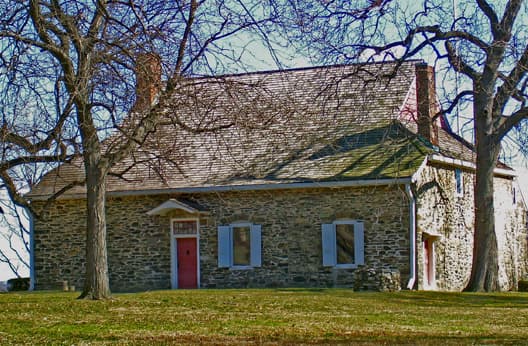
At 84 Liberty St. in Newburgh, Washington’s Headquarters State Historic Site turns Orange County’s Revolutionary War past into a place you can actually walk through. The Hasbrouck House is the nation’s first publicly owned historic site, and it is still the clearest local stop for seeing how the war’s final months played out in the Hudson Valley.
Why Newburgh belongs in Orange County’s civic classroom
Newburgh is not a background setting in this story. The Advisory Council on Historic Preservation describes it as a hilltop city overlooking the Hudson River, with a population of about 25,000, and the headquarters sits right inside that lived-in landscape. That makes the site especially useful for local families and school groups: it ties national history to a real Orange County street, a real river view, and a real farmhouse that became the command center for George Washington.
The house also broadens the story beyond Washington alone. New York State Parks describes the headquarters as the place where Washington, Martha Washington, aides, guards, servants, and enslaved people spent more time than at any other military headquarters. That detail matters because the site teaches domestic life, labor, and military decision-making together, not as separate stories.
The longest headquarters stay of the war
Washington and Martha Washington stayed at the Newburgh headquarters from April 1782 to August 1783, a stretch of 16 and a half months. That was longer than Washington’s stay at any other military headquarters, which is why Newburgh became such a powerful symbol at the end of the Revolutionary War.
The building itself helps explain that length. The Hasbrouck House is a 1750 fieldstone farmhouse, and it was not a ceremonial stopover. It became the working home where Washington led the final phase of the war, managed the household that supported his command, and presided over the transition from battlefield urgency to peace.
What happened here before peace arrived
Newburgh’s place in the Revolution is tied to two moments that shaped the nation’s military identity. While at headquarters, Washington created the Badge of Military Merit, the decoration that later became the forerunner of the Purple Heart. The U.S. Army Center of Military History identifies Newburgh 1783 as the historical context for that origin story.
The site is also where Washington announced the cease-fire that ended the Revolutionary War. Just weeks earlier, on March 15, 1783, he delivered the Newburgh Address, the speech that helped defuse the Newburgh Conspiracy. Later that year, on Sept. 3, 1783, the Treaty of Paris formally signed peace. Seen together, those dates make Newburgh one of the best places in Orange County to understand how the war ended in practice, not just on paper.
From family farmhouse to public landmark
The state’s ownership history is part of the site’s larger significance. New York acquired the Hasbrouck House in April 1850 and opened it on July 4, 1850. A New York State Parks press release calls it the nation’s first publicly owned historic site, and the agency’s blog says the 1750 house was transformed into New York State’s first state historic site that April.
That early public investment still shapes the visitor experience. The site includes both the Hasbrouck House and a Museum Building, so you can move from the headquarters rooms into exhibits that put the site in context. The Parks system also places it in the Palisades Region, which connects Newburgh to a broader network of Hudson Valley Revolutionary War places.
What to expect on a visit now
Parks lists current hours through Oct. 21, 2026 as Wednesday through Saturday from 11 am to 5 pm and Sunday from 1 pm to 5 pm. Those hours reflect ongoing restoration work on the Hasbrouck House, so the visit is shaped by preservation as much as interpretation. That is part of the lesson too: the site is still being cared for because it remains central to the region’s history.
Access has improved as well. In 2021, New York State Parks announced pathway, accessibility, and parking improvements at Washington’s Headquarters, a sign that the state has continued investing in the grounds as a public resource. In 2022, Parks and the Palisades Interstate Park Commission announced new site improvements, and the Daughters of the American Revolution marked the opening of new walking paths and landscaping. Those changes make the site more usable for visitors of different ages and mobility levels.
Why teachers keep bringing students here
For schools, Washington’s Headquarters works because it converts the abstract idea of the Revolution into a place students can see and question. Cottage Lane Elementary fifth graders from South Orangetown toured the site with help from a New York State Parks Connect-Kids-to-Parks Field Trip Grant, and a museum guide told them, “You’re getting to walk where George Washington walked and see what he saw.”
That is exactly the kind of lesson Orange County classrooms can use. The site helps students connect Newburgh, the Hudson River, and the final months of the war to the larger founding story of the country. It also shows why the region mattered: the Hudson Valley was not a side note, but a working center of command, diplomacy, and memory.
How the site fits the Revolution 250 moment
Washington’s Headquarters is also part of New York’s current Revolution 250 interpretation efforts. New York State Parks chose it as the first installation site for new interactive video displays interpreting the state’s Revolutionary history, and the rollout is planned for 20 state historic sites tied to the 250th anniversary. That keeps Newburgh in the center of the public conversation about how New York tells its founding story.
For Orange County, the value of the site is straightforward. It is a place where a 1750 farmhouse became the nation’s first publicly owned historic site, where Washington spent 16 and a half months at the war’s end, and where local students can still stand inside the rooms that helped bridge revolution and peace.
This article was produced by Prism’s automated news system from verified source data, official records, and press releases, then run through automated quality and moderation checks before publishing. The system is built and supervised by the people who set the standards it runs under. Read our full AI policy.
Did this article answer your question?