Woodbury board weighs tax-payment rule for applicants before approvals
Woodbury officials debated whether applicants with unpaid taxes or fees should be blocked before board approvals, raising questions about who would enforce it.
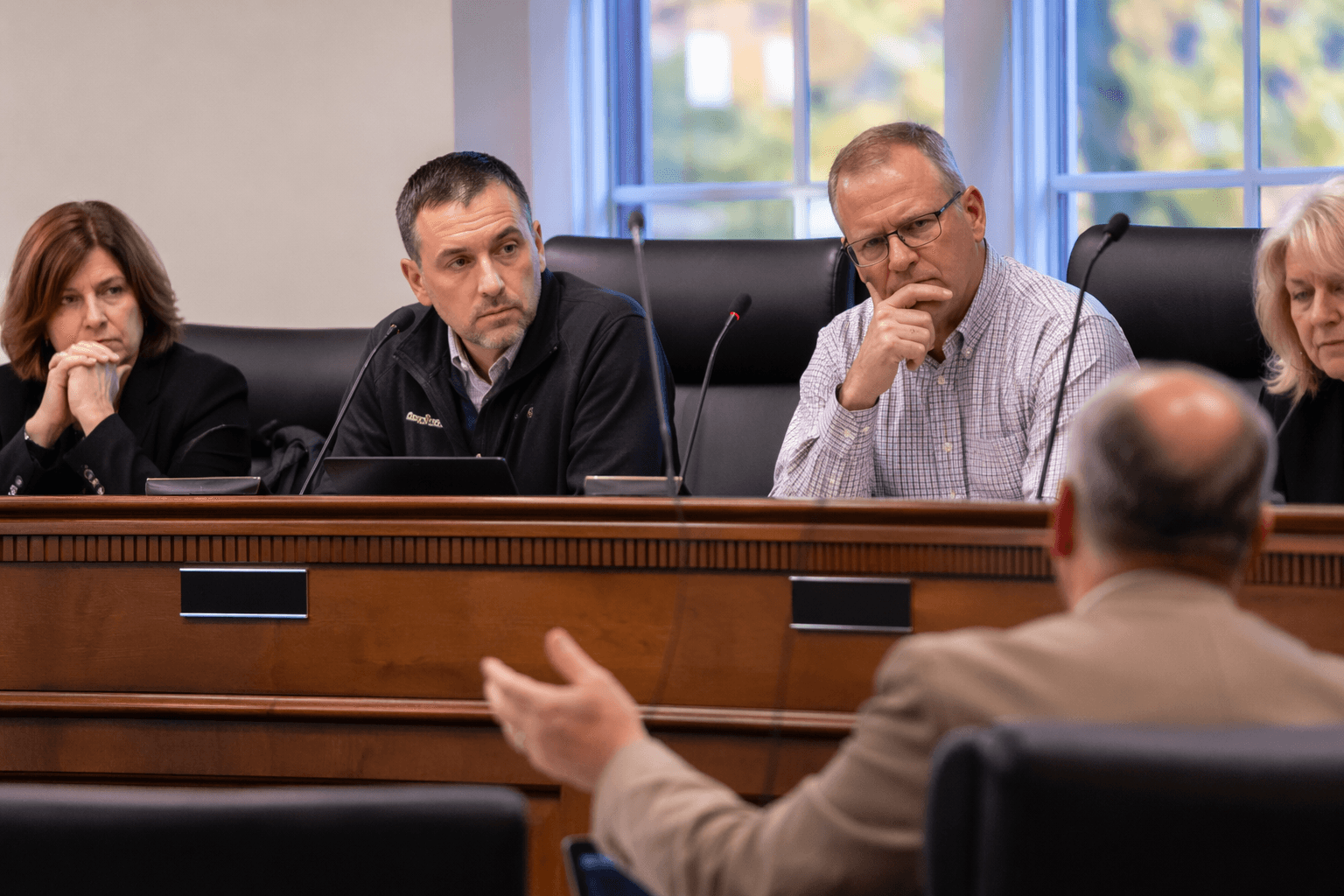
Woodbury officials spent part of a May 28 board meeting weighing a proposal that would stop applicants with unpaid taxes or certain fees from being heard by the village’s boards, a move that could tighten enforcement but also create a new hurdle for people trying to move projects forward.
Introductory Local Law 4 of 2026, titled Taxation, would amend the village code so payment of taxes and fees would come before board approval. The change would apply to all three municipal boards and would replace a previously reserved section in Chapter 277 with language creating an Article X on payment of taxes and fees before board approval. Public notice for the law had been printed in the Times Herald Record on March 5, 2026, and the Planning Board’s comments had not yet been folded into the draft when trustees continued the hearing.
Trustee Christopher Graziano backed the idea, saying the target was applicants who intentionally failed to pay rather than ordinary taxpayers who simply fell behind. He also said there were current applicants in the planning board system who had not paid taxes. But Village Treasurer Desiree Potvin pressed the practical issue that often decides whether a rule works in day-to-day government: who would actually verify the debt. Potvin said the draft did not explain whether proof would be written or verbal, who would check whether applicants owed the village, county, town or school district, or how the information would be obtained.
Potvin added a local-government wrinkle that matters in Orange County: village taxes unpaid by the end of October and school taxes unpaid by the end of November are relieved onto the town and county January taxes, with the county making those entities whole. In her view, that meant the village itself would never remain unpaid on those taxes. She also noted that the draft referred to a Village Clerk/Treasurer position that the village does not have, and said the Building Department, Water and Sewer Department and Highway Department were given authority over collecting their own fees when the village was formed.
The board also kept working on Introductory Local Law 6 of 2026, Site Plan Enforcement, which would give the Building Inspector and Code Enforcement Officer clearer authority under Section 310-45(F). The draft would make final site plan approval expire after one year unless a building permit, site work permit or on-site work began, allow one additional one-year extension when warranted, require renewed approval if work stopped for more than six months, and permit revocation for violations of site plan conditions or unauthorized construction. Violations could bring fines of up to $1,000 a day, up to five days in jail, or both, and the law would take effect immediately after filing with the New York State Secretary of State in Albany.
Graziano suggested a joint work session with the town so both laws could be discussed together, and Town Supervisor Jacqueline Hernandez urged cooperation between municipal departments. The meeting, attended by Mayor Andrew Giacomazza, Deputy Mayor Susan Ciciello, Trustees Tara Burek and Kathleen Mottola, Treasurer Potvin, Building Inspector John Hand, Zoning Board Chairman Craig Brady and Water/Wastewater Administrator Jason Braghirol, showed a village trying to tighten accountability without creating rules that cannot be enforced.
This article was produced by Prism’s automated news system from verified source data, official records, and press releases, then run through automated quality and moderation checks before publishing. The system is built and supervised by the people who set the standards it runs under. Read our full AI policy.
Know something we missed? Have a correction or additional information?
Submit a Tip