DEED Presents State Funding Options to New York Mills EDA Board
DEED's David Heyer outlined state grants and loans the New York Mills EDA could tap for commercial rehab and workforce training, but timing and project readiness will determine who wins.

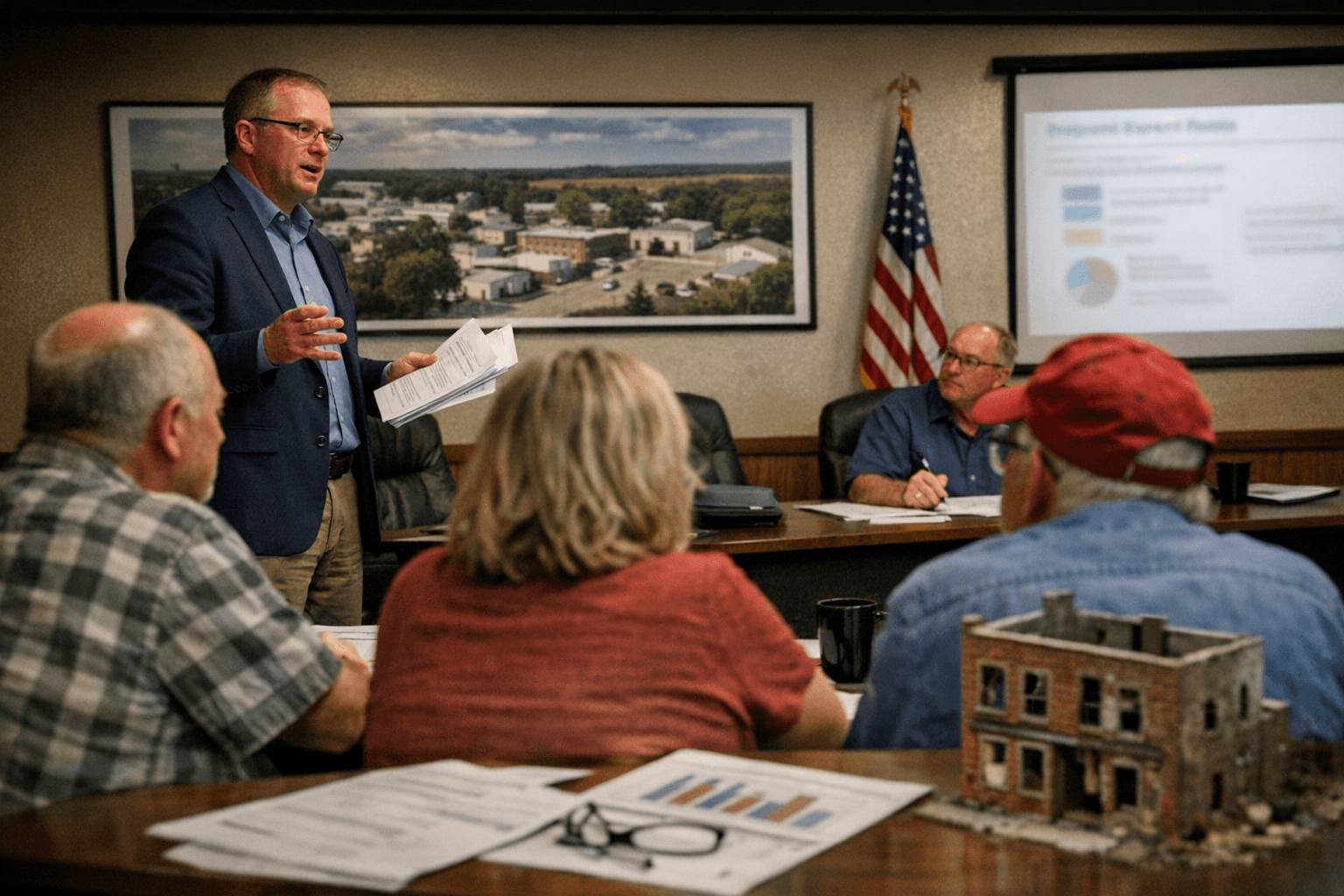
State economic development official David Heyer walked into the New York Mills EDA's March meeting with a straightforward message: the money exists, but only organized communities with shovel-ready projects tend to capture it.
Heyer, representing the Minnesota Department of Employment and Economic Development, presented the EDA board and city officials with a survey of grants, loans, and funding programs that communities, economic development organizations, and businesses can access through the state. The programs cover a range of local priorities New York Mills has been grappling with: rehabilitation of aging commercial properties, workforce training tied to the city's manufacturing base, and infrastructure investments that support both residents and tourism-linked businesses along the lakes corridor.
The timing of Heyer's visit was deliberate. State funding windows have opened in recent months, and DEED recently launched or updated its grant management resources to help applicants navigate the application process. For a city the size of New York Mills, where the EDA already maintains its own revolving loan fund and a local matching-grant program for small business building renovations, layering state dollars on top of existing local capacity is exactly the kind of leverage that turns a conceptual project into a funded one.
What dominated the conversation, according to reporting on the meeting, was the practicalities that separate competitive applications from unsuccessful ones: local match commitments, project timelines, and the degree to which a proposal is genuinely ready to move. State grant programs are competitive, and applicants that arrive with site control, cost estimates, and documented community need consistently outperform those still in early planning stages.
For property owners and business operators along New York Mills' main commercial corridor, the implications are direct. Building rehabilitation funding, if successfully pursued, could reduce the out-of-pocket cost of renovations that have stalled for lack of capital. Workforce training dollars could help manufacturers recruit and retain employees in a tight regional labor market. Infrastructure grants could address street, water, or utility projects that the city's own budget cannot easily absorb.
The EDA board is expected to use the DEED presentation as a springboard toward identifying specific projects to nominate, lining up match commitments, and scheduling follow-up sessions to develop formal applications before competitive deadlines close. The window opened last week. What New York Mills does with it in the next few months will determine whether the programs Heyer outlined stay on a whiteboard or break ground.
This article was produced by Prism’s automated news system from verified source data, official records, and press releases, then run through automated quality and moderation checks before publishing. The system is built and supervised by the people who set the standards it runs under. Read our full AI policy.
Did this article answer your question?