Fergus Falls library highlights reading picks, summer programs and events
Gail Hedstrom’s guide points Fergus Falls to summer reading prizes, free kickoff events, and a packed June calendar at the public library.

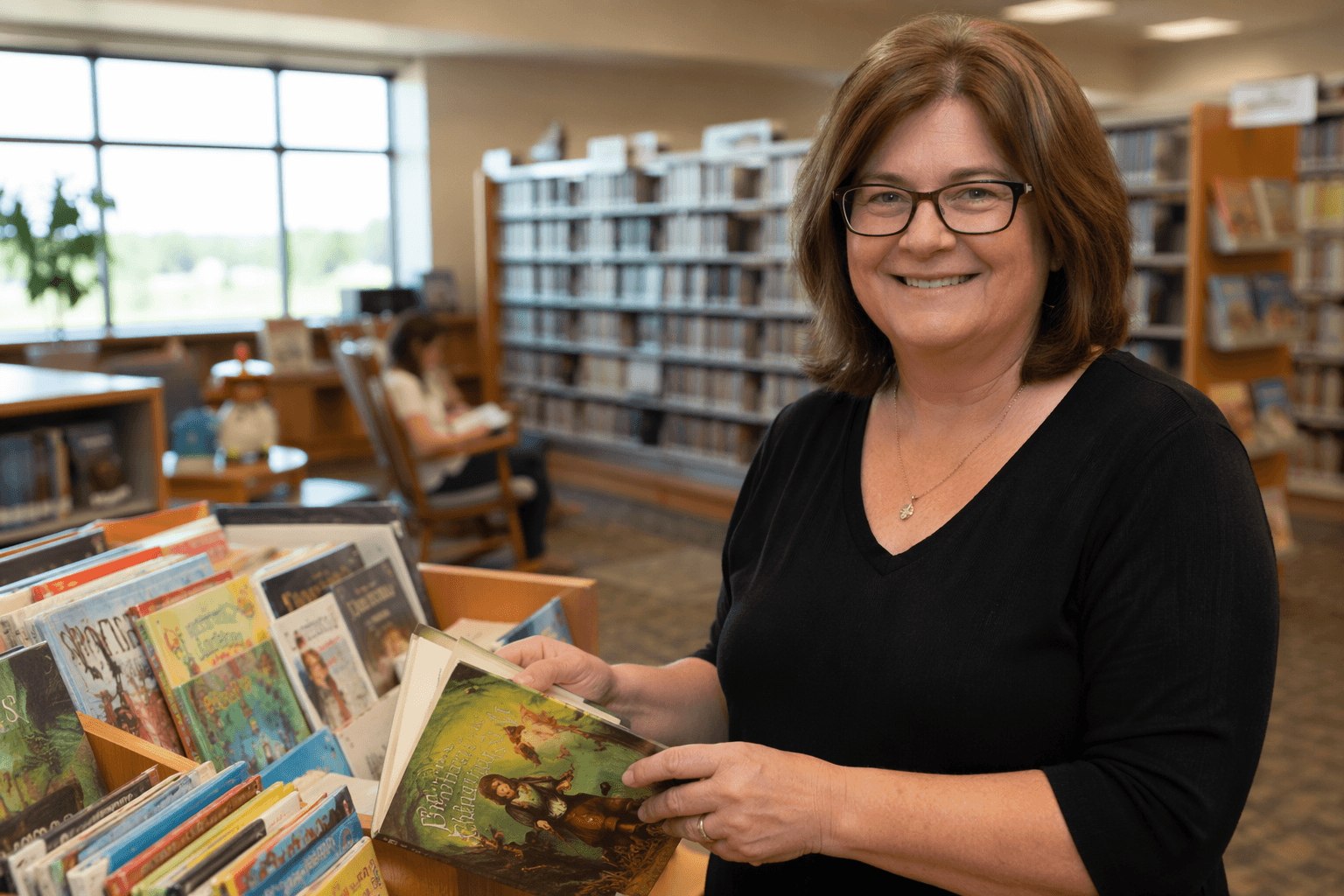
Gail Hedstrom is steering Fergus Falls readers toward a summer of prizes, art and easy entry points at the public library. The “Plant a Seed, Read” program runs through July 31 at 205 E. Hampden Ave., and the kickoff brings a free ice cream social, a plaza art session with Minnesota artist Michael Weatherly and a schedule built for families, teens and adults alike.
Summer reading with something for every age
The 2026 summer reading program is set up to meet people where they are. Gameboards are available for four age groups, Early Learning for birth to age 5, Children’s for kindergarten through 5th grade, Teen for 6th through 12th grade, and Adult. Finished gameboards earn a free book and a special bookmark, and children and teens also get a Papa Murphy’s pizza coupon when they complete theirs.
That structure gives the program a clear payoff, but the library has also added small weekly touches to keep it moving. In the children’s area, this year’s hidden mascots are “The Bad Seed” and “The Good Egg,” the Jory John and Pete Oswald characters that turn a reading program into a scavenger hunt. Weekly challenge questions near the entrance add another reason to stop by more than once.
The kickoff on Monday, June 8, runs from 10:00 a.m. to 7:00 p.m. at the library. The Friends of the Library are hosting a free ice cream social from 11:00 a.m. to 1:00 p.m. and again from 4:00 to 6:00 p.m., and a free art program on the plaza runs from 1:00 to 4:00 p.m. with Weatherly leading nature-inspired mono-printing. That art activity is sponsored by FFPL and the Viking Library System with funding from Minnesota’s Arts and Cultural Heritage Fund, which makes the kickoff feel less like a handout and more like a full afternoon in the center of town.
All ages can sign up for summer reading, and completed gameboards can be turned in by Saturday, August 8 for a prize. With the program stretching from June 8 through July 31, families have a long runway to build reading into summer routines instead of treating it like a one-day challenge.
June programming goes far beyond books
The June calendar shows a library that functions as a neighborhood meeting place as much as a checkout desk. Baby & Toddler Storytime and Preschool Storytime keep the youngest children in the loop, while Lunch Bunch Jr. gives another family-friendly option during the day. For adults and older teens, the list moves quickly from reading to making to conversation.
Among the standout offerings are Social Justice Book Club, Knit, Crochet & More, Houseplant Swap, film screenings, an origin-stories workshop, Sew Unique and a Puzzle Competition. That spread matters because it gives people multiple ways to use the same building, whether they want a structured discussion, a hands-on hobby or a low-pressure social event. The Houseplant Swap is one of the more unexpected programs on the calendar, and it fits neatly alongside the fiber arts and sewing events as a sign that the library is responding to everyday interests, not just books.
Auschwitz Today also appears on the June 2026 event list, adding another educational option to a calendar that already blends family programming, craft groups and public discussion. The mix is broad enough to serve different ages in the same week, which is part of what makes the library a useful daily stop rather than a place reserved for formal events.
Reading help is personalized, not one-size-fits-all
For readers who want a new novel, a nonfiction pick or a next book after a favorite author, the library’s “Find a Good Book” tools point people in several directions. The resources include Goodreads, Literature Map, the Indie Next List and Library Reads, which gives patrons a practical way to narrow down titles without starting from scratch. That matters in a town library where one person may want a mystery, another may want a debut novel and someone else may just need a book that will keep them engaged for the next two weeks.

The library also extends access beyond city lines. Residents and some other Minnesota library district patrons can borrow under the Minnesota Library Reciprocal Borrowing Compact, which broadens the pool of people who can use the collection without treating the Fergus Falls building as the only place to get a book. In a county where transportation and schedule can shape whether someone reads at all, that kind of access is a public-service issue, not just a convenience.
A local institution with deep roots and a busy present
Fergus Falls Public Library has been part of city life since 1891. It opened its first dedicated building in 1900, received a $15,000 Carnegie grant for a new building in 1906, expanded in 1961 and moved into its current building at 205 E. Hampden Ave. in 1986. The long timeline shows up in the way the library now serves both tradition and change: it still lends books, but it also hosts classes, clubs and social programs that help define daily life in town.
The library is a tax-supported department of the City of Fergus Falls and a member of the Viking Library System, which serves Douglas, Grant, Otter Tail, Pope, Stevens and Traverse counties in west-central Minnesota. Its five-member citizen advisory board, appointed by the mayor, meets the second Monday of each month at 5:00 p.m. at the library. Alongside Hedstrom, the staff roster includes Katelyn Boyer, Arielle McCune, Krista Kugler, Emily Millard and Kia Donais.
The scale of demand helps explain why the schedule stays so full. A 2025 city summary put the library at 6 full-time staff, 11 part-time staff and 6 summer tutors, with 14,116 users, more than 200,000 items circulated, 598 programs and more than 1,300 summer reading participants. The building stays open Monday through Thursday until 8 p.m., Friday until 6 p.m. and Saturday until 4 p.m., giving Fergus Falls a place to read, learn and gather well beyond standard daytime hours.
This article was produced by Prism’s automated news system from verified source data, official records, and press releases, then run through automated quality and moderation checks before publishing. The system is built and supervised by the people who set the standards it runs under. Read our full AI policy.
Did this article answer your question?