MSHSL spotlights Perham High School’s championship tradition and community support
Perham High School’s 25 team titles since 2003 are only part of the story. A new campus, broad career pathways and deep local support keep the Yellowjackets winning.
A tradition measured in championships
Perham High School’s latest spotlight from the Minnesota State High School League reads like a blueprint for how a small Otter Tail County district keeps stacking results. The school, just off U.S. Highway 10 in northwest Minnesota, carries an MSHSL enrollment of 473 and sits in Administrative Region 6A, but its impact reaches far beyond those numbers. The league points to 25 team championships since 2003 and 76 individual state championships, a record that has helped cement Perham Public Schools’ “School of Champions” identity.
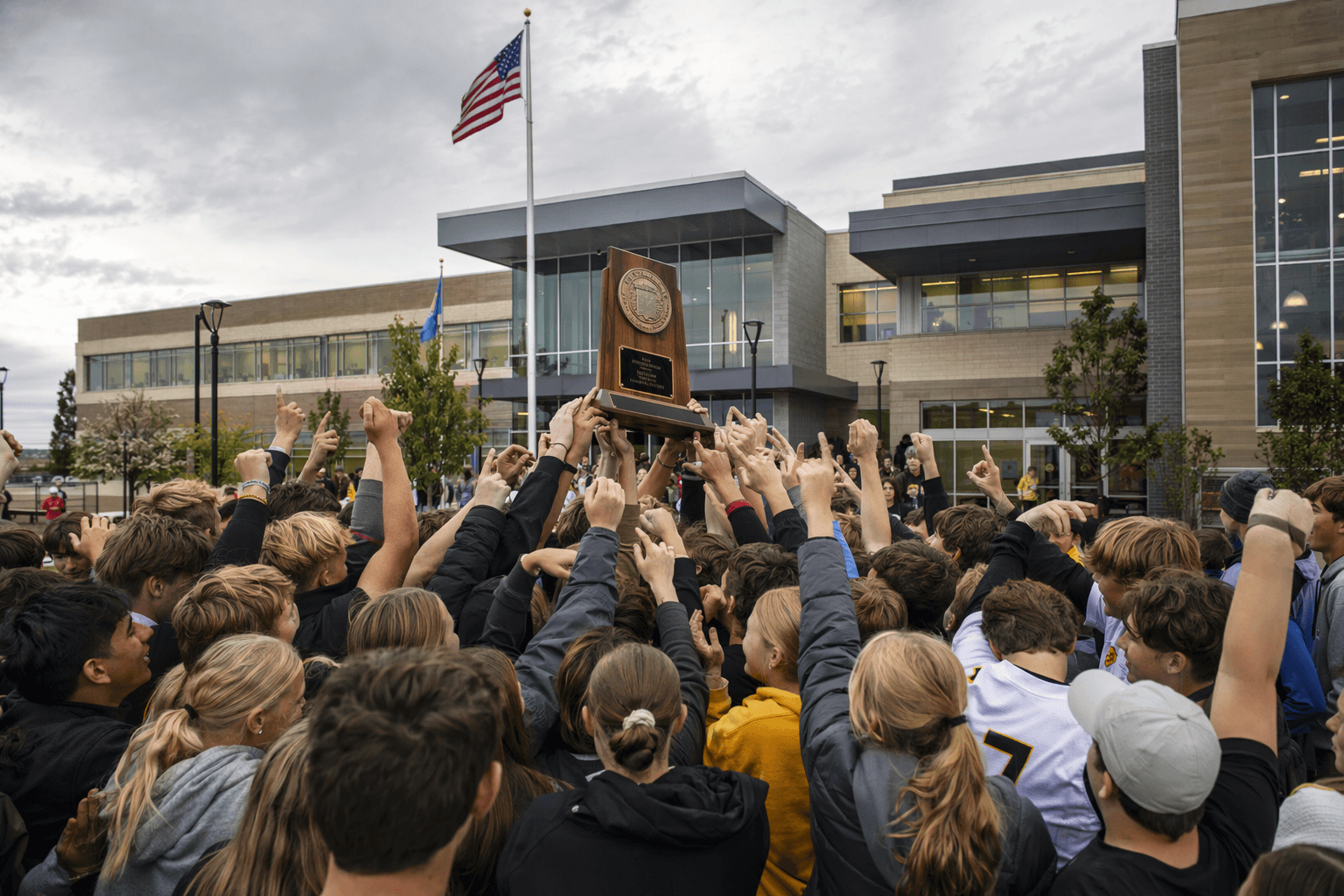
That label is not built on one dominant class or one standout season. It reflects a community of more than 3,700 residents that has stayed engaged in student academics and athletics year after year. In Perham, championship culture is not treated as an accessory to school life. It is part of the institution’s structure, and the results show up across sports, activities, and the classroom.
A campus designed around access
The clearest sign that Perham is doing things differently is the campus itself. The current high school building opened in fall 2018, replacing a century-old facility that first opened in 1917. The old building had served generations, and the district marked its final formal day of education there on May 23, 2018, before the move to a new chapter.
The new high school is connected to Prairie Wind Middle School, a detail that matters because it creates a tighter transition from middle grades to high school and reinforces a shared pipeline for students. Inside the building, Perham did not simply replace old walls with new ones. It built spaces meant to showcase the full range of student work: “The Hive,” a dedicated fine arts wing, career-tech services, the Perham Area Learning Center, and the Great Hall all sit alongside a practice wrestling facility, a weight room, four locker rooms, murals, and Hall of Fame displays that honor Yellowjacket history.
That mix tells families something important. The district is not separating academics, arts, trades, and athletics into different lanes. It is placing them in the same building and giving each one visible space.
How the Yellowjackets got their name
Perham’s identity also carries a story rooted in local sports history. The Yellowjackets nickname reportedly began when basketball players bought matching black-and-yellow jackets. Over time, the school embraced the name and eventually adopted an insect-themed Yellow Jacket logo.
That origin matters because it shows how community tradition can grow from something simple and practical, then become part of a school’s public identity. In Perham, the nickname is more than branding. It is tied to the way students and alumni recognize one another, and to the way the district presents continuity between older generations and current ones.
The academic and career pipeline behind the results
Perham-Dent Public Schools says the high school gives students access to rigorous college courses, industrial trades, and the arts, with staff, parents, and the wider community all contributing to student success. That balance is a major reason the district’s reputation extends beyond athletics. It is also one of the strongest examples of how a small system can widen opportunity without losing its local identity.
The district says it uses personal learning plans, work-based learning, internships, certification programs, PSEO, online learning, and shared courses with regional schools to support student growth. Taken together, those options show a deliberate approach: students are not expected to fit a single mold. Some are heading toward college credit. Some are aiming at technical credentials. Some are building experience through local work, and others are finding their place through the arts.
For a district with just over 1,800 students, breadth matters. Perham has built enough internal structure, and enough outside links, to keep more paths open than many schools of similar size can offer.
Career and technical education is producing visible results
That strategy is not theoretical. Perham High School students were recognized on May 13, 2026, after competing at the 2026 Business Professionals of America National Leadership Conference in Nashville, Tennessee, where nearly 7,000 BPA members from around the world took part from May 6–10. The appearance alone underscores how far the district’s career and technical education reach extends. The recognition afterward shows that students are not just participating, they are being noticed.
BPA fits neatly into Perham’s broader model because it connects classroom learning with leadership, professional standards, and real-world performance. In a district that already emphasizes internships, certification, and shared courses, that kind of national competition becomes another proof point rather than an outlier.
What neighboring districts can learn from Perham
Perham’s recognition is not just a celebration of trophies. It is a case study in how a school district builds durable success by making a series of practical choices and then sticking with them.
- Put multiple pathways under one roof, so arts, trades, academics, and athletics reinforce one another instead of competing for attention.
- Make student success visible, through spaces like Hall of Fame displays, murals, fine arts facilities, and career-tech services.
- Use regional partnerships and flexible learning options, including internships, PSEO, online learning, and shared courses, to make a small district act bigger than its enrollment.
- Tie the school to the community, because a district with more than 3,700 local residents backing it can sustain programs that go beyond a single season or class.
Perham High School’s story is not that it found a shortcut to success. It is that the district built a system where championships, classroom pathways, and community pride all point in the same direction. That is why the Yellowjackets keep showing up in the state spotlight, and why the model matters well beyond Otter Tail County.
Know something we missed? Have a correction or additional information?
Submit a Tip

