Otter Tail County urges residents to build pet emergency go-kits
Otter Tail County says most households have pets, and a three-day go-kit can keep them safe through tornadoes, floods and winter storms.
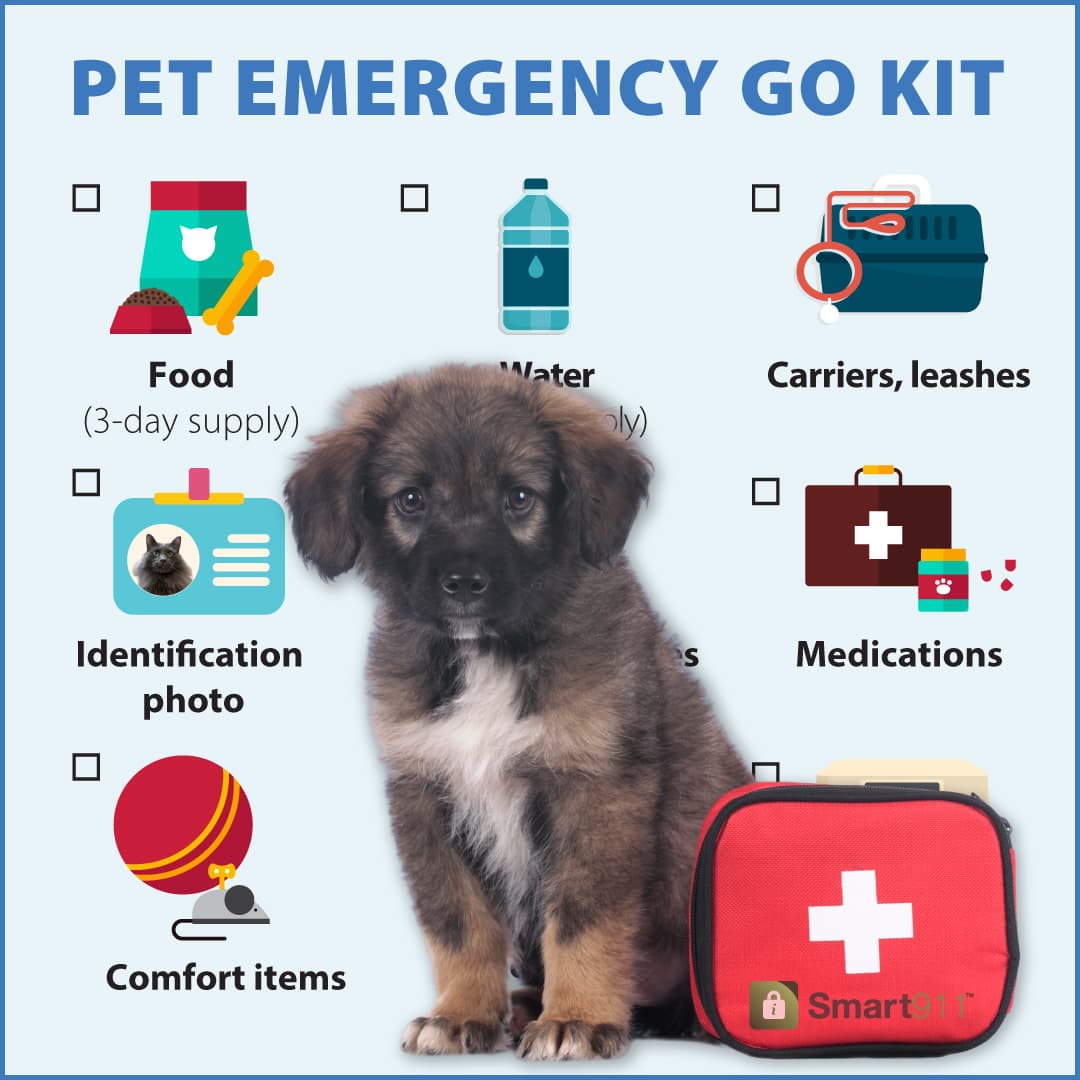
An estimated 57% of Otter Tail County households keep a dog, cat, bird, and/or horse — more than 41,622 animals countywide — and the county is telling residents to build pet emergency go-kits before sirens, smoke or floodwater force a fast exit.
What belongs in the kit
Otter Tail County Emergency Management’s June 2026 tip sheet lays out the core items for every pet go-kit. Pack at least a 3-day supply of food and water for each animal, along with medications, vaccination records, a photo for identification, carriers or crates, leashes, bowls, a litter box or waste bags, pet first-aid supplies and comfort items such as toys or blankets.
A practical kit should stay ready to grab, not assembled after a storm warning. Keep food in sealed containers, store records where they will not get wet, and make sure carriers and leashes are easy to reach.
- 3-day food and water supply per pet
- Medications and vaccination records
- Recent pet photo for identification
- Carriers or crates
- Leashes and bowls
- Litter box or waste bags
- Pet first-aid supplies
- Toys, blankets or other comfort items
Why this is urgent in Otter Tail County
The county has tied this month’s preparedness focus to pets, evacuations and extreme heat, and the local hazard list is not theoretical. Otter Tail County has experienced more tornadoes than any other county in Minnesota, and its emergency planning also reflects severe thunderstorms, flooding and winter storms that can cut off roads or force rapid evacuation.
FEMA approved Otter Tail County’s Multi-Hazard Mitigation Plan on December 29, 2022, and the plan covers tornadoes, flooding, wildland fires, blizzards, straight-line winds, ice storms and drought. Mitigation efforts are planned through 2027.
The county’s tip sheet breaks the local pet population into 22,862 dogs, 17,388 cats, 1,126 birds and 246 horses. A major weather event could involve thousands of animals that need transport, shelter space and documentation at the same time.
What pet owners most often forget
Records matter, especially when pets are frightened, separated from owners or taken to a shelter, and the tip sheet specifically asks residents to include vaccination records and a photo for identification. Many people also forget water bowls, waste bags, a litter box and a few familiar items that can calm an animal in a crowded shelter or temporary home.
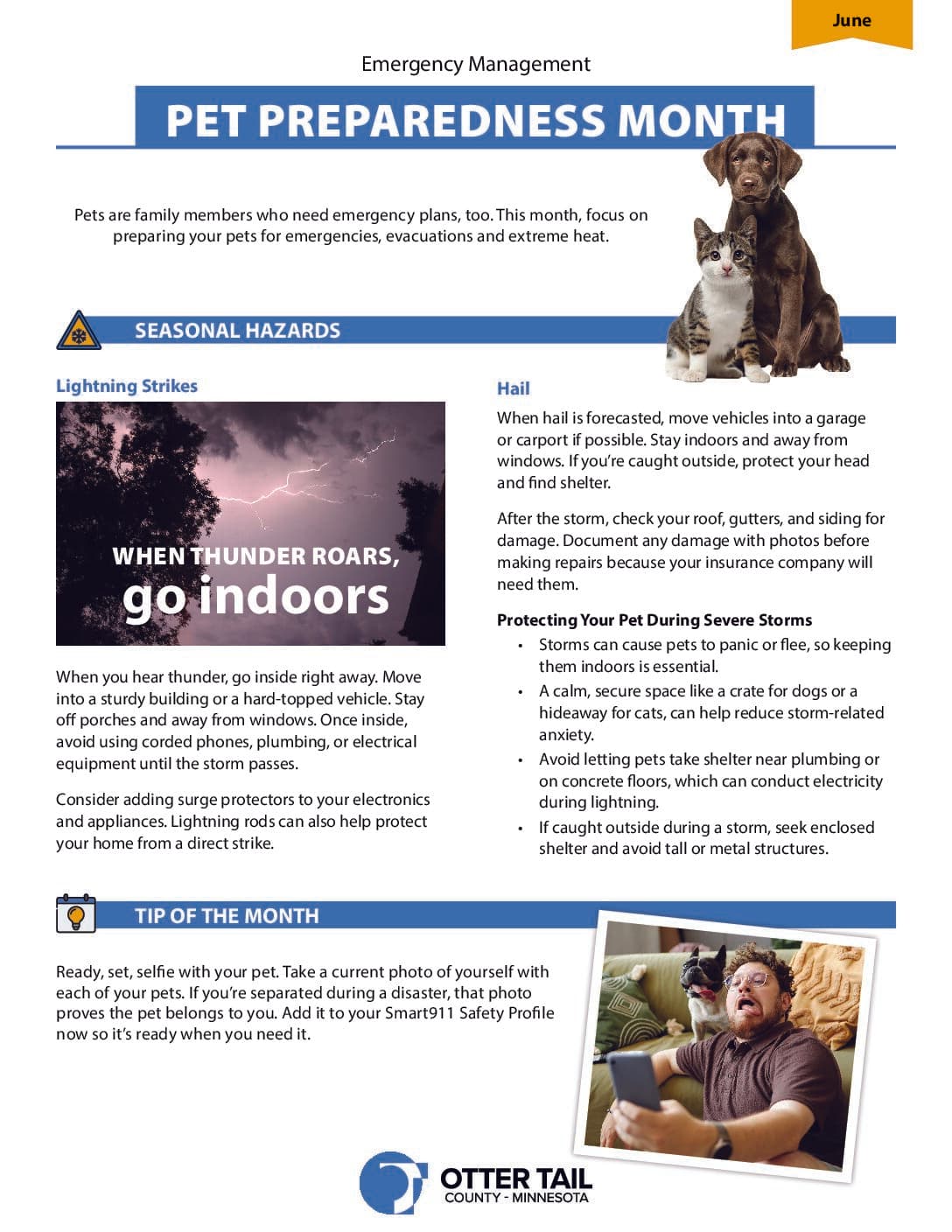
Add pets to a Smart911 Safety Profile and upload photos and special notes so 911 dispatchers can see that information before they arrive. Advance notice can help first responders know that a dog is in the home, that a cat is timid, or that a bird or horse needs a different transport plan.
Keep a carrier that fits the pet, make sure leash hardware works, and store medication instructions with the supply itself. If more than one pet lives in the home, pack each kit separately or label items clearly so no one wastes time sorting them during an evacuation.
How local planning lines up with national guidance
Otter Tail County’s advice tracks closely with national disaster guidance. National guidance recommends making a plan, building a kit, having an evacuation plan, using a buddy system, microchipping pets and keeping food, water, medicine and documents in waterproof containers. The CDC recommends photocopied veterinary records, a rabies certificate, vaccination records, microchip information, recent pet photos and a 2-week supply of food and water for each animal.
The American Red Cross also stresses current photos of owners with pets, medication records, leashes, carriers and knowing pet-friendly evacuation options.
This article was produced by Prism’s automated news system from verified source data, official records, and press releases, then run through automated quality and moderation checks before publishing. The system is built and supervised by the people who set the standards it runs under. Read our full AI policy.
Did this article answer your question?


