Perham seed company builds community around resilient northern crops
North Circle Seeds is turning Perham-area seed saving into a local resilience network, with crops bred for Otter Tail County’s cold zones and short seasons.
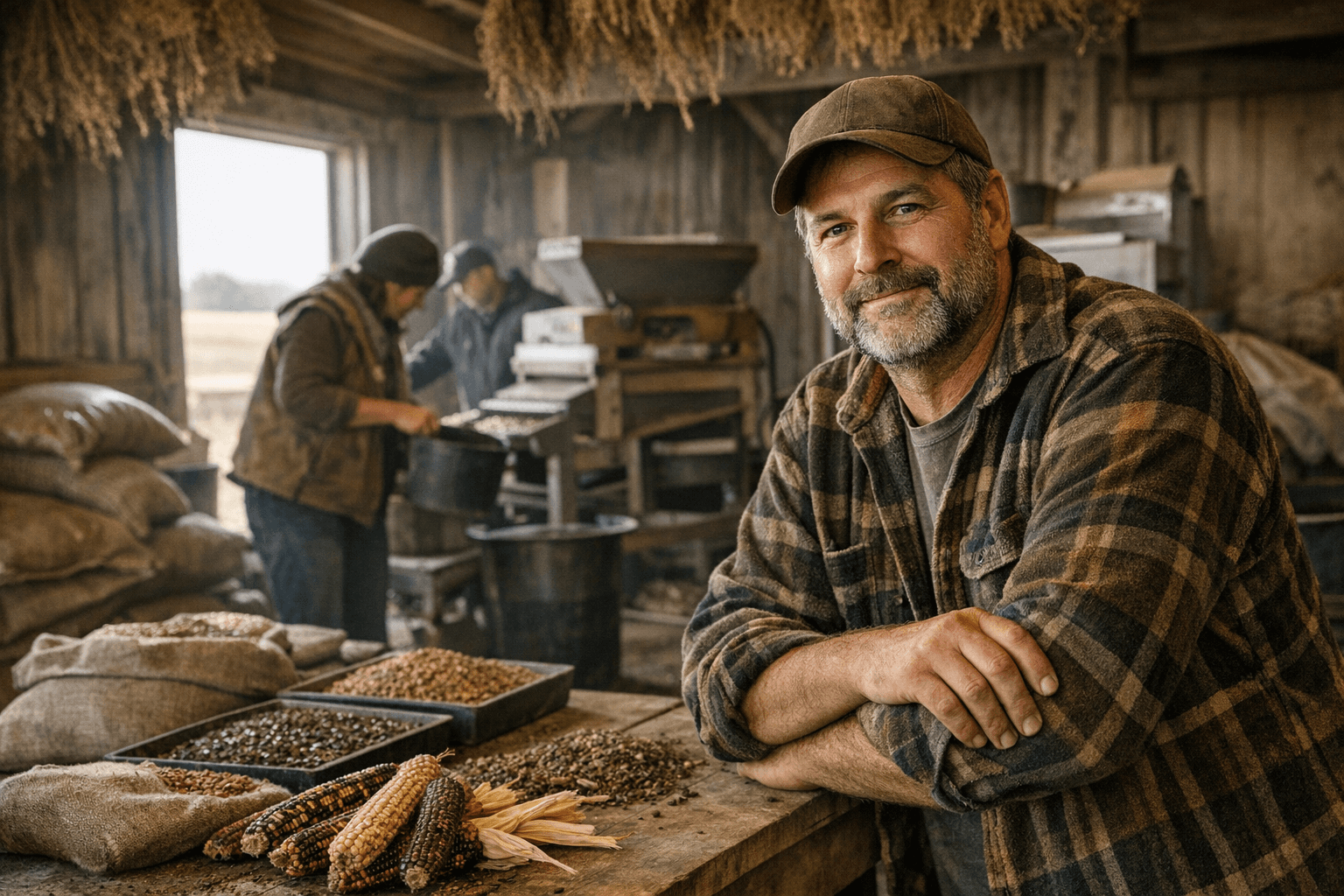
A seed company built for the north
At North Circle Seeds in Vergas, Zachary Paige is doing more than selling packets. He is helping keep regionally adapted seed in circulation so gardeners, volunteers, and small growers in Otter Tail County can plant crops that are more likely to finish the season, set fruit, and hold up in a northern climate.
That matters in a county that spans USDA hardiness zones 3b, 4a, and 4b. Those are not abstract map colors. They shape what can survive the cold, what can mature before frost, and what local growers can realistically count on from a short growing season.
Why the company stands out locally
North Circle Seeds says most of its seed is grown on its farm in Vergas, with many other varieties produced by farmers mostly in Minnesota and the Upper Midwest. The company says it has been Certified Organic since 2020, and its Minnesota Grown listing describes it as a certified organic vegetable and flower seed company committed to an ecologically diverse, equitable, and inclusive food system.
Its seed catalog is built around heirloom and open-pollinated varieties bred for yield and flavor. That combination gives home gardeners and market growers something practical: seed that can be saved, replanted, and shared, rather than one-time material tied to a single growing cycle.
An Organic Seed Alliance profile says 2020 was the company’s first year of operation, when it launched with select garden and small-farm packets of vegetables, flowers, and grain well adapted to northern climate conditions. That short timeline makes North Circle Seeds a young business, but one that has already anchored itself in a distinctly Minnesota identity.
What regionally adapted seed means in real life
For Otter Tail County, the value of locally adapted seed is easy to understand once the frost risk is clear. The USDA Plant Hardiness Zone Map is the standard reference gardeners and growers use to judge what perennial plants are most likely to thrive in a location. In a county stretching across zones 3b, 4a, and 4b, a seed line bred for farther south can be a gamble.
North Circle Seeds makes that point directly in its product descriptions. One tomato variety on the company’s site is described as being well adapted to a northern climate and shorter growing season. That kind of detail is not marketing fluff. It is a practical promise to people trying to get something edible to the table before the weather turns.
The company’s model also reinforces a broader truth about northern agriculture: resilience is not only about technology or equipment. It is also about genetics. If a crop has been selected over time to tolerate cold nights, finish earlier, or perform in a shorter season, it becomes a better fit for local gardens, small farms, and community plots in counties like Otter Tail.
Seed stewardship as community work
North Circle Seeds is framed not just as a business, but as a community effort. The notes behind the company point to volunteers and growers who are helping save and share Minnesota-tested varieties, building a network around a shared mission rather than simply transacting over seed packets.
That idea has deep roots. Seed Savers Exchange, founded in 1975, says its mission is to steward America’s culturally diverse and endangered garden and food-crop legacy for present and future generations. A historical paper on heirloom conservation says the modern seed-saving movement grew out of networks of gardeners exchanging and conserving heirloom varieties.
North Circle Seeds fits squarely into that tradition. A North Circle Seeds product page identifies some heirloom varieties as donations from long-time Minnesota seed savers, which shows the company is not only purchasing seed or breeding for a catalog. It is carrying forward material that came from local memory, local gardens, and local hands.
That distinction matters in a place like Otter Tail County, where community identity is closely tied to land use. Seed stewardship keeps agricultural knowledge moving between generations, and it keeps varieties alive that might otherwise disappear when commercial seed lines narrow or change.
Why this matters for gardeners, growers, and the local food economy
The practical benefit shows up in everyday use. A gardener in Perham, Vergas, or Fergus Falls who chooses an open-pollinated tomato, a northern-adapted flower, or a grain packet suited to short seasons is taking a smaller risk with the growing year. A small grower trying to sell at a local market is also working with seed that is more likely to produce usable harvests under Minnesota conditions.
That has a ripple effect on the local food economy. More dependable crops mean more stable harvests, more confidence for small-scale growers, and more opportunity to keep spending and know-how inside the county instead of depending entirely on outside supply chains. In a rural region, those choices can help support both backyard food production and the small businesses that serve it.
There is also a social return. The company’s emphasis on organic, heirloom, and open-pollinated seed gives volunteers and growers a reason to gather around something concrete. Seed packets become the entry point, but the bigger result is a stronger network of people who are sharing advice, preserving varieties, and adapting together to northern conditions.
Part of a bigger Minnesota adaptation story
The work at North Circle Seeds also lines up with broader Minnesota efforts to protect genetic diversity and respond to changing conditions. University of Minnesota Extension and related Minnesota projects have emphasized that maintaining genetic diversity and using locally adapted seeds can improve resilience. That principle is especially important in the northern half of the state, where the margin for error is smaller.
This is why a Perham-area seed company deserves attention beyond the gardening aisle. North Circle Seeds is showing that rural business development can be tied to ecological function, community knowledge, and food-system durability all at once. In a county where the climate is unforgiving and the growing season is short, seed stewardship becomes a form of local infrastructure.
The result is a business that is rooted in place and useful in practice. North Circle Seeds is preserving seed, but it is also preserving the ability of people in Otter Tail County to keep planting, keep harvesting, and keep passing along what works in the north.
This article was produced by Prism’s automated news system from verified source data, official records, and press releases, then run through automated quality and moderation checks before publishing. The system is built and supervised by the people who set the standards it runs under. Read our full AI policy.
Did this article answer your question?