Phelps Mill preserves Otter Tail County’s flour-milling history
Phelps Mill is now a riverfront park where Otter Tail County families can hike, fish and gather beside a preserved flour mill. Its history still shapes the site.
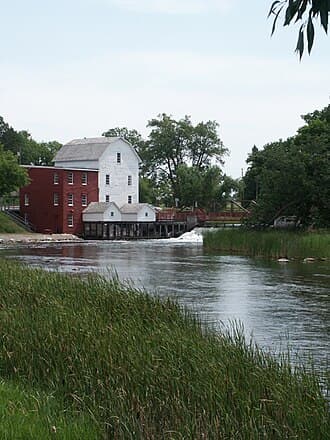
Phelps Mill no longer stands only as a relic of Otter Tail County’s flour-milling past. Today, the 127-acre park on the Otter Tail River gives families a place to walk, picnic, fish and learn the story of a mill that once helped drive settlement in Maine Township. Otter Tail County has turned the site into a usable riverfront destination, not just a historic landmark to admire from a distance.
From Maine Township mill to county landmark
Built by William E. Thomas and opened in December 1889, the mill began life as Maine Roller Mills and was designed to grind 60 to 75 barrels of flour a day. That scale made it an important local business in Maine Township, where the mill and the river setting became part of the area’s commercial life. Historical society records also note that a post office was established in 1891 at the Thomas & Adams mill, another sign that this was more than an industrial building. It was a place where work, travel and daily life converged.
The mill’s later history is just as important to understanding why it matters now. It was sold in 1919, closed in 1939, purchased by Otter Tail County in 1965 and listed on the National Register of Historic Places in 1975. That sequence left the county with one of its clearest surviving links to the flour-milling era that shaped west-central Minnesota. Phelps Mill remains valuable because it connects the region’s present-day park system to the businesses and communities that once depended on water-powered grain processing.
What visitors can do there now
Phelps Mill County Park is open seasonally from May through October, with limited winter access when weather permits. That seasonal rhythm fits the river setting, but it also means the park is built for people who want to spend time there, not just pass through. The county lists bank fishing access, a historic pedestrian bridge, ADA-compliant restrooms, parking, picnic tables, two reservable picnic shelters, a children’s play area, paved walking trails and two elevated boardwalks among the amenities.

The park’s western boundary is the Otter Tail River, and the master plan says the river supports fishing and non-motorized boating. That gives the site a broader public use than a museum-style property would offer. A family can fish from shore, walk the trails, stop at the shelters for a meal and still spend part of the visit learning how the mill operated in the late 1800s.
Phase 1 improvements, completed in 2025, added two ADA-compliant boardwalks, a 30-acre prairie restoration, more than a mile of soft-surfaced walking trails, 11 primitive campsites and a 700-plus-foot paved access trail from the parking lot to the prairie area. Those changes matter in practical ways. They make the park easier to navigate for older adults, children, and visitors who need smoother surfaces, while also widening the kinds of outings the site can support, from short walks to longer stays.
How county planning changed the park
Otter Tail County has expanded and reshaped Phelps Mill in a series of decisions that pushed the site beyond preservation alone. The county acquired 55 acres and the historic facilities in 1965, then bought another 72 acres and the former general store in 2019, more than doubling the park to its current 127 acres. That expansion made room for trails, prairie restoration and future amenities without losing the mill as the center of the property.
The Phelps Mill County Park Master Plan was adopted by the Otter Tail County Board of Commissioners on April 27, 2021. The planning process included a steering committee made up of county staff, Minnesota Department of Natural Resources staff, Otter Tail County Historical Society staff, Phelps Mill Festival representatives, Homestead at Ottertail RV Park and Resort representatives and members of the public. That mix matters because it ties the park’s future to both heritage preservation and the people who actually use the site.
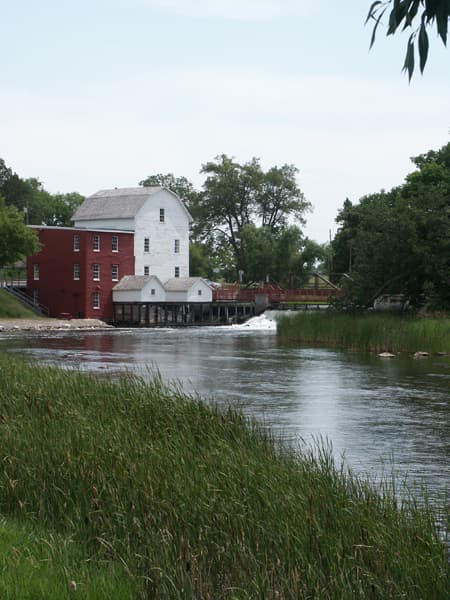
The survey behind the plan ran from April 30, 2020 through June 2, 2020 and drew 691 responses. Seventy-six percent of respondents were Otter Tail County residents, either seasonal or year-round. That level of local participation shows the park is being shaped by the people most likely to use it, from nearby families to seasonal property owners who depend on riverfront recreation during the warm months. The plan was not built in isolation; it reflected a broad local stake in what the site would become.
The county has also kept moving on funding. It announced a $713,747 grant for Phase 2 improvements, and a November 2022 county release said the park had received a $366,000 grant recommendation for enhancements. Phase 2 is planned to connect the boardwalks with ADA trails, add three onshore fishing stations, improve the playground, build an amphitheater area and reconstruct the parking lot. Together, those projects point toward a park that is more accessible, more usable and better suited to group gatherings.
Why the site still draws local families
Phelps Mill remains one of the few places in Otter Tail County where heritage and recreation sit side by side without competing for space. The Friends of Phelps Mill, formed in 1993, have helped keep the story in view with interpretive panels, a self-guided tour brochure, guided tours during public events and an annual ice cream social and band concert. Those efforts give visitors context before or after they cross the pedestrian bridge or sit by the river, and they help the mill stay visible to new generations.
For families, that combination is what makes the park matter now. The site offers a place for a walk, a picnic or a fishing stop, but it also preserves the architecture and setting of a working flour mill that once anchored local commerce. Otter Tail County’s preservation decisions have made sure Phelps Mill is still doing community work, just in a different form.
This article was produced by Prism’s automated news system from verified source data, official records, and press releases, then run through automated quality and moderation checks before publishing. The system is built and supervised by the people who set the standards it runs under. Read our full AI policy.
Did this article answer your question?