Boone's Station Marker on Courthouse Lawn Anchors Local History
A historical marker commemorating Boone's Station has stood on the Booneville courthouse lawn since April 17, 1963, marking the spot where Daniel Boone and his party camped in 1780-1781. The marker highlights the Boone family's long connection to the land and remains a focal point for local history, tourism, and educational programming in Owsley County.
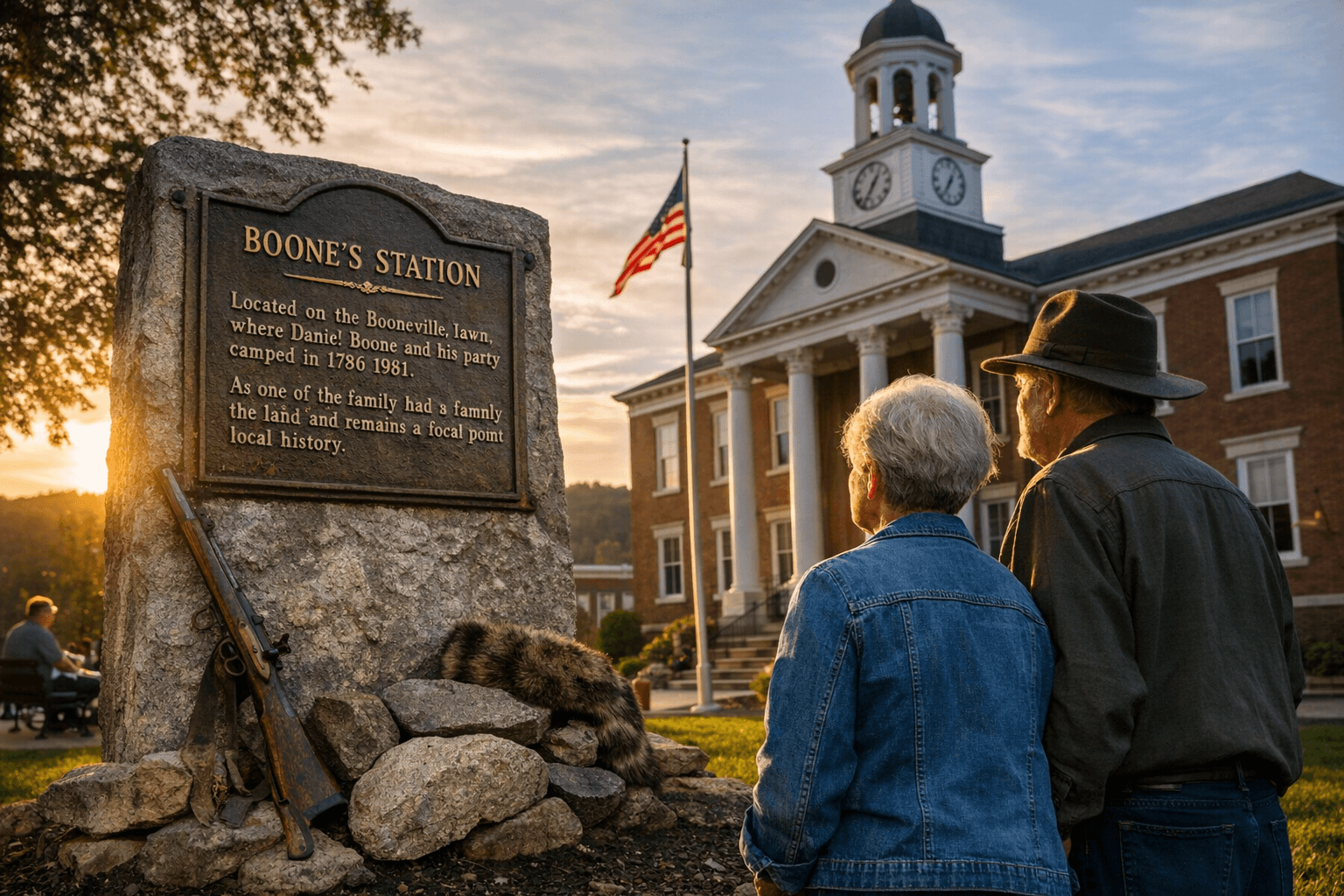
The bronze historical marker known as Boone's Station sits prominently on the lawn of the Owsley County courthouse in Booneville, identifying the site where Daniel Boone and his party camped during 1780-1781. Installed April 17, 1963, the plaque records that the camp was called Boone's Station until the county's organization in 1843 led to the settlement being renamed Booneville. The marker also notes that members of the Boone family owned land in the area until they relocated to Missouri.
Placed in a public, government-owned space, the marker is one of several local references that explain Owsley County's name and early settlement history. Its location on the courthouse lawn gives it both symbolic and practical significance: it is visible to those conducting business at county offices, and it is routinely cited in community histories, tourism materials, and school programming that seek to connect residents and visitors with the county's 18th and 19th century origins.
For a sparsely populated county with limited tourist infrastructure, a durable, place-based artifact such as the Boone's Station marker represents a low-cost asset with potential civic and economic value. It functions as an entry point for local interpretation of the past, anchoring narratives used in heritage tourism and local education. At the same time, its continued presence on public property places responsibility for upkeep and interpretation on county institutions, including the county fiscal offices that oversee grounds maintenance and the boards that set priorities for cultural preservation.
Policy and institutional implications are straightforward. Decisions about maintenance, signage enhancements, and interpretive materials intersect with county budget choices and broader development strategies. Investing in clear, accessible information at the site and integrating the marker into school curricula and public programming could strengthen civic engagement around shared local history and support modest tourism initiatives. Conversely, neglect of such publicly sited markers risks eroding a visible link between county government and the community's historical identity.
As Owsley County plans events, updates public spaces, or refines economic development goals, the Boone's Station marker offers a tangible reminder that stewardship of local landmarks is both an administrative obligation and an opportunity to deepen civic ties. Its decades-long presence on the courthouse lawn continues to shape how residents and visitors understand the county's origins and the role of place in community life.
Know something we missed? Have a correction or additional information?
Submit a Tip