Owsley County database entry bridges enslaved and free Black history
Owsley County descendants can use a county-specific NKAA entry to trace enslaved, free Black, and free mulatto ancestors across the 1850-1870 divide.
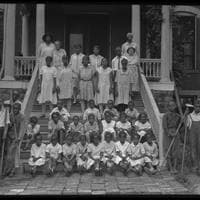
Families tracing Owsley County roots now have a county-specific entry that can help reconnect names, households, and legal statuses that local histories often left out. The University of Kentucky’s Notable Kentucky African Americans Database includes the page titled “Owsley County (KY) Enslaved, Free Blacks, and Free Mulattoes, 1850-1870,” and that date span matters because it reaches across slavery, emancipation, and the first postwar years when formerly enslaved people began appearing by name in federal census households.
Why this Owsley County page matters
The entry is more than a label in a database. It ties Owsley County to a specific stretch of time when Black life in Kentucky was documented unevenly, with enslaved people counted one way and free residents another. The phrase “Enslaved, Free Blacks, and Free Mulattoes” signals that the county’s history included more than bondage alone, and it gives descendants a place to begin sorting family branches that were split apart by law and recordkeeping.
That broader structure is part of what makes the Notable Kentucky African Americans Database useful. The site says it began as a website with a series of individual web pages listing about 200 biographical entries, and it now also includes place-based and topical entries. In practice, that means the database is not just for famous names. It also preserves county-level historical material that can help ordinary families, teachers, and local historians identify who lived in Owsley County and under what status.
The Owsley County page sits alongside similar county entries for Lawrence County, Hopkins County, Green County, Madison County, Anderson County, Pulaski County, Livingston County, Barren County, Whitley County, and Letcher County. That county-by-county pattern shows the Owsley page is part of a wider Kentucky research framework, not an isolated listing.
How to use the entry in family research
The most practical way to use the Owsley County page is as an index point, then move outward into records that can fill in names and relationships. The 1850-1870 range is especially useful because it covers the era when enslaved people were not named in the same way as free households, and 1870 became the first federal census to list formerly enslaved people by name in a full household schedule.
A family search can start with the county entry itself, then connect what it suggests to the records held in and around Booneville. Booneville is the county seat, and Kentucky historical material notes that the settlement was called Owsley Courthouse when the post office opened in 1844 before it was incorporated as Booneville in 1846. That local detail matters because courthouse records, town records, and county tax material often sit behind the same place name changes that can confuse family searches.
- 1850 and 1860 census schedules, especially for household patterns and slave schedules
- 1870 census household schedules, where formerly enslaved residents appear by name
- probate files that can point to kinship, inheritance, and property transfers
- deed books that show land ownership and family movement
- tax lists that can place households in a specific year and district
Useful records to pair with the NKAA entry include:
Seen together, those records can help reconstruct a family line that may not appear clearly in one source alone. For descendants trying to bridge the gap between antebellum Owsley County and the first years after emancipation, the database entry gives a county-specific doorway into that work.
The legal world behind the records
The county title also carries legal history inside it. Juliet E.K. Walker’s Filson Historical Society article on the legal status of free Blacks in early Kentucky explains that Kentucky’s free Black population was relatively small compared with enslaved people and whites, and by 1830 state laws imposed severe legal disabilities and damaging social proscriptions on free Black residents. That context helps explain why the Owsley County entry names free Blacks and free mulattoes alongside enslaved people: legal status shaped how people were recorded, where they could live, and how easily their stories could be preserved.
For Owsley County researchers, that legal reality is not an abstraction. It is the reason family lines can seem to vanish between one census and the next, or why a household may appear in tax and deed records long before it shows up in a named federal household schedule. The county entry is valuable because it helps readers keep those legal categories in view while moving through the paper trail.
Why this matters in today’s Owsley County
The historical record is especially important in a county where Black residents are a very small share of the population now. U.S. Census Bureau QuickFacts lists Owsley County’s Black alone population at 0.9% in recent data, while USAFacts puts the county’s population at about 3,900 in 2025. Those figures do not erase the county’s Black history; they underscore how easy it is for older communities to disappear from memory unless they are deliberately preserved.
That is what makes the NKAA county entry useful for Booneville families, school projects, and local historians alike. It helps reconnect the county to an older social landscape that included enslaved people, free Black residents, and free mulattoes during the decades before and after the Civil War. In a place where the documentary trail is thin and the local population is small, the county entry functions as a bridge between scattered records and the family histories they still contain.
This article was produced by Prism’s automated news system from verified source data, official records, and press releases, then run through automated quality and moderation checks before publishing. The system is built and supervised by the people who set the standards it runs under. Read our full AI policy.
Did this article answer your question?