Owsley County historical society preserves local history in books and newsletters
Owsley County’s historical society has built a printed memory bank of families, veterans, recipes and newsletters. Its publication list shows who the county chose to remember, and where the record is thinner.
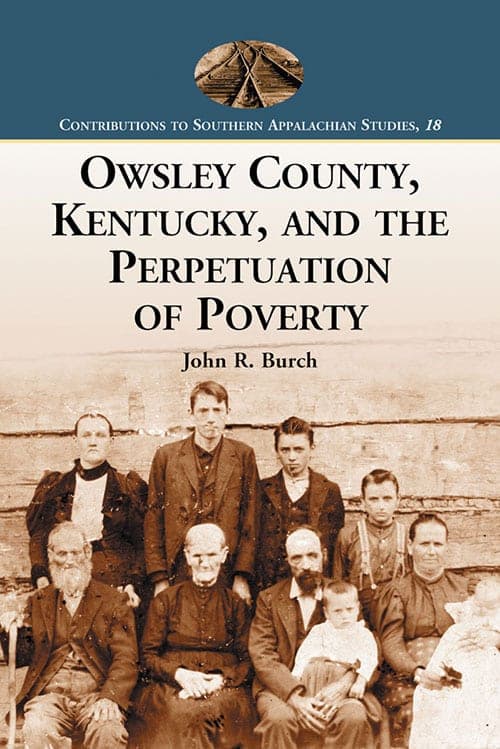
*Women of Owsley County, Their Joys and Their Hardships* fills 258 pages with the stories of 154 women, and *Men of Owsley County, Their Dreams and Their Accomplishments* runs 406 pages with the stories of 198 men. Together with a pictorial family-and-history book, a veterans tribute, a recipes volume, and past newsletters, the Owsley County historical society’s publication list shows whose lives, work, and traditions the county has chosen to preserve in print.
A county archive built around people, not abstractions
The strongest pattern in the society’s publications is how often it centers named people and family lines. Those two volumes are large biographical collections that make local history feel personal, concrete, and searchable.
The county’s memory work is not limited to a few celebrated figures. It reaches into the lives of ordinary residents whose names, households, and family connections shaped the community over time.
What the publications page preserves
The society’s list also points to a broader understanding of history than countywide summaries alone can provide. Alongside the biographical volumes, the catalog includes a pictorial family-and-history book, a veterans tribute, a recipes volume, and past newsletters. Together, those publications preserve both public life and private life: military service, family memory, household traditions, and the everyday habits that usually disappear first if nobody writes them down.
In a rural county, a great deal of history survives outside formal institutions. Cemetery markers, school memories, old photographs, church records, kitchen tables, and front-porch stories often carry the most useful details. A publication list like this gives those fragments a more durable form. It also creates a paper trail for people who need to trace family connections, understand a home place, or identify which names still appear across generations.
Why these books matter to residents and researchers
These books and newsletters work as reference tools when a family is trying to confirm who lived where, how relatives were connected, or what a branch of the family was known for. A pictorial family-and-history volume can help identify faces and households. A veterans tribute can connect service records to local names. A recipes book can preserve the domestic traditions that often carry as much cultural meaning as public events.

For researchers, the publications create a local starting point that is already organized around Owsley County life. Genealogists often need exactly this kind of source: a place to begin before moving to courthouse records, cemetery surveys, school records, or oral histories. The historical society’s catalog shows which surnames, family stories, and community themes have already been gathered into a reusable format.
Even when they are less formal than a bound history, newsletters keep a county’s memory active. They can bridge the gap between old records and current readers, and they often carry the kind of small but essential details that later help piece together a family timeline or a community event.
The catalog also reveals what the county values
The publication list suggests Owsley County has chosen to remember more than government milestones or a narrow list of prominent leaders. It has made room for women’s lives, men’s lives, military service, family photographs, recipes, and continuing updates through newsletters.
By separating women’s stories from men’s stories, the society gives both groups formal space in the county’s printed memory. It also signals that the county’s history is being told through everyday accomplishment, hardship, labor, and family continuity rather than through politics alone. The titles themselves frame those lives with dignity: joys and hardships for women, dreams and accomplishments for men.
What is less visible in print
The same list also shows where the record is thinner. The most durable material is concentrated in family biography, gender-specific life stories, veterans, recipes, and newsletters. That leaves less obvious space for other kinds of county history, including the full range of institutions, occupations, and communities that also shaped Owsley County.
Local memory often preserves first what families can gather, name, and pass along. That tends to favor people whose descendants remain close to the county, stories that survived in photographs or scrapbooks, and traditions that were easy to organize into a book. Other voices can fade when there is no matching scrapbook, no compiled family file, and no one left to assemble the record.
This article was produced by Prism’s automated news system from verified source data, official records, and press releases, then run through automated quality and moderation checks before publishing. The system is built and supervised by the people who set the standards it runs under. Read our full AI policy.
Did this article answer your question?