Perry County doctor and legislator left rare Civil War letters
Magnus Brucker’s German-language letters tie Troy to Civil War surgery, Indiana politics and immigrant life, with 115 letters and 12 legislative papers.
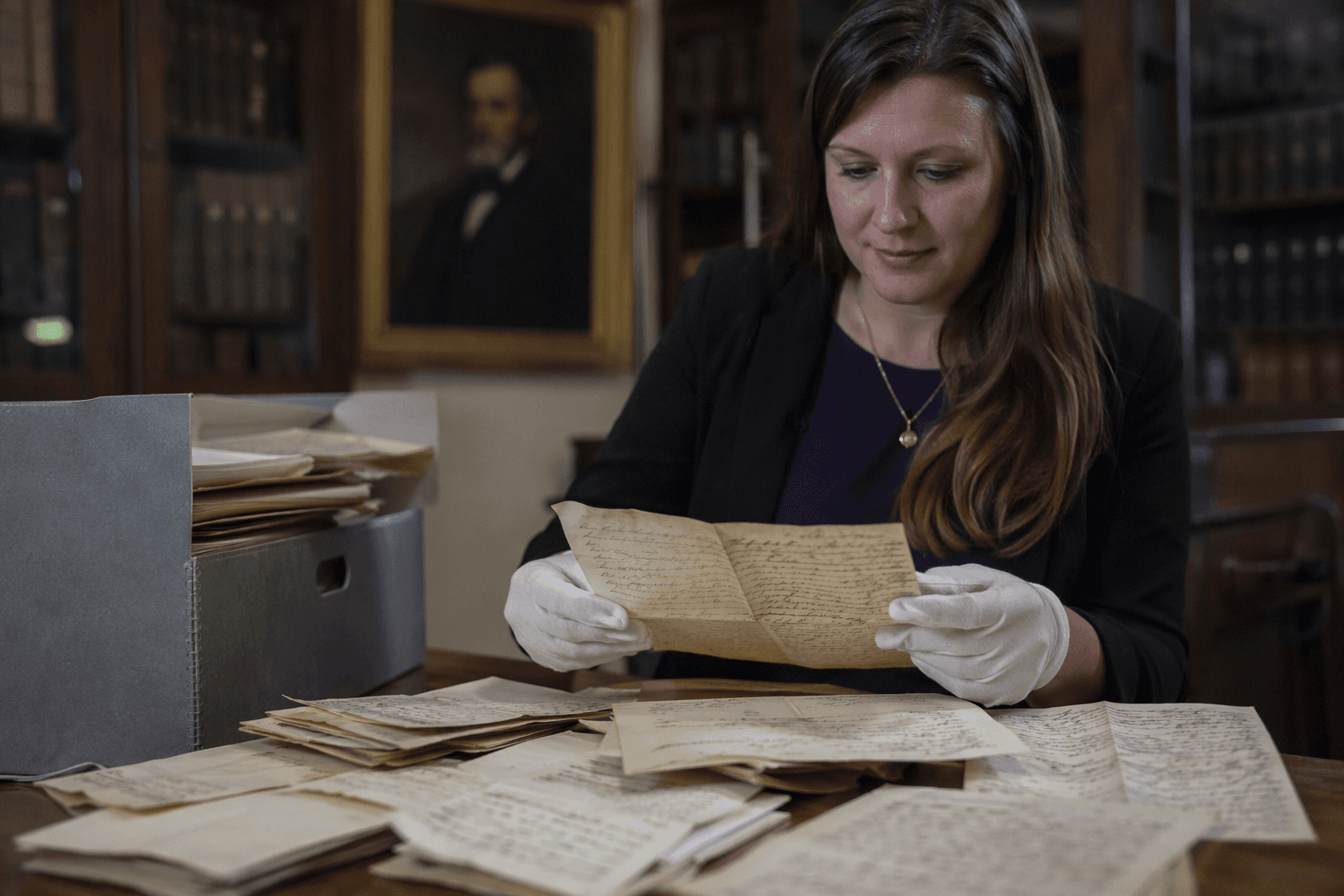
Magnus Brucker’s papers turn Troy into more than a river town footnote. The letters show a Perry County doctor, immigrant and lawmaker moving between family life in German, service in the Indiana legislature and the brutal logistics of Civil War medicine, all from one local archive. For people who care about Perry County history, it is the kind of primary source that makes the county feel central, not peripheral.
A Perry County life that crossed medicine, politics and migration
Brucker was born in 1828 in Baden, Germany, studied medicine at Heidelberg and Strasburg, and came to the United States after taking part in the revolutions of 1848. He settled in Troy in 1849, then built a medical practice there that one secondary biographical source says lasted about twenty years and earned him a strong reputation and a solid business. That mix of immigrant experience, medical training and local standing gave him an unusual place in Perry County life.
His public career reached beyond the office and the exam room. The Indiana Historical Society identifies him as a Republican elected to the Indiana House of Representatives in 1860 and again in 1866. That matters for Perry County because it places a Troy resident inside the political world of Civil War and Reconstruction-era Indiana, where German-American voices were often tied to anti-slavery and free-labor politics. Brucker was not just passing through town. He was part of the county’s governing class, and his career tied Troy to state politics at a moment when both medicine and war were reshaping Indiana.
Troy itself gives the story local weight. The town sits on the Ohio River near the mouth of the Anderson River, a position that helped make it a place where people, goods and ideas moved through the county. Perry County was formed on November 1, 1814, and its population grew from 11,847 in 1860 to 14,801 in 1870. Brucker’s life sits inside that period of growth, when river access, immigration and politics were shaping the county’s public identity.
What the papers preserve
The Magnus Brucker Papers cover 1861 through 1868 and hold 115 letters, mostly written by Brucker to his wife in German. The collection also includes 12 letters from Indianapolis while he was serving in the legislature, plus supplementary translations and military records. ArchiveGrid describes the material as one box of Civil War letters from Brucker to his wife while he served as a surgeon with the 23rd Indiana Infantry Regiment in Tennessee, Mississippi and Georgia.
That combination makes the archive unusually valuable. It is not just a set of official papers or a later biography. It preserves a working family correspondence in German, alongside legislative letters and military material that document how one Perry County resident moved between home, Capitol Square and the army hospital. For researchers, that means the collection can show how a local German immigrant family talked about war, work and public life in real time. For heritage groups, it offers a rare chance to anchor Troy’s history in an actual voice rather than a generic memorial story.
The German-language letters are especially important because they keep the immigrant household visible. They suggest that Brucker’s family life, not only his public service, survived in the record. That gives the papers value well beyond Civil War studies, because they connect Perry County to the larger story of German settlement in Indiana and the way immigrant communities maintained language, kinship and professional standing across the 19th century.
The 23rd Indiana and the war that reached Perry County
Brucker enlisted with the 23rd Indiana Infantry Regiment on March 21, 1862. The regiment itself was organized at New Albany on July 29, 1861, and left Indiana for Paducah, Kentucky, on August 15, 1861. A National Park Service monument detail places the 23rd Indiana at Shiloh under Col. William L. Sanderson and Maj. Gen. Lewis Wallace, which helps situate Brucker inside one of the war’s defining Western Theater campaigns.
His service stretched across some of the most important operations of the war. The regiment saw action at Shiloh, Port Gibson, Raymond, Champion Hill, Vicksburg, Kennesaw Mountain, Atlanta, Jonesboro, Sherman’s March to the Sea and Bentonville. The archive ties Brucker to that path as a surgeon, first as an assistant surgeon and later as a regimental surgeon. That means the letters are not simply wartime souvenirs. They are records of a man dealing with injury, movement and medical care as Union armies pushed through Tennessee, Mississippi and Georgia.
One memorial source lists Brucker’s resignation as surgeon on July 7, 1864, a date that can help readers follow the arc of his wartime service. Even with that timeline, the broader record shows how closely Perry County was connected to the war’s Western campaigns. Brucker’s papers tie Troy to places far from the Ohio River, but they do so through a resident who moved between battlefield medicine and local politics, not through an abstract national narrative.
Why Perry County should care now
This archive matters because it gives Perry County a documented link to three histories at once: German immigration, Civil War medicine and Indiana state politics. The papers help explain how Troy fit into 19th-century Indiana, especially through a resident who arrived after the revolutions of 1848, built a practice, served in the legislature and carried a German-speaking family life into the war years. That is a stronger local story than a simple biographical sketch, and it is the kind of evidence historians, teachers and preservation advocates can use.
It also gives residents a practical heritage asset. The collection can support exhibits, classroom work, cemetery and family history research, and broader efforts to place Troy and Perry County within the state’s Civil War memory. Because the letters run through 1868, they also bridge the war and Reconstruction, making them useful for anyone tracing how local leadership changed after the fighting stopped. In a county where the historical record often depends on scattered references, Brucker’s papers offer something far rarer: a full human trail from Baden to Troy to the Indiana House and the army hospital.
This article was produced by Prism’s automated news system from verified source data, official records, and press releases, then run through automated quality and moderation checks before publishing. The system is built and supervised by the people who set the standards it runs under. Read our full AI policy.
Did this article answer your question?