Perry County Museum seeks more names for African-American Civil War soldiers list
Perry County Museum is asking for help finishing its African-American Civil War soldiers list, using family records to correct the county’s history.
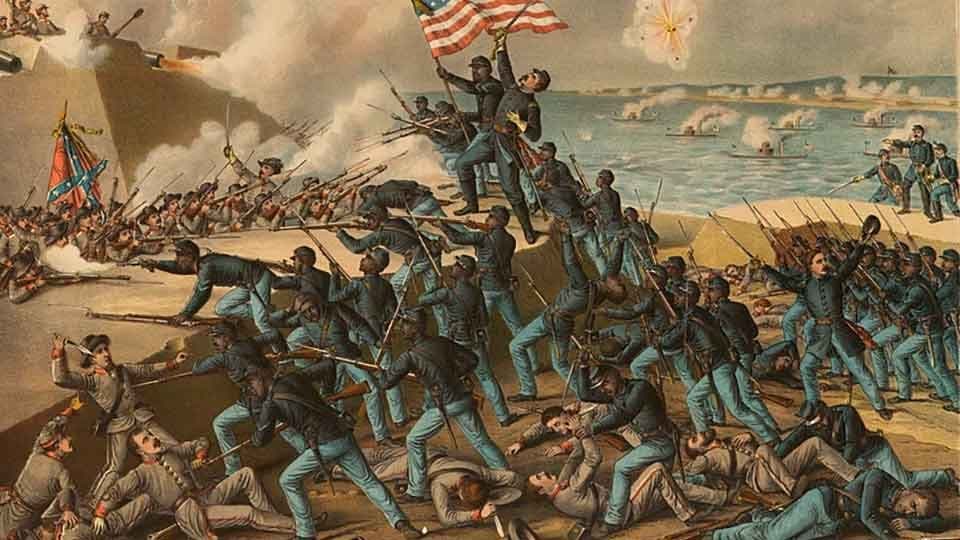
Perry County Museum is asking residents to help finish an African-American Civil War soldiers list tied to Perry County, Indiana, turning its old courthouse building in Cannelton into a living records-recovery project. The museum says the list is not complete and that more names are added as they are discovered, with a direct invitation for questions and additions from families and local historians.
A county list built from fragments
The museum’s African-American Civil War Soldiers page is more than a display case for names. It is building, in its own words, “the following list of soldiers enumerated in Perry County, Indiana,” and the page makes clear that the work is ongoing rather than finished. That matters in a county where the historical record can sit in pieces across enrollment records, family papers, and oral history, with a soldier’s service sometimes visible in one document but absent from another.
This kind of local reconstruction gives Perry County a way to correct omissions in its official memory. A name tied to Cannelton or Tell City can be connected to family lines, household histories, and county records that would otherwise stay disconnected, especially when descendants still live nearby and remember details that never made it into formal archives. The museum’s page is built around that idea: more names can be added, and the public is invited to help verify the soldiers already listed.
The museum also asks for people to get in touch if they have further information to add or questions about a soldier on the list. That makes the page an open archival project, not just a finished historical roster, and it gives residents a way to help fill gaps that institutional records have left behind.
Why the paper trail is hard to follow
The scale of Black Civil War service helps explain why a county list can still be incomplete. The National Archives says the 1860 population census was the Eighth Decennial Census of the United States, a benchmark record from just before the war transformed military service and citizenship. After the Emancipation Proclamation took effect on January 1, 1863, African Americans could officially serve in the Union Army, and the Library of Virginia notes that free Black men and self-emancipated men joined the United States Colored Troops.
That national shift produced a vast but uneven paper trail. National Archives materials say the compiled military service records for men who served with the United States Colored Troops number approximately 185,000. The number is large enough to show the breadth of Black military service, but the records are also scattered across federal and state collections, which is why a local museum can be the place where fragments finally come together under one county name.
For Perry County, that means the work is not only about battlefield history or well-known generals. It is about ordinary residents whose service can be traced through enlistment records, county references, and family memory, then matched back to a place where descendants can recognize a surname, a household, or a generation. The museum’s approach helps turn broad Civil War history into something local and legible.
A museum housed in the county’s old courthouse
The setting reinforces that records-first mission. Perry County Museum is located at 125 S. 7th Street in Cannelton, inside the old Perry County Courthouse, a building that fits a document-driven history project because courthouses were the administrative centers where many 19th-century county records originated. A historical marker entry identifies the courthouse as c. 1896, giving the building itself a place in the county’s recorded past.
The museum says it is a 501(c)(3) nonprofit organization, and its board bought the building in December 1998. It is also entirely run by volunteers, including the people who handle phone messages and emails, a reminder that preserving local history in Perry County depends on small-scale labor as much as on formal institutions. That volunteer structure makes the museum’s request for help even more grounded in community life: names do not get added by themselves.
Its visit page says the museum is open on Sundays beginning in June through the end of October. It is closed on Father’s Day and Labor Day weekend. Those seasonal hours make it a limited but steady destination for people looking to trace Perry County history in a building that has itself become part of that history.
How residents can help verify names and family ties
The most useful additions are often the simplest. A family Bible entry, a pension note, a handwritten name, or a story repeated through generations can help confirm whether a soldier belongs on the Perry County list and how he fits into a family line. The museum’s invitation is not just for historians, but for anyone who can help connect a name to a place, a service record, or a descendant.
Helpful details can include:
- full names and alternate spellings
- the soldier’s unit, if known, including United States Colored Troops service
- where the person lived in Perry County, Cannelton, or Tell City
- names of parents, spouses, children, or descendants
- copies or transcriptions of enrollment records, family papers, and related notes
- questions about whether a listed soldier matches a family story or local memory
Perry County has other research supports that can help piece together those answers. Perry County Public Library maintains research resources for local history and genealogy work, and the Indiana Historical Society has materials on early Black settlements by county. The Indiana Business Research Center at Indiana University has also published an article titled Black and White in Indiana, adding broader state context to a local search that still begins with a name, a document, and a place.
For Perry County, the work is straightforward and unfinished at the same time: recover the names, verify the service, and keep the county’s Civil War record from forgetting the Black soldiers who were part of it.
This article was produced by Prism’s automated news system from verified source data, official records, and press releases, then run through automated quality and moderation checks before publishing. The system is built and supervised by the people who set the standards it runs under. Read our full AI policy.
Did this article answer your question?