Perry County's Five Must-Know Outdoor and Historic Sites for Visitors
From a free Rosary Walk to sandstone mill towns, Perry County packs Ohio River history and Hoosier National Forest trails into one compact corner of Indiana.
Perry County's combination of Ohio River towns, sandstone industrial heritage, and Hoosier National Forest access makes it a compact destination for outdoor recreation and history. Whether you're a longtime resident rediscovering your backyard or a first-time visitor plotting a weekend itinerary, five sites anchor the county's identity and reward the time it takes to reach them.
The National Shrine of Our Lady of the Miraculous Medal and the Rosary Walk
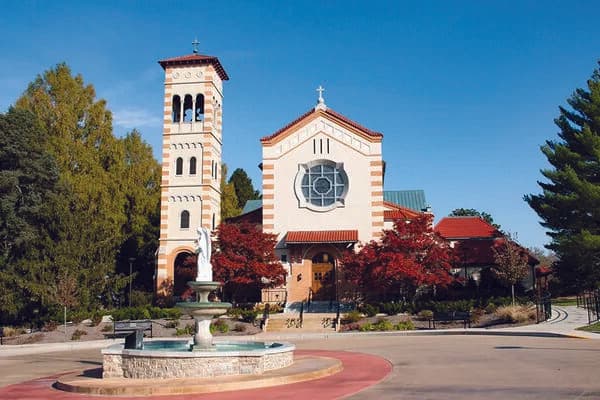
Few places in southern Indiana invite the kind of unhurried reflection that the National Shrine of Our Lady of the Miraculous Medal offers in Perryville. The site anchors a culturally rich tour that Visit Perry County describes as a journey through "two heroic immigration stories and the faiths that sustained them," connecting visitors to houses of worship built by early pioneers who sought religious freedom along the Ohio River corridor.
The highlight for many visitors is the Rosary Walk, a 35-minute stroll featuring flower gardens, natural areas, and a historic WWI outdoor grotto. Along the shaded path, hand-carved marble and bronze statues from Italy punctuate the route, and benches are placed throughout so the experience never feels rushed. Admission is free, though donations are appreciated, and a gift shop and restrooms are available on-site. Before leaving the grounds, pause at the Charles Lindbergh Historic Marker, a unique glass and metal sculpture set in a small park near the Shrine. The marker commemorates Perryville's connection to the famous aviator during his barnstorming days, a piece of early aviation history that surprises many visitors who didn't expect to find it tucked beside a pilgrimage site. The Lutheran Heritage Center is also noted among the significant historic sites woven into this faith and immigration tour, rounding out a narrative that spans multiple faith communities and settlement eras.
Perryville's Downtown Public Art Circuit
Perryville's compact downtown repays a slow, self-directed walk. On the way from the Shrine toward the historic square, Miget Park holds four sculptures, three of them rotating pieces from the Perryville Outdoor Sculpture Exhibit, an initiative launched in 2021 that draws works by artists from across the country. The exhibit doesn't stay contained to the park: additional pieces appear on St. Joseph Street near Katie's Liquor Store, on the southeast corner of the square, and in front of the Perryville Post Office, so following the full circuit means weaving through several blocks of downtown.
At the square itself, large murals on each corner depict local history and heritage, giving the downtown the feel of an open-air gallery rather than a conventional small-town center. On the courthouse lawn, the Eclipse Sundial commemorates the total solar eclipses of both 2017 and 2024, a quietly distinctive monument that marks Perry County's place along two rare celestial paths. Historic buildings throughout the district are marked with plaques for a self-guided walking tour, and Visit Perry County encourages visitors to pair the walk with an authentic German meal and browsing at the unique local shops that line the square.
Oriole East Trail in Hoosier National Forest
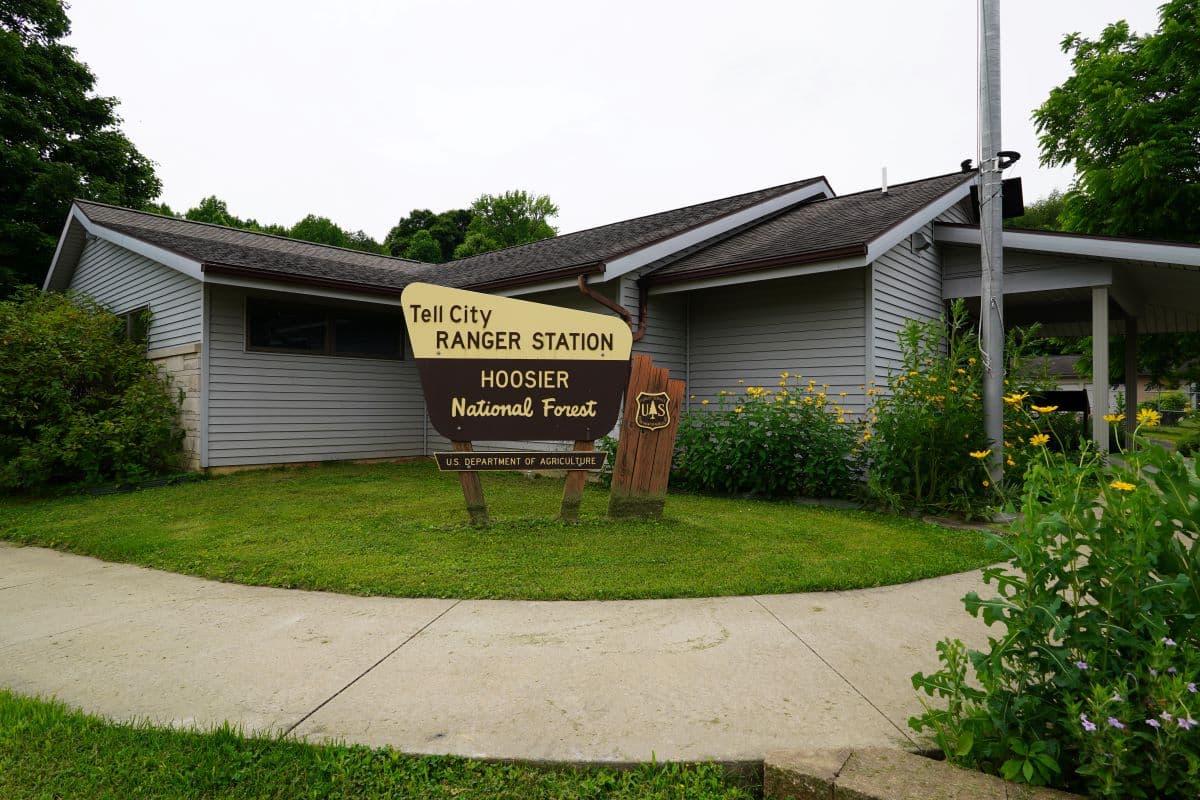
For visitors seeking forest immersion rather than a town walk, the Oriole East Trail in Hoosier National Forest offers a change of terrain and pace. The trail is a highlighted segment on outdoor planning platforms and has drawn attention from hikers who use the route as an entry point into the broader Hoosier National Forest network that surrounds much of Perry County. Specific distance and difficulty details are worth confirming with the Hoosier National Forest ranger district before heading out, but the trail is recognized as a compelling option for those wanting mature hardwood canopy and the quieter rhythms that come with national forest access. The county's position alongside the forest means that trailheads are rarely far from the Ohio River towns, making it straightforward to combine a morning on the trail with an afternoon in Perryville or Cannelton.
Tipsaw Lake Recreation Area
Tipsaw Lake is the county's most versatile outdoor destination, drawing hikers, cyclists, anglers, and paddlers to the same corner of the Hoosier National Forest. Six miles of trails designed for both hiking and biking circle the area, with campsites and picnic areas that make an overnight stay practical for those coming from outside the county. The lake itself is popular for fishing and boating, extending the recreational possibilities well beyond what a purely trail-focused area could offer. The combination of water access, multi-use trails, and camping infrastructure makes Tipsaw Lake the kind of place that fills up on summer weekends, so planning ahead is advisable if a campsite is part of the itinerary.
Historic Downtown Cannelton and the Cannelton Cotton Mill
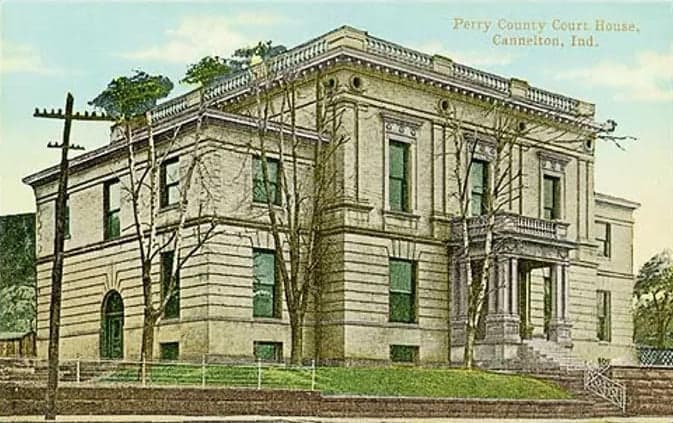
Indiana State Road 66 cuts through the historic town of Cannelton on the banks of the Ohio River, where the Kentucky shoreline is visible across the water. The town is built from the region's characteristic sandstone, and its downtown streetscape reflects that material in a way few Indiana towns can match. Two buildings define the Cannelton skyline above all others: the magnificent historical cotton mill and the town's courthouse, both of which speak to the industrial and civic ambitions of a 19th-century river community that punched well above its current population size.
The cotton mill in particular stands as one of the most significant pieces of sandstone industrial architecture in the Ohio Valley. Cannelton is surrounded by the Hoosier National Forest, so the town sits at the intersection of industrial heritage and natural landscape in a way that feels singular even within Perry County. A short drive along State Road 66 also brings Tell City into range, where the town hall, a large brick building fronted by a statue of its Swiss-folk namesake William Tell, anchors a broad green square. The Tell City town hall is not a footnote: it's a well-preserved civic landmark that reflects the Swiss-German heritage of the county's earliest European settlers and completes the arc from faith and immigration history in Perryville to the river towns built by those same communities downstream.
Taken together, these five destinations cover the county's full register: pilgrimage site and public art, national forest trail, lakeside recreation, and industrial-era streetscapes along a river that still supplies drinking water to five million people across the region. Perry County rewards the visitors who treat it as more than a pass-through on the way to somewhere else.
This article was produced by Prism’s automated news system from verified source data, official records, and press releases, then run through automated quality and moderation checks before publishing. The system is built and supervised by the people who set the standards it runs under. Read our full AI policy.
Did this article answer your question?