Perry County’s history, hills and shifting county seats shaped its identity
Perry County’s river edge, steep hills and moving county seat tell you why Tell City, Cannelton and Rome still matter. Its history still shapes where people work, visit and gather.
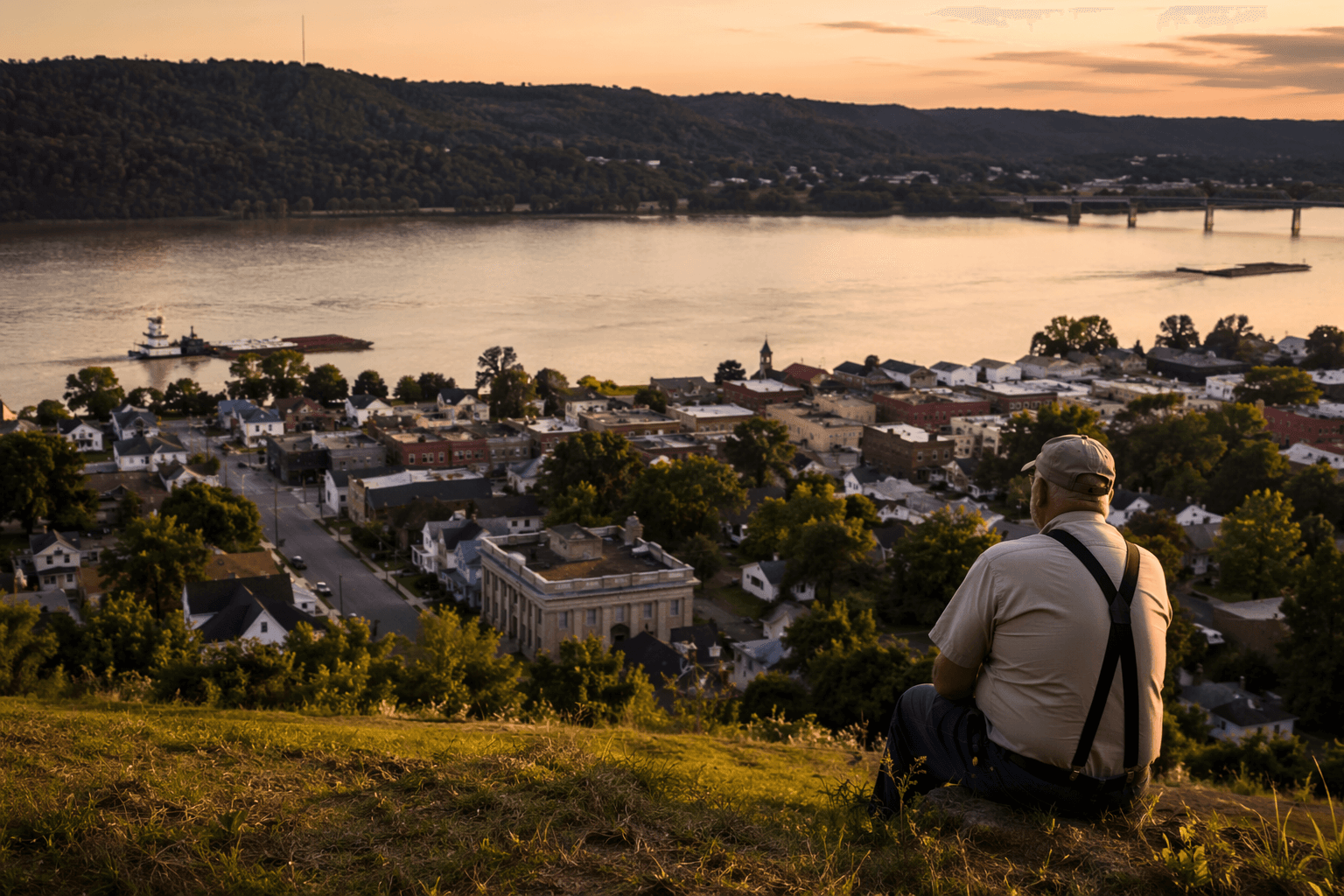
Perry County’s identity is easier to read once you follow the courthouse trail. Created in 1814 from Gibson and Warrick Counties and named for Commodore Oliver Hazard Perry, the county was the last in Indiana to be organized before the territory sought statehood authorization. That detail is more than trivia: it explains why Perry County still feels like a place where geography, settlement and civic power have always been in motion.
A county built around river, hills and moving centers
The county seat history is the clearest sign of that movement. Troy served first, from 1814 to 1818. Rome followed from 1818 to 1859, then Cannelton held the seat from 1859 until 1994, when it moved to Tell City, where it remains today. Those shifts left more than old records behind. They helped distribute civic importance across several towns, which is why Perry County’s identity is still shared among places that outsiders sometimes treat as footnotes.
That broader identity matters now because the county sits in a very specific landscape. Perry County lies on the Kentucky border, with the Ohio River forming its southern edge. It is also Indiana’s hilliest county and contains more than 60,000 acres of the Hoosier National Forest. The U.S. Forest Service describes the forest as being in the hills of south-central Indiana, and that terrain shapes everything from recreation to settlement patterns to how people think about the county itself.
Why the landscape still drives daily life
In Perry County, the hills are not just scenery. They have helped define where towns grew, where roads had to bend and where industry could fit. The county government’s own framing of the forest acreage points to a scenic county with a strong outdoor identity, while the Ohio River keeps the county linked to shipping, industry and river-town history.
That mix makes Perry County feel like three places at once: an industrial corridor, a recreation destination and a historic river community. Visitors can see the forest, the working railway and the river in the same trip, and longtime residents live with all three as part of the same county reality. The geography is also why the county’s towns have distinct personalities. Tell City is the seat, but Cannelton, Rome, Troy, Tobinsport, Branchville and Leopold each still matter in ways that go beyond a map label.
History that still shows up in the landscape
Perry County’s past is visible in the places people still visit. Cannelton stands out because its riverfront history is tied to industry and to the limits of the land itself. The National Park Service says construction on Cannelton Cotton Mills began in May 1849 and the first cloth was woven on January 7, 1851. It also notes that the town’s growth was constrained by the Ohio River and steep bluffs, a reminder that even a successful industrial town had to work around the county’s rugged topography.
That same geography helped preserve the county’s layered historical identity. Former Indiana governor Edgar Whitcomb lived in Rome during the final years of his life, and his 144-acre riverside property near Rome was purchased for a nature park and retreat project. The site sits surrounded by Hoosier National Forest and overlooks the Ohio River, making it a modern example of how Perry County’s riverfront land continues to carry public value. At Tobinsport, the burial place of Charles Polke, one of the signers of the Indiana Constitution, ties the county directly to the state’s founding era.
The local economy is wider than one employer or one town
Perry County’s economy reflects that same blend of tradition and adaptation. Pick Perry lists major employers across several sectors, including ATTC Manufacturing, Mulzer Crushed Stone, Parker Meggitt, Perry Central School Corporation, Tell City-Troy Township School Corporation, Perry County Memorial Hospital and Branchville Correctional Facility. That spread tells the story of a county that relies on manufacturing, corrections, education and healthcare rather than on any single industry.
That matters for civic life because the major employers are distributed across the county. Schools in Perry Central and Tell City-Troy Township anchor local families. Perry County Memorial Hospital is central to healthcare access. Branchville Correctional Facility adds a major public-sector presence, while manufacturing and stone production reflect the county’s industrial base. For a county of this size, those institutions are not background details. They are part of the daily structure that keeps communities functioning.
A small county with an aging profile and modest growth
The numbers help explain the county’s current shape. Perry County had a population of 19,170 in the 2020 census, and the U.S. Census Bureau’s July 1, 2025 estimate puts it at 19,389. That is modest growth, not a boom, but it does show the county is holding steady.
The demographic profile also matters. Census QuickFacts reports that 20.6% of residents were age 65 or older in 2020 to 2024 estimates, and 16.6% of adults 25 and older held a bachelor’s degree. Taken together, those figures suggest a county with an older-than-average population and a workforce profile shaped by practical, local institutions rather than by large-scale in-migration or a college-centered economy. That helps explain why stable employers, nearby services and familiar community anchors carry so much weight.
What newcomers often miss about Perry County
People who only drive through Tell City may miss how much of Perry County’s identity sits outside the current seat. Cannelton’s mill history, Rome’s connection to Edgar Whitcomb, Troy’s place in the county-seat timeline and Tobinsport’s constitutional link all show that the county’s story is not concentrated in one town. The move from Troy to Rome to Cannelton to Tell City is a civic map of where authority has shifted over time, but it is also proof that Perry County has never been a one-center county.
That is the real value of understanding Perry County now. Its history is not sealed off in the past, and its geography is not just beautiful backdrop. The hills, the river, the forest, the employers and the old courthouse trail still shape how the county works, where people gather and why its towns continue to matter well beyond their borders.
This article was produced by Prism’s automated news system from verified source data, official records, and press releases, then run through automated quality and moderation checks before publishing. The system is built and supervised by the people who set the standards it runs under. Read our full AI policy.
Know something we missed? Have a correction or additional information?
Submit a Tip