Tell City outlines registration, safety rules for golf carts, off-road vehicles
Tell City lets golf carts and ORVs on certain city streets, but only after inspection, insurance and registration. Skip the rules and you risk a ticket, especially for helmet and equipment violations.
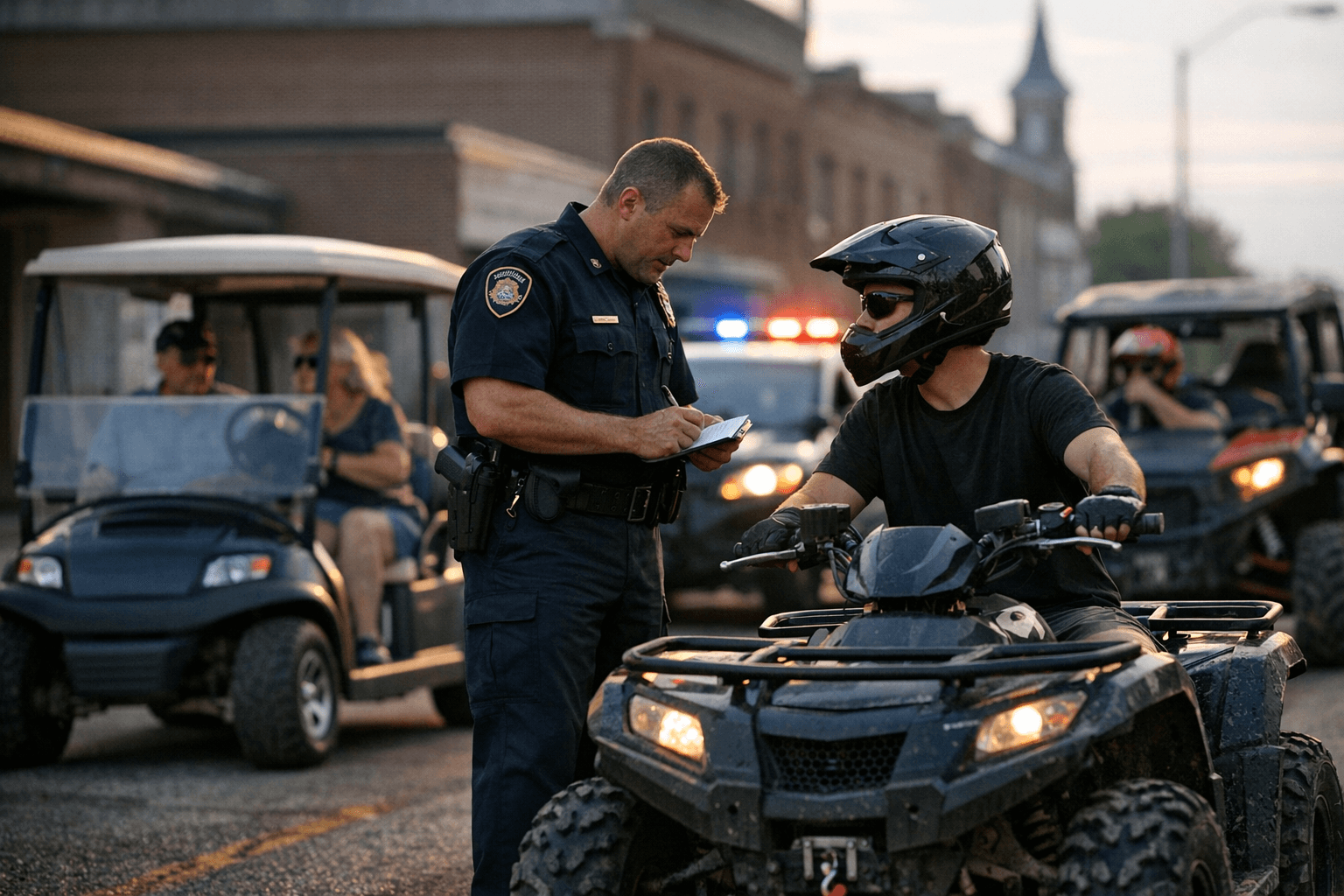
Where you can drive them in Tell City
Tell City does allow golf carts and off-road vehicles on some city roadways, but only in the places the ordinance covers and only if the vehicle has been brought into compliance. The city defines those streets as city-maintained roadways, including streets, alleys and some unimproved rights-of-way inside city limits. It does not extend to U.S. highways or state highways that happen to carry local street names.
That distinction matters for anyone trying to decide whether they can take a cart or ORV out for a short trip across town. Indiana law gives cities, counties and towns the power to set local traffic rules for golf carts and off-road vehicles, and Tell City used that authority to formalize its own rules. The city says the Common Council authorized use on city roadways in October 2020, and Ordinance 1168 was passed Nov. 2, 2020.
What you must do before you drive
Tell City treats these vehicles as regulated street vehicles, not casual neighborhood toys. Before a golf cart or off-road vehicle can be registered for city use, it must be physically inspected by a representative of the Tell City Police Department. The city also requires liability insurance, and the operator must keep a certificate of insurance with the vehicle while it is being driven.
The registration itself costs $60 for a three-year period. That fee is a practical benchmark for residents weighing whether to bring a cart or ORV into compliance, especially for short local trips around Perry County. But registration is only the start. Without inspection, insurance and the paperwork on hand, the vehicle is not in the clear for city street use.
The equipment Tell City requires
The ordinance lays out a concrete list of safety requirements. Golf carts and off-road vehicles must have non-straddle seats and safety belts for operators and passengers. Each occupant must wear a seat belt, and the vehicle may not carry more passengers than it was designed for. Tell City also requires a slow-moving vehicle sign on the rear of the vehicle while it is in operation.
Lighting rules are equally strict. These vehicles may be driven only during daylight hours unless they have functioning headlights and taillights and are otherwise authorized under Indiana law. Tell City’s guidance also says headlights and taillights are required if the vehicle is operated after sunset.
The ordinance bans operation on sidewalks and public walkways. It also says a driver must hold a valid Indiana driver’s license or another license recognized by Indiana. In other words, a registered cart does not override basic licensing rules, and it does not open access to pedestrian spaces.
Crossing a blocked roadway, not cruising it
One of the few exceptions in the city guidance is for crossing a prohibited roadway. Tell City says off-road vehicles and golf carts may cross a roadway that is otherwise off limits, but only at a right angle and only when it can be done safely. Indiana law also allows local governments to write ordinances that permit that kind of crossing.
That means the city is not inviting free movement across every road in town. The rule is narrow and deliberate: cross straight across when it is safe, then get back onto the streets where the ordinance allows operation. The rule is meant to manage local use, not erase the limits on where these vehicles belong.
Helmet rules for off-road vehicles
The helmet rule is where ORVs carry the biggest enforcement risk, especially when minors are involved. Indiana Department of Natural Resources guidance says the under-18 helmet requirement for ORVs took effect July 1, 2017. It applies on public and private property, but it does not apply to golf carts.
Tell City’s page says anyone under 18 operating or riding on an off-road vehicle must wear a DOT-approved helmet, and it adds that the owner or possessor of the vehicle can be held responsible for making sure the rule is followed. The city also says violations involving minors and helmets can be charged as Class C infractions with a maximum penalty of $500.
That is the kind of rule that can turn an ordinary drive into a citation. If an ORV is being used with a minor aboard, the helmet requirement is not optional, and the responsibility does not stop with the person behind the wheel.
Why the city is drawing a hard line
Tell City’s reminder reflects a broader Indiana pattern: local communities often set their own rules for golf cart and ORV use because state law leaves much of that authority in local hands. The state makes clear that a golf cart or off-road vehicle may not be operated on a highway unless it is done under a local ordinance. Tell City’s ordinance is the local permission slip, but it comes with inspection, insurance, equipment and licensing conditions attached.
For Perry County drivers, the practical takeaway is simple. If your vehicle is on Tell City streets, it needs to be registered, inspected and equipped the way the ordinance requires. If it is not, the city has already made clear that the privilege can turn into a ticket quickly.
This article was produced by Prism’s automated news system from verified source data, official records, and press releases, then run through automated quality and moderation checks before publishing. The system is built and supervised by the people who set the standards it runs under. Read our full AI policy.
Did this article answer your question?