Battle of Leatherwood marker ties Cornettsville to Civil War history
The Battle of Leatherwood marker pins a Civil War fight to Cornettsville, giving Perry County a place-specific story tied to salt works, local units, and a battlefield students still study.
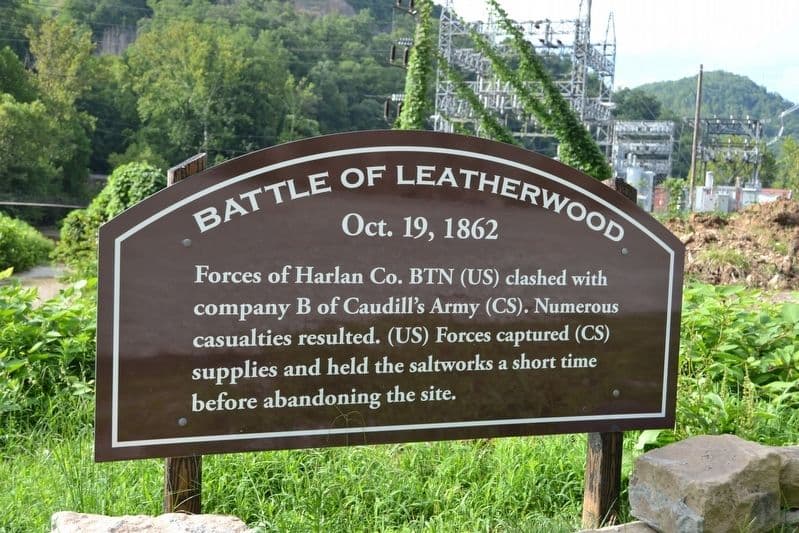
The Battle of Leatherwood marker near Cornettsville fixes the battle to Oct. 19, 1862, names the forces on each side, and places a Civil War action in a Perry County hollow where local people can still connect geography to memory. The sign turns an often abstract Kentucky war story into a precise one: Leatherwood, Cornettsville, and the men who fought there.
Why Cornettsville is the right lens
Cornettsville gives the battle its clearest frame because the action happened in a specific mountain community rather than in a distant, statewide theater. The Battle of Leatherwood marker identifies the site as near Cornettsville in Perry County and notes that numerous casualties resulted. It is a fixed point for understanding how the Civil War reached a particular Appalachian settlement.
Civil War history in eastern Kentucky often gets flattened into broad campaigns and famous battlefields. Leatherwood shows a different reality: a fight rooted in terrain, work, and supply.
What happened at Leatherwood
The fight took place at 2 o’clock that day. It unfolded in the middle of the Kentucky Campaign, just 11 days after the Battle of Perryville on Oct. 8, 1862. Perryville was the largest and last major battle in that campaign, and Leatherwood unfolded in its aftermath, when the war in eastern Kentucky was becoming more fragmented and local.
At Leatherwood, the marker identifies Union forces as the Harlan County Battalion and Confederate forces as Company B of Caudill’s Army. The battle was fought by units tied to nearby counties and to the same mountain region.
The men behind the names
The Harlan County Battalion was a Kentucky State Guard battalion recruited in Harlan and Letcher counties. It was comprised of seven companies and served from October 1862 to January 1863, with some detachments on duty as late as February 1863. That short service window shows how quickly local forces were assembled and how closely tied they were to the shifting security needs of the region.
It was a home-guard formation drawn from neighboring counties at a moment when eastern Kentucky was under intense pressure, placing Leatherwood inside the broader pattern of mountain defense, county recruitment, and improvised military organization.
Why salt works made the site strategic
The 2021 Battle of Leatherwood Reenactment in Cornettsville showcased the 1862 battle between Confederate and Union sides over salt works in the area. Salt was a wartime necessity, and in a region where supplies were becoming harder to move, control over salt works carried immediate military value.
After Perryville, Confederate armies had retreated from Kentucky, but detachments and partisan bands lingered in the southeastern mountains hunting provisions the South could no longer import. In that setting, a fight over salt works was part of the logistics of survival, supply, and control in a war that was still grinding through local communities.
How the site is still used to teach history
In 2021, the 19th annual Battle of Leatherwood Reenactment took place in Cornettsville, showing that the site already had an established public history role. By 2025, students from throughout the region were attending Education Day at the site where the battle took place 163 years earlier, reinforcing that the marker and the reenactment continue to function as teaching tools.
For Perry County, that educational use links the marker to the classroom and the field trip. Students can stand where the battle occurred, connect the date to a place, and see how a mountain community was pulled into the Civil War. The reenactment and Education Day format also help translate a marker inscription into something local families can use, whether they are learning county history, studying the Kentucky Campaign, or tracing how eastern Kentucky communities were shaped by wartime pressure.
How the marker fits heritage tourism and local identity
Kentucky’s historical marker program dates back to 1936 and now includes more than 2,400 markers statewide. Leatherwood belongs to that larger system, but it stands out because it names a very specific local event that can still be tied to a map, a community, and a memory. For visitors moving through Perry County, the marker offers a compact stop that connects roadside history to a larger state narrative.
The Kentucky Historical Society’s Explore KY History materials use Civil War markers and digital collections to build a fuller picture of the Commonwealth’s war years. Leatherwood fits naturally into that interpretation because it helps explain how Civil War history was lived in the mountains of southeastern Kentucky, not just in famous battlefields like Perryville Battlefield State Historic Site in Boyle County.
This article was produced by Prism’s automated news system from verified source data, official records, and press releases, then run through automated quality and moderation checks before publishing. The system is built and supervised by the people who set the standards it runs under. Read our full AI policy.
Did this article answer your question?