Buckhorn history centers on Log Cathedral and Witherspoon College
Buckhorn’s Log Cathedral is the surviving heart of Witherspoon College, where more than 6,000 mountain students once passed through and the town’s roots still show.
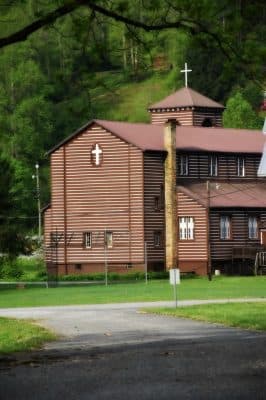
Buckhorn’s most enduring landmark is not just the Log Cathedral, but the community memory built around it. The 1928 sanctuary grew out of Witherspoon College, a mission school that helped shape this Perry County mountain town through donated labor, family land, and outside support that reached all the way from Brooklyn.
How Buckhorn began around a church and school
The Buckhorn story starts with Harvey S. Murdoch, who came to the Buckhorn area in 1902 after a revival at Laurel Point, above the junction of Squabble Creek and the Middle Fork of the Kentucky River. After that visit, Murdoch asked to leave his work as field secretary so he could found a church and school in Buckhorn, turning a remote mountain settlement into a place organized around worship and education.
Witherspoon College High School opened in 1902 with Murdoch and local citizens of Buckhorn at the center of the effort. John Gross’s family supplied land, residents donated labor and materials, and supporters in Brooklyn sent money that helped the work grow beyond the first buildings. The school was named Witherspoon College to encourage adult learners as well as children, which gave the mission a wider reach than a simple classroom program.
That reach became measurable over time. Berea College Special Collections and Archives records show that between 1903 and 1957, more than 6,000 mountain boys and girls attended Witherspoon College High School, and about 1,500 graduated. In 1957, the Perry County Board of Education took over operation of the school, while the Synod of Kentucky had already established the Presbyterian Child Welfare Agency of Buckhorn in 1956 as a successor to Witherspoon College and Orphanage.
Why the Log Cathedral still carries weight
The Log Cathedral matters because it is the physical reminder of that larger mission-school era. The city’s history page says the sanctuary was completed in 1928 using local lumber, mostly oak, and local labor, at a time when there were no roads into Buckhorn and no modern equipment to help build it. That construction story is inseparable from the town itself, because the building rose from the same mountain resources and hands that sustained the school.
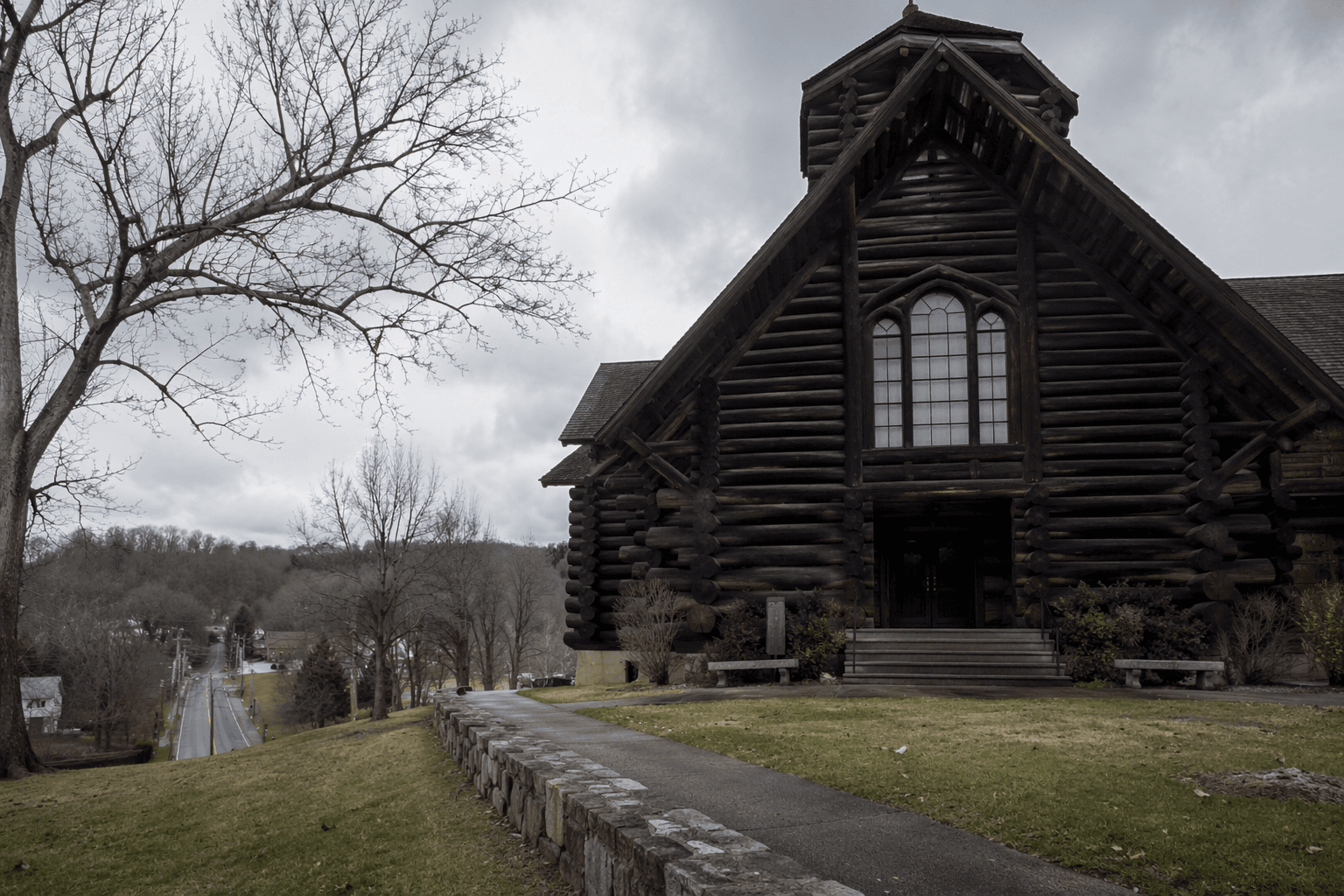
The church was designed to serve a large and growing community. Its sanctuary seated hundreds and quickly became a place for graduations, church services, and community ceremonies, not just Sunday worship. One detail captures the effort behind it: the E. and G. G. Hook and Hastings pipe organ was brought in on mule-back in time for the dedication.
The building’s interior and surviving objects keep the connection to the school visible. One source notes native oak, poplar, and sawn chestnut inside the church, while framed images and mementos tie the space to Murdoch and Witherspoon College. The prayer bell tradition still marks Sunday services and some weekday evenings, so the church continues to sound like a working part of Buckhorn rather than a static display.
Kentucky Living describes the Log Cathedral as having once served the largest rural Presbyterian congregation in Kentucky, with more than 800 members. Pastor Tom Burns says the church still draws people back because of its spiritual atmosphere and history, a reminder that the building’s pull is not only architectural. The Buckhorn Children’s Center also identifies the Log Cathedral as an active Presbyterian church and a local landmark, which matches how residents still use and remember it.
What the historic record says about the site
The National Register of Historic Places listing placed the Buckhorn church and Greer Gymnasium on the register on June 27, 1975. That designation gives the site’s areas of significance as education, architecture, religion, and social history, and sets the period of significance from 1925 to 1949, with significant years in 1927 and 1928. Those dates track the moment when the mission campus reached its most recognizable form.
The National Park Service nomination text shows how much larger the Buckhorn complex once was. In the isolated mountain community of Buckhorn, the surviving church and gymnasium were part of a campus built between 1903 and 1928 that also included a hospital, orphanage, kindergarten, elementary and secondary schools, and dormitories. Today, the Buckhorn church and Greer Gymnasium are the only surviving buildings from that Witherspoon College campus.
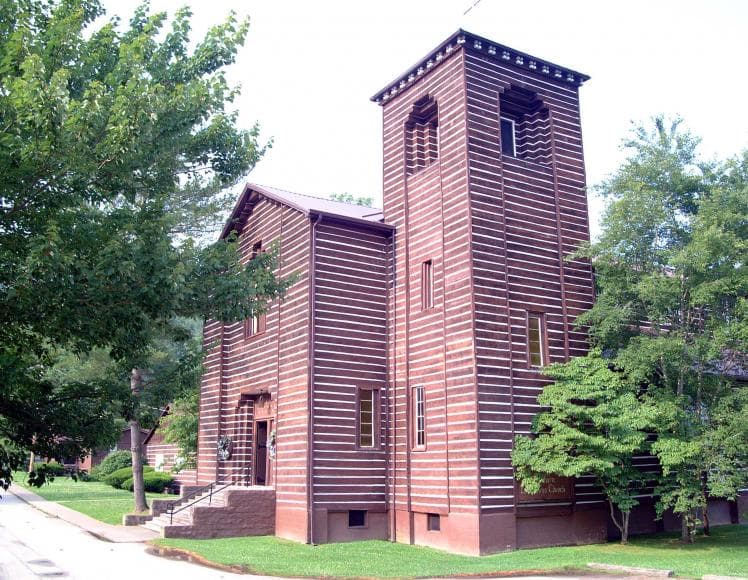
The Kentucky Historical Society marker adds another layer to the record. It says Murdoch was born in 1871 and died in 1935, came from Brooklyn, and founded Witherspoon College in 1902. It also uses 1907 for the log cathedral history, which fits the earlier church phase rather than the larger 1928 sanctuary now known as the Log Cathedral.
Why the landmark still fits Buckhorn today
Buckhorn’s historic center still connects to the rest of the area, including Buckhorn Lake State Resort Park nearby. The park gives visitors lodge rooms, cottages, a restaurant, hiking trails, a beach, and views of the 1,200-acre lake, which adds another reason people pass through the same mountain corridor that once carried schoolchildren, church members, and supplies by mule.
That modern visitor traffic does not replace the old story. It gives more people a chance to see how a church, a school, and a small group of residents built something lasting in a hard-to-reach place. The Log Cathedral survives because it is the most visible piece of a larger institution that educated thousands, housed families, and gave Buckhorn a shared identity rooted in faith, labor, and local memory.
What remains now is more than a historic building. The Buckhorn church and Greer Gymnasium are the last physical pieces of a campus that shaped generations, and the Log Cathedral still stands as the place that helped make this mountain community what it is.
This article was produced by Prism’s automated news system from verified source data, official records, and press releases, then run through automated quality and moderation checks before publishing. The system is built and supervised by the people who set the standards it runs under. Read our full AI policy.
Did this article answer your question?